
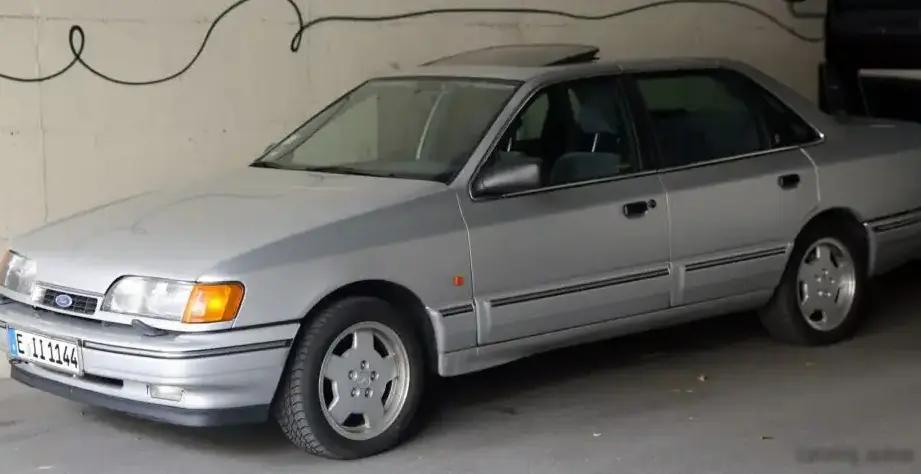
The Ford Scorpio I, specifically the 2.9 i 4×4 variant produced between 1988 and 1993, represented a significant step forward for Ford’s executive car offerings in Europe. Positioned as a flagship model, the Scorpio I (chassis codes GAE and GGE) aimed to compete with vehicles like the BMW 5 Series and Mercedes-Benz E-Class. This particular 2.9-liter, all-wheel-drive configuration was a mid-to-high trim level, offering a blend of performance and all-weather capability. It was part of the first generation Scorpio, replacing the Granada, and represented a more modern and aerodynamic design philosophy for Ford at the time. The Scorpio I was never officially sold in the North American market, remaining a primarily European vehicle.
Technical Specifications
| Brand | Ford |
| Model | Scorpio |
| Generation | Scorpio I (GAE, GGE) |
| Type (Engine) | 2.9 i 4×4 (145 Hp) |
| Start of production | 1988 |
| End of production | 1993 |
| Powertrain Architecture | Internal Combustion engine |
| Body type | Sedan |
| Seats | 5 |
| Doors | 4 |
| Fuel Type | Petrol (Gasoline) |
| Power | 145 Hp @ 5500 rpm |
| Power per litre | 49.4 Hp/l |
| Torque | 229 Nm @ 3000 rpm / 168.9 lb.-ft. @ 3000 rpm |
| Engine layout | Front, Longitudinal |
| Engine Model/Code | BRD, BRE, BRF |
| Engine displacement | 2933 cm3 / 178.98 cu. in. |
| Number of cylinders | 6 |
| Engine configuration | V-engine |
| Cylinder Bore | 93 mm / 3.66 in. |
| Piston Stroke | 72 mm / 2.83 in. |
| Number of valves per cylinder | 2 |
| Fuel injection system | Multi-port manifold injection |
| Engine aspiration | Naturally aspirated engine |
| Valvetrain | OHC |
| Engine oil capacity | 4.3 l / 4.54 US qt | 3.78 UK qt |
| Coolant | 8.5 l / 8.98 US qt | 7.48 UK qt |
| Fuel tank capacity | 70 l / 18.49 US gal | 15.4 UK gal |
| Length | 4744 mm / 186.77 in. |
| Width | 1766 mm / 69.53 in. |
| Height | 1450 mm / 57.09 in. |
| Wheelbase | 2761 mm / 108.7 in. |
| Minimum turning circle | 10.4 m / 34.12 ft. |
| Drive wheel | All wheel drive (4×4) |
| Number of gears | 5 gears, manual transmission |
| Front brakes | Ventilated discs |
| Rear brakes | Disc |
| Steering type | Steering rack and pinion |
| Power steering | Hydraulic Steering |
Powertrain & Engine Architecture
The heart of the Scorpio 2.9 i 4×4 was the Ford Cologne V6 engine, specifically the BRD, BRE, or BRF variant. This 2.9-liter (2933 cc) engine featured a 60-degree V-configuration with two valves per cylinder operated by an overhead camshaft (OHC). The engine utilized multi-port fuel injection, a significant upgrade from the carburetors found on earlier Ford models, contributing to improved fuel efficiency and smoother power delivery. The engine codes denoted slight variations in compression ratios and emissions control equipment depending on the specific market. The all-wheel-drive system was a viscous coupling system, providing automatic engagement of the rear wheels when slippage was detected. This system wasn’t a sophisticated torque-vectoring setup, but rather a reactive system designed to enhance traction in adverse conditions. The five-speed manual transmission was the only gearbox option for this specific configuration.
Driving Characteristics
The 2.9-liter V6, producing 145 horsepower and 229 Nm (168.9 lb-ft) of torque, provided a respectable level of performance for its time. While not a sports car, the Scorpio 2.9 i 4×4 offered brisk acceleration and a comfortable cruising speed. The all-wheel-drive system significantly improved handling and stability, particularly on wet or slippery roads. Compared to the lower-powered 2.0-liter four-cylinder versions, the 2.9 offered a more refined and effortless driving experience. However, it wasn’t as nimble as the rear-wheel-drive models. The five-speed manual transmission allowed for good control over the engine’s power band, although the gear ratios were geared more towards comfortable cruising than outright performance. The 0-60 mph time was estimated to be around 9.5 seconds.
Equipment & Trim Levels
The 2.9 i 4×4 trim generally included features such as central locking, electric windows, power steering, and an upgraded interior trim compared to the base models. Upholstery typically consisted of cloth or velour, with options for leather available at an extra cost. Air conditioning was a common option, as were features like a sunroof and upgraded audio systems. The dashboard layout was functional and straightforward, typical of Ford designs of the era. Higher-spec versions could be equipped with features like trip computers and automatic climate control. The Scorpio aimed for a premium feel, but didn’t quite reach the levels of luxury offered by its German competitors.
Chassis & Braking
The Scorpio I utilized a MacPherson strut front suspension and a multi-link rear suspension, providing a comfortable ride and reasonable handling. The 2.9 i 4×4 models typically featured larger diameter brakes than the lower-spec versions, with ventilated discs at the front and solid discs at the rear. Hydraulic power steering was standard, making the car relatively easy to maneuver. Stabilizer bars were fitted to both the front and rear axles to reduce body roll during cornering. The all-wheel-drive system added weight, which slightly impacted handling agility compared to the rear-wheel-drive variants.
Market Reception & Comparison
The Ford Scorpio I was generally well-received by automotive critics, who praised its spacious interior, comfortable ride, and improved aerodynamics. However, it was often criticized for its somewhat bland styling and lack of a truly premium feel. The 2.9 i 4×4 variant was considered a good all-rounder, offering a balance of performance, practicality, and all-weather capability. Compared to the 2.0-liter models, the 2.9 offered significantly more power and refinement, but at the cost of slightly increased fuel consumption. The all-wheel-drive system added to the price and complexity, making it a less popular choice than the rear-wheel-drive versions. Fuel economy averaged around 22-26 mpg.
Legacy
The Ford Scorpio I, while not a runaway sales success, represented an important step in Ford’s development of executive cars. The 2.9 i 4×4 variant, with its robust V6 engine and all-wheel-drive system, has proven to be relatively reliable, although maintenance can be costly due to the age of the vehicle and the potential for corrosion. Today, the Scorpio I is gaining recognition as a classic car, particularly among enthusiasts who appreciate its unique blend of practicality, performance, and retro styling. Finding well-maintained examples can be challenging, but the Scorpio I offers a distinctive alternative to the more common German executive cars of the era. Parts availability can be an issue, requiring resourceful sourcing from specialist suppliers.
