
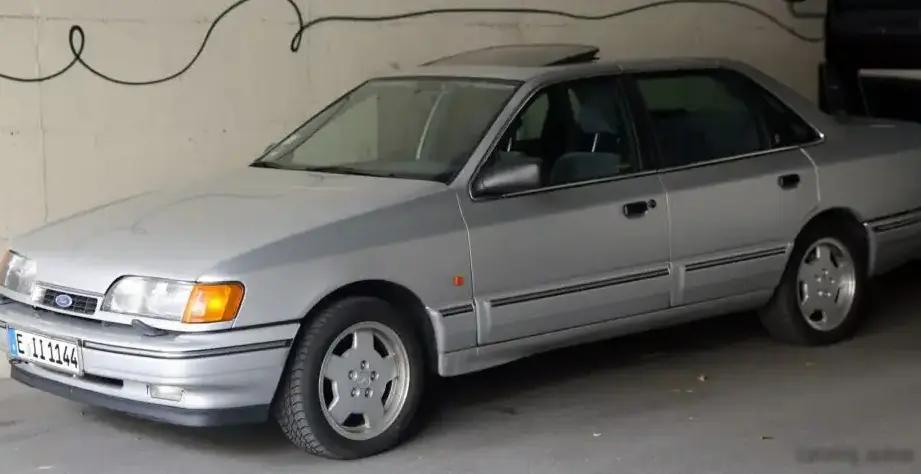
The Ford Scorpio I, produced between 1986 and 1994, represented a significant step forward for Ford of Europe’s executive car offerings. Replacing the Granada, the Scorpio (designated GAE and GGE) aimed to blend spaciousness, comfort, and a more modern driving experience. The 2.9i variant, equipped with a 2.9-liter V6 engine producing 150 horsepower, occupied a mid-range position within the Scorpio lineup, offering a balance between performance and affordability. It was positioned above the smaller engined models and below the more luxurious and often better-equipped Ghia trim levels.
Technical Specifications
| Brand | Ford |
| Model | Scorpio |
| Generation | Scorpio I (GAE, GGE) |
| Type (Engine) | 2.9i (150 Hp) |
| Start of production | 1986 |
| End of production | 1994 |
| Powertrain Architecture | Internal Combustion engine |
| Body type | Sedan |
| Seats | 5 |
| Doors | 4 |
| Fuel consumption (combined) | 10.4 l/100 km (22.6 US mpg, 27.2 UK mpg, 9.6 km/l) |
| Fuel Type | Petrol (Gasoline) |
| Acceleration 0 – 100 km/h | 9.4 sec |
| Acceleration 0 – 62 mph | 9.4 sec |
| Acceleration 0 – 60 mph | 8.9 sec |
| Maximum speed | 200 km/h (124.27 mph) |
| Weight-to-power ratio | 9 kg/Hp, 111.5 Hp/tonne |
| Weight-to-torque ratio | 5.9 kg/Nm, 170.3 Nm/tonne |
| Power | 150 Hp @ 5500 rpm |
| Power per litre | 51.1 Hp/l |
| Torque | 229 Nm @ 3000 rpm (168.9 lb.-ft. @ 3000 rpm) |
| Engine layout | Front, Longitudinal |
| Engine Model/Code | BRC |
| Engine displacement | 2933 cm3 (178.98 cu. in.) |
| Number of cylinders | 6 |
| Engine configuration | V-engine |
| Cylinder Bore | 93 mm (3.66 in.) |
| Piston Stroke | 72 mm (2.83 in.) |
| Number of valves per cylinder | 2 |
| Fuel injection system | Multi-port manifold injection |
| Engine aspiration | Naturally aspirated engine |
| Valvetrain | OHC |
| Engine oil capacity | 4.3 l (4.54 US qt | 3.78 UK qt) |
| Kerb Weight | 1345 kg (2965.22 lbs.) |
| Fuel tank capacity | 70 l (18.49 US gal | 15.4 UK gal) |
| Length | 4744 mm (186.77 in.) |
| Width | 1766 mm (69.53 in.) |
| Height | 1450 mm (57.09 in.) |
| Wheelbase | 2761 mm (108.7 in.) |
| Minimum turning circle | 10.4 m (34.12 ft.) |
| Drivetrain Architecture | Rear wheel drive |
| Number of gears and type of gearbox | 5 gears, manual transmission |
| Front brakes | Ventilated discs |
| Rear brakes | Disc |
| Steering type | Steering rack and pinion |
| Power steering | Hydraulic Steering |
Powertrain & Engine Architecture
The heart of the Scorpio 2.9i was the Ford BRC engine, a 2.9-liter, 60-degree V6. This engine was a significant departure from the inline-six engines previously used in the Granada. The BRC featured a cast iron block with aluminum cylinder heads, and utilized a multi-port fuel injection system for improved efficiency and responsiveness. The overhead camshaft (OHC) design, with two valves per cylinder, contributed to a relatively smooth power delivery. The 150 horsepower peak was achieved at 5500 rpm, while the 229 Nm (168.9 lb-ft) of torque was available at 3000 rpm. The engine’s longitudinal mounting and rear-wheel drive configuration were traditional for a car of this class at the time. The standard transmission was a five-speed manual, although a four-speed automatic transmission was also available, albeit impacting performance slightly.
Driving Characteristics
The Scorpio 2.9i offered a comfortable and refined driving experience. The V6 engine provided ample power for relaxed cruising and overtaking, although it wasn’t a particularly sporty performer. The five-speed manual transmission allowed drivers to make the most of the engine’s torque, while the automatic option prioritized convenience. Compared to the smaller 2.0-liter four-cylinder models, the 2.9i felt significantly more effortless, especially when fully loaded or tackling inclines. However, it lacked the outright punch of the later Scorpio RS Cosworth models. The rear-wheel drive layout provided a balanced feel, but also required a degree of driver awareness in slippery conditions. The steering was light and precise, making the Scorpio easy to maneuver in urban environments.
Equipment & Trim Levels
The 2.9i Scorpio typically came well-equipped, though standard features varied slightly depending on the market. Generally, it included central locking, electric windows, and a basic stereo system. Higher trim levels, such as the Ghia, added features like leather upholstery, climate control, and upgraded audio systems. Optional extras included a sunroof, alloy wheels, and more advanced sound systems. The interior design was functional and spacious, with comfortable seating for five adults. The dashboard layout was straightforward, with clearly labeled controls. The 2.9i often featured a wood trim finish, adding a touch of luxury to the cabin.
Chassis & Braking
The Scorpio I utilized a MacPherson strut front suspension and a multi-link rear suspension, providing a good balance between ride comfort and handling. The 2.9i models typically featured ventilated disc brakes on the front wheels and solid discs on the rear. Power-assisted steering was standard, making the car easy to maneuver. Stabilizer bars were fitted to both the front and rear axles to reduce body roll during cornering. The chassis was robust and well-built, contributing to the Scorpio’s overall feeling of solidity. The suspension was tuned for comfort, absorbing bumps and imperfections in the road surface effectively.
Market Reception & Comparison
The Ford Scorpio I was generally well-received by automotive critics, who praised its spaciousness, comfort, and refined driving experience. The 2.9i variant was considered a good all-rounder, offering a compelling blend of performance and affordability. However, some critics noted that the styling was somewhat conservative and lacked the visual appeal of some of its rivals. Compared to the 2.0-liter models, the 2.9i offered significantly more power and refinement, but at a higher price point. The automatic transmission option, while convenient, resulted in a noticeable decrease in fuel economy and acceleration. Reliability was generally good, although some owners reported issues with the fuel injection system and electrical components.
Legacy
The Ford Scorpio I, and particularly the 2.9i variant, holds a nostalgic appeal for many enthusiasts. While not a high-performance icon, it represented a well-engineered and comfortable executive car of its era. The BRC V6 engine proved to be relatively durable, and many examples are still on the road today. In the used car market, the Scorpio 2.9i is often sought after by collectors and enthusiasts who appreciate its classic styling and comfortable driving experience. Parts availability can be a challenge, but a dedicated community of owners and specialists helps to keep these cars running. The Scorpio’s legacy lies in its ability to provide a spacious, comfortable, and reliable mode of transportation for families and executives alike.
