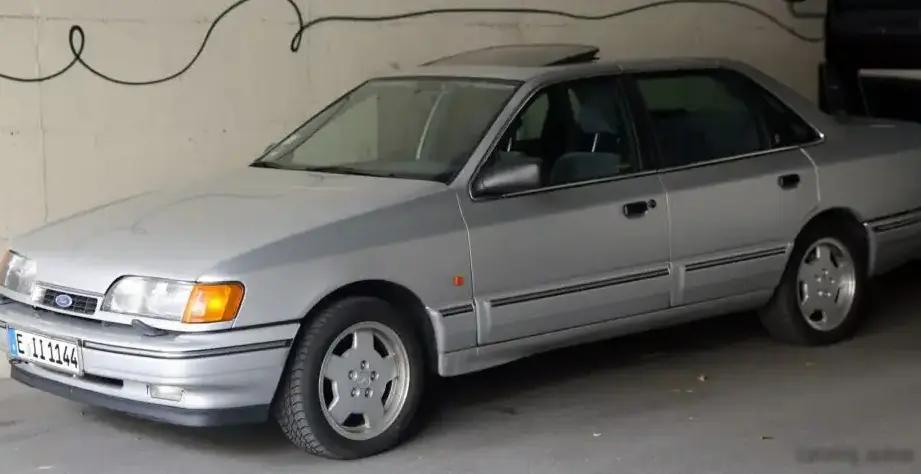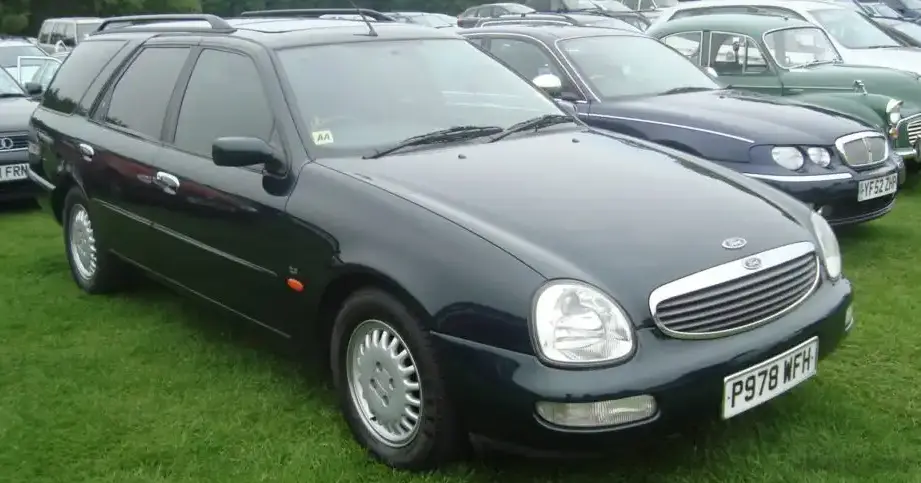
The Ford Scorpio II Turnier 2.0i 16V, produced between 1994 and 1998, represented a significant offering in Ford’s European lineup as a spacious and relatively luxurious executive station wagon. Positioned as a mid-range trim within the Scorpio II Turnier family, it aimed to balance performance with practicality and affordability. The Turnier, Ford’s designation for its estate (station wagon) models, provided a larger cargo capacity than the saloon (sedan) version, appealing to families and those requiring substantial load-carrying ability. This variant utilized the Ford N3A engine, a 2.0-liter inline-four cylinder powerplant, and was typically paired with a five-speed manual transmission, though automatic options were also available. It was a key model in Ford’s attempt to compete with established European brands in the executive car segment.
Technical Specifications
| Brand | Ford |
| Model | Scorpio |
| Generation | Scorpio II Turnier |
| Type (Engine) | 2.0i 16V (136 Hp) |
| Start of production | 1994 |
| End of production | 1998 |
| Powertrain Architecture | Internal Combustion engine |
| Body type | Station wagon (estate) |
| Seats | 5 |
| Doors | 5 |
| Fuel consumption (combined) | 9.1 l/100 km (25.8 US mpg, 31 UK mpg, 11 km/l) |
| Fuel Type | Petrol (Gasoline) |
| Maximum speed | 200 km/h (124.27 mph) |
| Weight-to-power ratio | 11 kg/Hp, 91 Hp/tonne |
| Weight-to-torque ratio | 8.5 kg/Nm, 117.1 Nm/tonne |
| Power | 136 Hp @ 6000 rpm |
| Power per litre | 68.1 Hp/l |
| Torque | 175 Nm @ 4200 rpm (129.07 lb.-ft. @ 4200 rpm) |
| Engine layout | Front, Longitudinal |
| Engine Model/Code | N3A |
| Engine displacement | 1998 cm3 (121.93 cu. in.) |
| Number of cylinders | 4 |
| Engine configuration | Inline |
| Cylinder Bore | 86 mm (3.39 in.) |
| Piston Stroke | 86 mm (3.39 in.) |
| Compression ratio | 9.8:1 |
| Number of valves per cylinder | 4 |
| Fuel injection system | Multi-port manifold injection |
| Engine aspiration | Naturally aspirated engine |
| Valvetrain | DOHC |
| Engine oil capacity | 4.25 l (4.49 US qt | 3.74 UK qt) |
| Coolant | 7.5 l (7.93 US qt | 6.6 UK qt) |
| Kerb Weight | 1495 kg (3295.91 lbs.) |
| Max. weight | 2125 kg (4684.82 lbs.) |
| Max load | 630 kg (1388.91 lbs.) |
| Trunk (boot) space – minimum | 550 l (19.42 cu. ft.) |
| Trunk (boot) space – maximum | 1020 l (36.02 cu. ft.) |
| Fuel tank capacity | 70 l (18.49 US gal | 15.4 UK gal) |
| Length | 4826 mm (190 in.) |
| Width | 1760 mm (69.29 in.) |
| Width including mirrors | 1875 mm (73.82 in.) |
| Height | 1442 mm (56.77 in.) |
| Wheelbase | 2770 mm (109.06 in.) |
| Front track | 1478 mm (58.19 in.) |
| Rear (Back) track | 1495 mm (58.86 in.) |
| Drivetrain Architecture | Rear wheel drive |
| Number of gears and type of gearbox | 5 gears, manual transmission |
| Front suspension | Wishbone |
| Rear suspension | Coil spring |
| Front brakes | Ventilated discs |
| Rear brakes | Ventilated discs |
| Assisting systems | ABS (Anti-lock braking system), Hydraulic Steering |
| Tires size | 195/65 R15 |
Powertrain & Engine Architecture
The heart of the Scorpio II Turnier 2.0i 16V was the Ford N3A engine, a 1998cc inline-four cylinder unit. This engine featured a dual overhead camshaft (DOHC) valvetrain operating four valves per cylinder, contributing to its relatively high output for its displacement. The N3A utilized multi-port fuel injection, a common technology in the 1990s, for precise fuel delivery. The engine was longitudinally mounted in the front of the vehicle, driving the rear wheels. While not a particularly advanced engine by modern standards, the N3A was known for its durability and reasonable refinement. The five-speed manual transmission offered precise gear changes and allowed drivers to effectively utilize the engine’s power band. An optional four-speed automatic transmission was also available, though it generally resulted in slightly reduced performance and fuel economy.
Driving Characteristics
The 2.0i 16V Scorpio Turnier offered a comfortable and composed driving experience. With 136 horsepower, acceleration was adequate for everyday driving, but it wasn’t a particularly sporty vehicle. The rear-wheel-drive configuration provided balanced handling, although it lacked the agility of front-wheel-drive competitors. The manual transmission allowed for good control, while the automatic, though convenient, felt somewhat sluggish in comparison. Gear ratios were tuned for cruising comfort rather than outright performance. Compared to the higher-performance Scorpio variants, such as the 2.9i V6, the 2.0i 16V offered a more economical and accessible option, sacrificing some power for improved fuel efficiency.
Equipment & Trim Levels
The 2.0i 16V Scorpio Turnier typically came equipped with a reasonable level of standard features. These included central locking, electric front windows, power steering, and an adjustable steering column. Interior upholstery was generally cloth, though leather options were available. Dashboard design was functional and straightforward, reflecting the car’s executive positioning. Optional extras included air conditioning, a sunroof, upgraded audio systems, and alloy wheels. The Turnier’s spacious interior and large boot (trunk) were key selling points, making it a practical choice for families and those needing to transport large items.
Chassis & Braking
The Scorpio II utilized a traditional body-on-frame construction, contributing to its robust feel. Front suspension employed a wishbone setup, while the rear featured a coil spring arrangement. Braking was provided by ventilated discs on all four wheels, offering adequate stopping power. An Anti-lock Braking System (ABS) was standard, enhancing safety. The suspension was tuned for comfort, providing a smooth ride over most road surfaces. Stabilizer bars were fitted to both the front and rear axles to reduce body roll during cornering.
Market Reception & Comparison
The Scorpio II Turnier 2.0i 16V was generally well-received by automotive critics as a practical and comfortable estate car. However, it often faced criticism for its somewhat dated styling and lack of cutting-edge technology compared to some of its rivals. Fuel economy was considered reasonable for a vehicle of its size and class, averaging around 25.8 US mpg. Compared to the V6-powered Scorpio variants, the 2.0i 16V offered a more affordable entry point, but at the expense of performance. The 2.0i 16V also competed with other European estates like the Volvo 940 and the Opel/Vauxhall Omega, offering a similar blend of practicality and comfort.
Legacy
The Ford Scorpio II Turnier 2.0i 16V, while not a groundbreaking vehicle, remains a fondly remembered model for many. The N3A engine proved to be relatively reliable, and well-maintained examples can still be found on the used car market today. Parts availability is generally good, making it a viable option for enthusiasts. The Scorpio II Turnier represents a period when Ford attempted to create a genuinely competitive executive car for the European market, and the 2.0i 16V variant offered a balanced combination of practicality, comfort, and affordability.