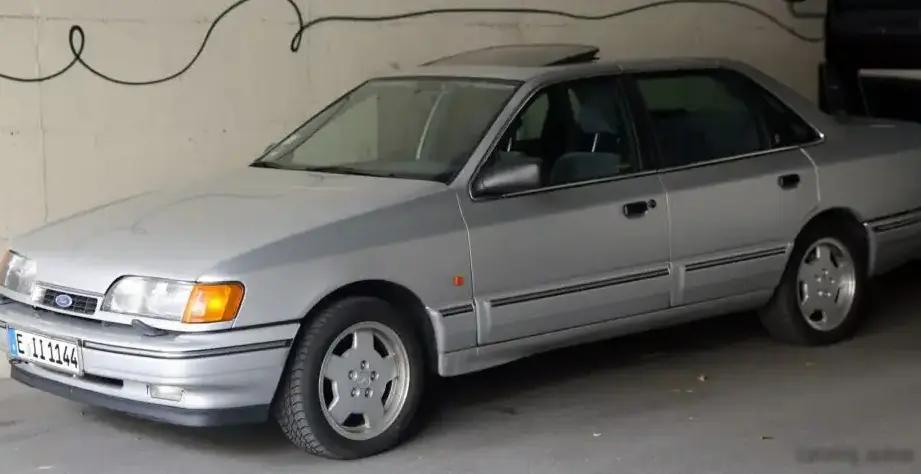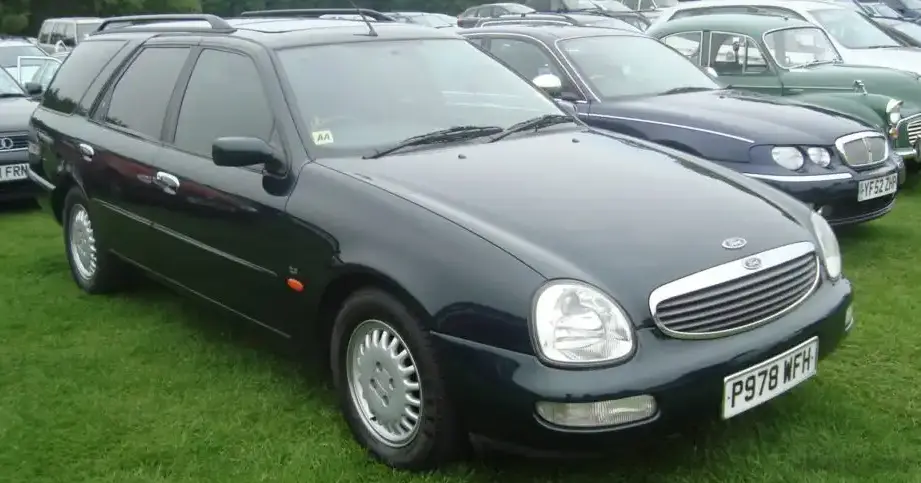
The Ford Scorpio II Turnier 2.5 TD, produced between 1996 and 1998, represents a significant offering in Ford’s European lineup during that period. This variant, a diesel-powered station wagon (estate), was positioned as a practical and efficient choice for families and those requiring substantial cargo space. It was part of the larger Scorpio II range (1994-1998), which aimed to replace the aging Granada and Scorpio I models, offering a more modern and refined experience. The Turnier body style, specifically, catered to buyers prioritizing versatility and load-carrying capacity. This model was primarily sold in Europe, where large, rear-wheel-drive estates remained popular.
Technical Specifications
| Brand | Ford |
| Model | Scorpio |
| Generation | Scorpio II Turnier |
| Type (Engine) | 2.5 TD (125 Hp) |
| Start of production | 1996 |
| End of production | 1998 |
| Powertrain Architecture | Internal Combustion engine |
| Body type | Station wagon (estate) |
| Seats | 5 |
| Doors | 5 |
| Fuel consumption (urban) | 11.3 l/100 km (20.8 US mpg) |
| Fuel consumption (extra urban) | 6.8 l/100 km (34.6 US mpg) |
| Fuel Type | Diesel |
| Acceleration 0 – 100 km/h | 11.3 sec |
| Acceleration 0 – 62 mph | 11.3 sec |
| Acceleration 0 – 60 mph | 10.7 sec |
| Maximum speed | 198 km/h (123.03 mph) |
| Weight-to-power ratio | 12.4 kg/Hp |
| Weight-to-torque ratio | 5.3 kg/Nm |
| Power | 125 Hp @ 4200 rpm |
| Power per litre | 50 Hp/l |
| Torque | 293 Nm @ 2000 rpm (216.11 lb.-ft. @ 2000 rpm) |
| Engine layout | Front, Longitudinal |
| Engine Model/Code | SCD |
| Engine displacement | 2500 cm3 (152.56 cu. in.) |
| Number of cylinders | 4 |
| Engine configuration | Inline |
| Cylinder Bore | 92 mm (3.62 in.) |
| Piston Stroke | 94 mm (3.7 in.) |
| Compression ratio | 21.5:1 |
| Number of valves per cylinder | 2 |
| Fuel injection system | Precombustion chamber injection |
| Engine aspiration | Turbocharger, Intercooler |
| Valvetrain | SOHC |
| Engine oil capacity | 6.6 l (6.97 US qt | 5.81 UK qt) |
| Kerb Weight | 1550 kg (3417.17 lbs.) |
| Max. weight | 2200 kg (4850.17 lbs.) |
| Max load | 650 kg (1433 lbs.) |
| Trunk (boot) space – minimum | 550 l (19.42 cu. ft.) |
| Trunk (boot) space – maximum | 1600 l (56.5 cu. ft.) |
| Fuel tank capacity | 70 l (18.49 US gal | 15.4 UK gal) |
| Length | 4826 mm (190 in.) |
| Width | 1760 mm (69.29 in.) |
| Width including mirrors | 1875 mm (73.82 in.) |
| Height | 1442 mm (56.77 in.) |
| Wheelbase | 2770 mm (109.06 in.) |
| Front track | 1478 mm (58.19 in.) |
| Rear (Back) track | 1495 mm (58.86 in.) |
| Minimum turning circle | 10.4 m (34.12 ft.) |
| Drivetrain Architecture | Rear wheel drive |
| Number of gears | 5 gears, manual transmission |
| Front suspension | Independent type McPherson, Transverse stabilizer |
| Rear suspension | Transverse stabilizer, Trailing arm, Coil spring |
| Front brakes | Ventilated discs |
| Rear brakes | Disc |
| Assisting systems | ABS (Anti-lock braking system) |
| Steering type | Steering rack and pinion |
| Power steering | Hydraulic Steering |
| Tires size | 215/60 R15 |
INTRODUCTION
The Ford Scorpio II Turnier 2.5 TD, launched in 1996, was a key variant within the Scorpio II range. The Turnier, Ford’s designation for its station wagon models, offered a practical alternative to the saloon (sedan) body style. This 2.5-liter turbocharged diesel version aimed to provide a balance between fuel efficiency, reasonable performance, and the cargo capacity demanded by families and commercial users. It sat within a lineup that also included petrol (gasoline) engines of varying displacements and power outputs, including a 2.0L, 2.3L, and a more powerful 2.9L V6. The Scorpio II, built on the 1HX0 platform, represented a significant step up in terms of design and technology compared to its predecessor.
Powertrain & Engine Architecture
The heart of the Scorpio II Turnier 2.5 TD is the SCD engine, a 2.5-liter inline-four cylinder diesel. This engine utilized a precombustion chamber injection system, a common technology for diesel engines of the era, designed to improve combustion efficiency and reduce noise. The turbocharger, coupled with an intercooler, significantly boosted power output to 125 horsepower at 4200 rpm and 293 Nm (216 lb-ft) of torque at 2000 rpm. The engine featured a single overhead camshaft (SOHC) valvetrain, operating two valves per cylinder. The engine was mounted longitudinally in the front of the vehicle, driving the rear wheels. The 5-speed manual transmission was the standard offering for this variant, providing a relatively direct connection between the engine and the wheels. The transmission’s gear ratios were tuned to prioritize fuel economy and mid-range acceleration, rather than outright performance.
Driving Characteristics
The 2.5 TD variant offered a distinctly different driving experience compared to the petrol-powered Scorpios. While lacking the immediate responsiveness of the gasoline engines, the diesel provided strong low-end torque, making it well-suited for hauling loads and tackling inclines. The 0-60 mph time of around 10.7 seconds was respectable for a large, diesel-powered estate car of the 1990s. The manual transmission allowed for greater driver control, but the long gearing emphasized fuel efficiency over spirited driving. The rear-wheel-drive configuration provided a balanced feel, although it could be prone to oversteer in challenging conditions. Compared to the higher-output V6 models, the 2.5 TD felt less refined and produced more engine noise, but it compensated with significantly better fuel economy.
Equipment & Trim Levels
The Scorpio II Turnier 2.5 TD typically came with a reasonable level of standard equipment, reflecting its position as a mid-range offering. Features included central locking, power windows, and a basic audio system. Interior upholstery was typically cloth, with options for upgraded materials available. Dashboard configuration was functional and straightforward, prioritizing usability over aesthetics. Optional extras included air conditioning, a sunroof, and upgraded audio systems. Higher trim levels, such as the Ghia, offered more luxurious appointments, including leather upholstery, wood trim, and additional convenience features.
Chassis & Braking
The Scorpio II utilized an independent McPherson strut suspension at the front, providing a comfortable ride and decent handling. The rear suspension employed a trailing arm setup with coil springs and a transverse stabilizer bar. Braking duties were handled by ventilated discs at the front and solid discs at the rear. Anti-lock braking system (ABS) was standard, enhancing safety and control during emergency braking. The chassis was designed to accommodate the weight of the diesel engine and the potential for heavy loads, resulting in a robust and stable platform. The steering was rack and pinion, providing precise and responsive control.
Market Reception & Comparison
The Scorpio II Turnier 2.5 TD was generally well-received by automotive critics as a practical and economical estate car. Its fuel efficiency was a major selling point, particularly in Europe where diesel fuel was often cheaper than gasoline. However, some critics noted the engine’s relative lack of refinement and the car’s somewhat dated interior design. Compared to the petrol-powered Scorpios, the 2.5 TD offered significantly better fuel economy but less overall performance. Against competitors such as the Volvo 940 estate and the BMW 5 Series Touring, the Scorpio offered a competitive price point and a spacious interior, but it lacked the prestige of the German brands.
Legacy
The Ford Scorpio II Turnier 2.5 TD, while not a particularly rare or collectible vehicle today, remains a reasonably reliable and affordable option in the used car market. The SCD diesel engine, while capable of high mileage, requires regular maintenance to prevent issues with the precombustion chambers and turbocharger. Parts availability is generally good, although some components may be becoming increasingly difficult to find. The Scorpio II Turnier 2.5 TD represents a practical and durable estate car from a bygone era, offering a unique blend of space, efficiency, and rear-wheel-drive dynamics.