
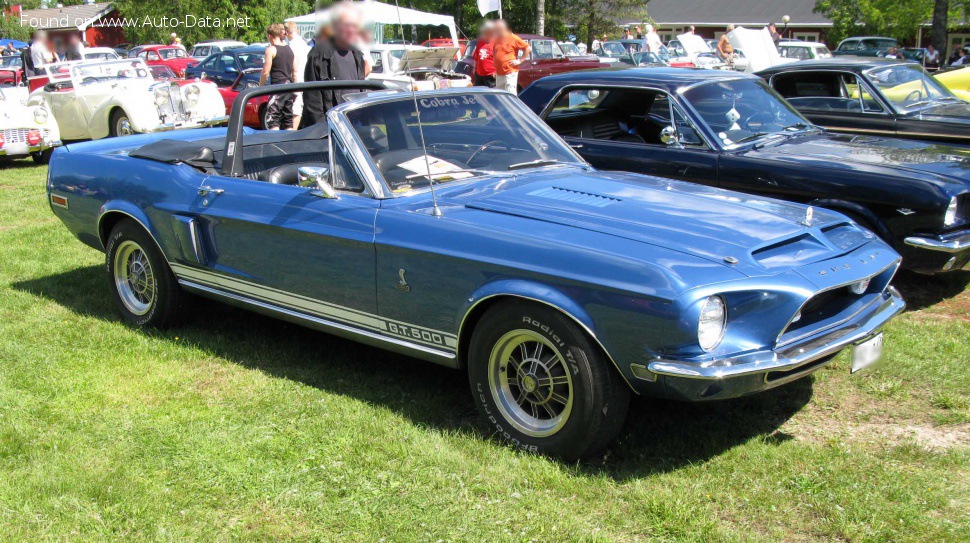
The Ford Shelby I Cabrio Cobra GT 350 5.0 V8 (254 Hp): A Classic American Legend
The late 1960s represented a golden era for American performance automobiles, a period characterized by raw power, distinctive styling, and an undeniable sense of automotive freedom. Among the pantheon of legends from this time, the Ford Shelby I Cabrio Cobra GT 350 5.0 V8 (254 Hp) stands as an enduring icon. This particular iteration, produced between 1968 and 1970, was a pinnacle of the collaboration between Ford Motor Company and the legendary automotive designer and racer Carroll Shelby. Building upon the already popular Ford Mustang, Shelby transformed it into a more aggressive, track-focused machine that still retained street legality and everyday drivability. The Shelby I Cabrio, specifically the GT 350 convertible with its potent 5.0-liter V8 engine, offered an exhilarating open-air experience combined with formidable performance, cementing its place in the annals of muscle car history. It represented the zenith of the first generation of Shelby-modified Mustangs, offering a blend of American ingenuity and racing pedigree that captivated enthusiasts then and continues to do so today.
Genesis of a Performance Icon
Carroll Shelby’s involvement with Ford began with the AC Cobra and the GT40 project, both of which achieved international racing success. By the mid-1960s, Ford sought to inject a performance image into its wildly successful Mustang pony car. The result was the Shelby GT 350, first introduced in 1965 as a stripped-down, race-ready fastback. As the Mustang evolved, so did the Shelby versions. By 1968, the Shelby line had matured, offering more comfort and a wider range of body styles, including the highly desirable convertible. The 1968-1970 Shelby I Cabrio Cobra GT 350 5.0 V8 (254 Hp) was not just a powerful car; it was a statement. It combined the brute force of a large American V8 with the sophisticated handling improvements Shelby applied, all wrapped in a distinctive package that screamed performance. The “Cobra” designation further linked it to Shelby’s earlier, legendary creations, underscoring its high-performance aspirations.
Powertrain and Performance: The Heart of the Ford Shelby I Cabrio Cobra GT 350 5.0 V8 (254 Hp)
Engine Architecture and Output
At the core of the Ford Shelby I Cabrio Cobra GT 350 5.0 V8 (254 Hp) was its robust, naturally aspirated V-engine. With an engine displacement of 4942 cubic centimeters, or approximately 5.0 liters (301.58 cubic inches), this V8 was designed to deliver strong, reliable power. The engine featured a classic front, longitudinal layout, feeding power to the rear wheels, a quintessential setup for American muscle cars of the era. With a bore of 101.6 mm (4 inches) and a piston stroke of 76.2 mm (3 inches), the engine boasted an oversquare design, conducive to higher revving and robust power delivery. The compression ratio of 10.5:1 was respectable for its time, contributing to its energetic performance. Fuel was supplied via a carburetor system, a standard technology before the widespread adoption of electronic fuel injection, offering a raw, mechanical feel that enthusiasts often cherish today.
The GT 350’s V8 produced a healthy 254 horsepower at 4800 rpm, which translated into exhilarating acceleration for its time. More importantly for real-world driving and the muscle car experience, it developed a substantial 420 Nm (309.78 lb.-ft.) of torque at a relatively low 2800 rpm. This abundant low-end torque meant instant throttle response and impressive pulling power, perfect for both spirited driving and cruising. The power-to-liter ratio stood at 51.4 Hp/l, showcasing an efficient use of its displacement. Mated to a 4-speed manual transmission, the driver had direct control over this potent powertrain, allowing for an engaging and visceral driving experience. The weight-to-power ratio of 5.9 kg/Hp (168.1 Hp/tonne) and a weight-to-torque ratio of 3.6 kg/Nm (278 Nm/tonne) further illustrate its performance capabilities, positioning it as a formidable contender in its segment.
Design and Engineering of the Shelby I Cabrio
Exterior Aesthetics and Interior Appointments
The Ford Shelby I Cabrio Cobra GT 350 5.0 V8 (254 Hp) was undeniably a product of its time, showcasing the bold and aggressive styling cues popular in the late 1960s. As a two-door convertible, it offered the ultimate freedom of open-air motoring, a highly desirable feature for performance cars of that era. Its dimensions were substantial, with a length of 4740 mm (186.61 inches), a width of 1801 mm (70.91 inches), and a height of 1306 mm (51.42 inches). The wheelbase measured 2743 mm (107.99 inches), providing a stable platform for its powerful engine. The design was a clear departure from the standard Mustang, featuring unique Shelby styling elements such as a distinctive front grille, integrated fog lights, functional scoops for engine and brake cooling, and often, racing stripes that proclaimed its performance pedigree. The convertible top, when down, seamlessly integrated into the car’s flowing lines, enhancing its sporty appeal.
Inside, the GT 350 Cabrio offered seating for four, combining practicality with a performance-oriented cockpit. While retaining many elements of the Mustang’s interior, Shelby enhancements typically included a sportier steering wheel, additional gauges to monitor critical engine functions, and often upgraded seating with more support. The focus was on providing a driver-centric environment, where all controls were easily accessible, and the driving experience was paramount. Despite its performance aspirations, the convertible also offered a degree of comfort suitable for grand touring, making it a versatile machine for both spirited drives and leisurely cruises.
Chassis and Braking Systems
To handle the significant power output, the Shelby GT 350 convertible featured a chassis designed for improved handling and stability. The suspension, while based on the Mustang’s architecture, received Shelby-specific tuning, including stiffer springs, larger sway bars, and revised shock absorbers to enhance cornering capabilities and reduce body roll. The front and rear track measurements of 1476 mm (58.11 inches) contributed to its planted stance and stability. The steering system, with a minimum turning circle of 11.6 meters (38.06 feet), provided a reasonable maneuverability for a car of its size and power.
Braking performance was crucial for a high-performance vehicle. The GT 350 came equipped with disc brakes at the front, offering superior stopping power and fade resistance compared to drum brakes. The rear, however, retained drum brakes, a common configuration for the time, though less effective than discs. This combination provided adequate stopping performance for street use and light track duty, a significant upgrade over standard Mustang models. The kerb weight of 1511 kg (3331.18 lbs.) meant that the braking system had a substantial mass to bring to a halt, underscoring the importance of these performance enhancements.
Technical Specifications
| Ford Shelby I Cabrio Cobra GT 350 5.0 V8 (254 Hp) – Full Specifications | |
|---|---|
| General Information | |
| Brand | Ford |
| Model | Shelby |
| Generation | Shelby I Cabrio |
| Type (Engine) | Cobra GT 350 5.0 V8 (254 Hp) |
| Start of production | 1968 year |
| End of production | 1970 year |
| Powertrain Architecture | Internal Combustion engine |
| Body type | Cabriolet |
| Seats | 4 |
| Doors | 2 |
| Performance Specs | |
| Fuel Type | Petrol (Gasoline) |
| Weight-to-power ratio | 5.9 kg/Hp, 168.1 Hp/tonne |
| Weight-to-torque ratio | 3.6 kg/Nm, 278 Nm/tonne |
| Engine Specs | |
| Power | 254 Hp @ 4800 rpm |
| Power per liter | 51.4 Hp/l |
| Torque | 420 Nm @ 2800 rpm (309.78 lb.-ft. @ 2800 rpm) |
| Engine layout | Front, Longitudinal |
| Engine displacement | 4942 cm³ (301.58 cu. in.) |
| Number of cylinders | 8 |
| Engine configuration | V-engine |
| Cylinder Bore | 101.6 mm (4 in.) |
| Piston Stroke | 76.2 mm (3 in.) |
| Compression ratio | 10.5:1 |
| Number of valves per cylinder | 2 |
| Fuel injection system | Carburetor |
| Engine aspiration | Naturally aspirated engine |
| Space, Volume and Weights | |
| Kerb Weight | 1511 kg (3331.18 lbs.) |
| Fuel tank capacity | 64 l (16.91 US gal | 14.08 UK gal) |
| Dimensions | |
| Length | 4740 mm (186.61 in.) |
| Width | 1801 mm (70.91 in.) |
| Height | 1306 mm (51.42 in.) |
| Wheelbase | 2743 mm (107.99 in.) |
| Front track | 1476 mm (58.11 in.) |
| Rear (Back) track | 1476 mm (58.11 in.) |
| Minimum turning circle (turning diameter) | 11.6 m (38.06 ft.) |
| Drivetrain, Brakes and Suspension Specs | |
| Drivetrain Architecture | The Internal combustion engine (ICE) drives the rear wheels of the vehicle. |
| Drive wheel | Rear wheel drive |
| Number of gears and type of gearbox | 4 gears, manual transmission |
| Front brakes | Disc |
| Rear brakes | Drum |
Legacy and Market Impact of the Shelby GT 350 Convertible
Competitors and Cultural Significance
The Ford Shelby I Cabrio Cobra GT 350 5.0 V8 (254 Hp) occupies a revered position in the pantheon of American muscle cars. Its production run from 1968 to 1970 marked a period of intense competition in the high-performance segment, with rivals like the Chevrolet Camaro Z/28, Pontiac Firebird Trans Am, Dodge Challenger R/T, and Plymouth Barracuda ‘Cuda all vying for supremacy. What set the Shelby apart was not just its raw power, but its unique blend of Ford’s mass-production capabilities with Carroll Shelby’s racing expertise and distinctive styling. The GT 350, particularly in its convertible form, offered a more refined yet still aggressive package than some of its more brutish competitors.
The legacy of the Shelby GT 350 convertible is profound. It cemented Carroll Shelby’s name as a legendary figure in American automotive history and significantly elevated the performance image of the Ford Mustang. These cars are now highly sought-after collector’s items, commanding premium prices at auctions and among enthusiasts. Their appeal lies not only in their performance but also in their historical significance as symbols of a bygone era of American automotive prowess. They represent a time when horsepower was king, and the driving experience was raw, unfiltered, and deeply engaging. The Shelby GT 350, especially the convertible, continues to be celebrated at car shows, in popular culture, and among a dedicated community of owners and admirers, ensuring its place as an automotive icon for generations to come. Its impact on Ford’s performance lineage is undeniable, paving the way for future high-performance Mustang variants and solidifying the brand’s commitment to speed and excitement.
