
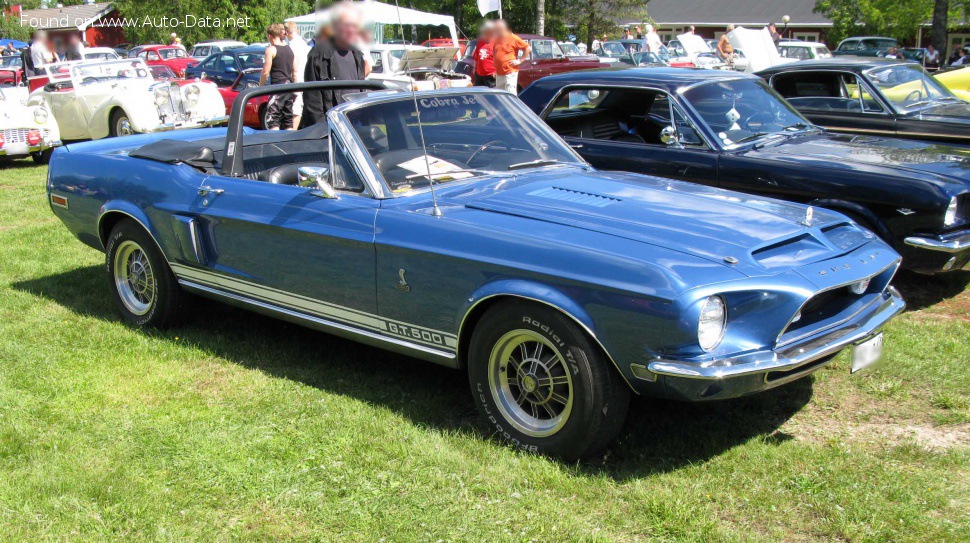
Ford Shelby I Cabrio Cobra GT 350 5.0 V8 (254 Hp) Automatic
The Ford Shelby I Cabrio Cobra GT 350 5.0 V8 (254 Hp) Automatic represents a pivotal chapter in American automotive history, embodying the raw power and distinctive style of the late 1960s muscle car era. Produced from 1968 to 1970, this iconic convertible was a high-performance variant of the Ford Mustang, reimagined and enhanced by the legendary Carroll Shelby and his team. The “Shelby I Cabrio” designation refers to its generation and convertible body style, distinguishing it as a potent open-top machine built for both exhilarating performance and cruising presence. Positioned at the apex of the pony car segment, the GT350, particularly in its Cobra guise with the robust 5.0-liter V8, offered a compelling blend of American muscle, refined handling for its time, and undeniable curb appeal. It competed fiercely with other performance convertibles of the era, cementing its place as a highly sought-after collectible and a testament to American automotive engineering.
Engine & Performance: The Heart of the Cobra GT 350
At the core of the Ford Shelby I Cabrio Cobra GT 350 5.0 V8 (254 Hp) Automatic lies a formidable 5.0-liter (4942 cm³ or 301.58 cu. in.) V8 engine, configured longitudinally at the front of the vehicle. This naturally aspirated powerhouse, fed by a robust carburetor fuel injection system, was engineered to deliver exhilarating performance characteristic of the muscle car era. With a compression ratio of 10.5:1, the engine produced a healthy 254 horsepower at 4800 rpm, translating to a power output of 51.4 horsepower per liter. More importantly for its street performance, the V8 generated a substantial 309.78 lb.-ft. (420 Nm) of torque at a relatively low 2800 rpm, ensuring potent acceleration and responsiveness from a standstill.
The engine featured an 8-cylinder V-configuration, with a cylinder bore of 4 inches (101.6 mm) and a piston stroke of 3 inches (76.2 mm), utilizing two valves per cylinder. This setup provided a broad powerband, making it both formidable on the drag strip and enjoyable for spirited road driving. Mated to a 3-speed automatic transmission, the power was efficiently transferred to the rear wheels, adhering to the classic American muscle car drivetrain architecture. This combination, while perhaps not as engaging as a manual for some purists, offered a smooth and powerful driving experience, making the GT350 accessible to a wider audience and ideal for both performance driving and comfortable cruising. The resulting weight-to-power ratio of 6 kg/Hp (166.6 Hp/tonne) and a weight-to-torque ratio of 3.6 kg/Nm (275.4 Nm/tonne) underscore its impressive performance capabilities for its time.
Design & Features: Iconic Shelby Styling
The design of the Ford Shelby I Cabrio Cobra GT 350 5.0 V8 (254 Hp) Automatic is instantly recognizable and deeply rooted in the aggressive aesthetic of late 1960s American performance cars. As a cabriolet, it offered the thrill of open-top motoring, perfectly complementing its powerful engine and sporty demeanor. The vehicle featured a classic 2-door, 4-seat configuration, blending practicality with its performance aspirations. Its exterior dimensions – a length of 186.61 inches (4740 mm), a width of 70.91 inches (1801 mm), and a height of 51.42 inches (1306 mm) – gave it a commanding road presence without being overly cumbersome. The wheelbase measured 107.99 inches (2743 mm), contributing to both stability and interior space.
Shelby’s modifications extended beyond the engine, encompassing distinctive styling cues that set it apart from standard Mustangs. These often included unique hoods with functional scoops, side scoops for brake cooling, prominent racing stripes, unique badging, and a more aggressive front fascia. While specific luxury features by modern standards were minimal, the focus was on a driver-centric experience, often including sport seats, a performance-oriented gauge cluster, and a high-quality interior finish for its class. For its era, safety features were rudimentary, primarily consisting of seatbelts and a robust chassis. The braking system utilized disc brakes at the front and drum brakes at the rear, a common setup for high-performance vehicles of the period, providing adequate stopping power for its weight of 3362.05 lbs. (1525 kg). The front and rear track measurements of 58.11 inches (1476 mm) ensured a wide stance, contributing to its handling characteristics and muscular appearance.
Technical Specifications
| Category | Specification |
|---|---|
| Brand | Ford |
| Model | Shelby |
| Generation | Shelby I Cabrio |
| Type (Engine) | Cobra GT 350 5.0 V8 (254 Hp) Automatic |
| Start of Production | 1968 year |
| End of Production | 1970 year |
| Powertrain Architecture | Internal Combustion engine |
| Body Type | Cabriolet |
| Seats | 4 |
| Doors | 2 |
| Performance Specs | |
| Fuel Type | Petrol (Gasoline) |
| Weight-to-Power Ratio | 6 kg/Hp, 166.6 Hp/tonne |
| Weight-to-Torque Ratio | 3.6 kg/Nm, 275.4 Nm/tonne |
| Engine Specs | |
| Power | 254 Hp @ 4800 rpm |
| Power per Liter | 51.4 Hp/l |
| Torque | 420 Nm @ 2800 rpm (309.78 lb.-ft. @ 2800 rpm) |
| Engine Layout | Front, Longitudinal |
| Engine Displacement | 4942 cm³ (4.9 Liters / 301.58 cu. in.) |
| Number of Cylinders | 8 |
| Engine Configuration | V-engine |
| Cylinder Bore | 101.6 mm (4 in.) |
| Piston Stroke | 76.2 mm (3 in.) |
| Compression Ratio | 10.5:1 |
| Number of Valves per Cylinder | 2 |
| Fuel Injection System | Carburetor |
| Engine Aspiration | Naturally aspirated engine |
| Space, Volume and Weights | |
| Kerb Weight | 1525 kg (3362.05 lbs.) |
| Fuel Tank Capacity | 64 l (16.91 US gal) |
| Dimensions | |
| Length | 4740 mm (186.61 in.) |
| Width | 1801 mm (70.91 in.) |
| Height | 1306 mm (51.42 in.) |
| Wheelbase | 2743 mm (107.99 in.) |
| Front Track | 1476 mm (58.11 in.) |
| Rear (Back) Track | 1476 mm (58.11 in.) |
| Minimum Turning Circle | 11.6 m (38.06 ft.) |
| Drivetrain, Brakes and Suspension Specs | |
| Drivetrain Architecture | The Internal combustion engine (ICE) drives the rear wheels of the vehicle. |
| Drive Wheel | Rear wheel drive |
| Number of Gears and Type of Gearbox | 3 gears, automatic transmission |
| Front Brakes | Disc |
| Rear Brakes | Drum |
Legacy & Market Impact
The Ford Shelby I Cabrio Cobra GT 350 5.0 V8 (254 Hp) Automatic holds a formidable legacy in the annals of American automotive history. It represents the pinnacle of the collaboration between Ford and Carroll Shelby, a partnership that yielded some of the most iconic and desirable performance cars of the 1960s. The GT350 series, particularly the convertible variants like this Cobra, played a crucial role in establishing the Mustang’s image as more than just a stylish pony car; it cemented its status as a serious performance machine capable of challenging more expensive sports cars.
In its primary market, the United States, the Shelby GT350 competed directly with other high-performance offerings from the “Big Three” automakers. Its rivals included the Chevrolet Camaro Z/28 and SS, the Pontiac Firebird Trans Am, and the Plymouth Barracuda Cuda, all vying for supremacy in the burgeoning muscle car segment. What set the Shelby apart was its unique blend of Mustang affordability with Shelby’s race-bred engineering and distinctive aesthetic. While the automatic transmission in this specific model might have been seen as a slight departure from the pure racing ethos of earlier Shelbys, it broadened its appeal, offering a more comfortable and accessible high-performance driving experience without sacrificing the essential thrill of a powerful V8.
Today, the 1968-1970 Shelby GT350 convertibles are highly prized by collectors and enthusiasts worldwide. Their limited production numbers, association with Carroll Shelby, and undeniable classic muscle car appeal contribute to their significant market value. They are celebrated for their distinctive styling, the visceral experience of their carbureted V8 engines, and their representation of a golden age of American automotive innovation. The Cobra GT 350 convertible’s historical significance lies not only in its performance figures but also in its cultural impact, symbolizing freedom, power, and the enduring spirit of American ingenuity. It remains a powerful reminder of a time when raw horsepower and bold design ruled the road, continuing to inspire new generations of automotive enthusiasts.
