
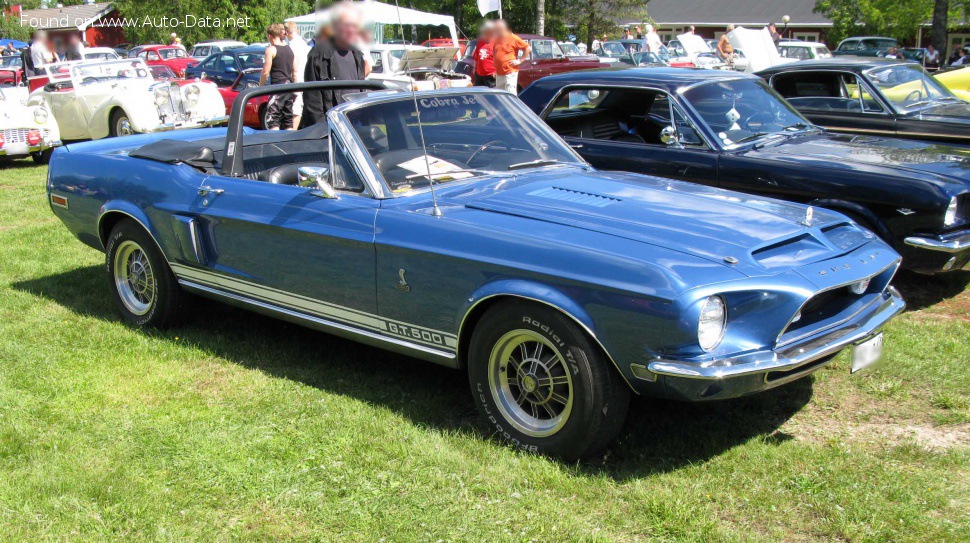
The Iconic Ford Shelby I Cabrio Cobra GT 350 5.0 V8 (340 Hp) Automatic: A Timeless American Muscle Car
The late 1960s represented a golden age for American performance vehicles, an era defined by raw power, distinctive styling, and the thrill of open-road driving. Among the most revered machines of this period was the Ford Shelby GT 350, a name synonymous with high-performance Mustangs meticulously enhanced by the legendary Carroll Shelby. The specific variant, the Ford Shelby I Cabrio Cobra GT 350 5.0 V8 (340 Hp) Automatic, produced between 1968 and 1970, stands as a particularly desirable and historically significant model. This generation, known as the Shelby I Cabrio, took the already potent Mustang platform and elevated it to an art form of American muscle, combining formidable power with the exhilarating experience of a convertible, making it a true icon of automotive heritage.
Built upon the second revision of the first-generation Mustang, the Shelby GT 350 Cabrio offered a unique blend of track-ready performance and boulevard cruising appeal. While the GT 350 was initially conceived as a race-bred machine, later iterations, particularly the convertibles, embraced a more grand touring persona, without sacrificing the Shelby DNA for power and aggressive aesthetics. This particular model, equipped with a robust 5.0-liter V8 engine and an automatic transmission, represented a pinnacle of its class, embodying the spirit of American ingenuity and a relentless pursuit of speed and style. Its role in the US market was clear: to dominate both the drag strip and the open highway, offering an unmatched driving experience for those who craved performance with a touch of open-air freedom.
Engine and Performance: A Supercharged Legend
At the heart of the Ford Shelby I Cabrio Cobra GT 350 5.0 V8 (340 Hp) Automatic was its formidable powertrain, a testament to American engineering prowess. The vehicle was propelled by a front-mounted, longitudinal 5.0-liter (4942 cm³ or 301.58 cu. in.) V8 engine, a configuration synonymous with muscle cars of the era. What truly set this engine apart was its supercharger, an enhancement that significantly boosted its output. This mechanical forced induction system compressed the air entering the engine, allowing for a denser air-fuel mixture and, consequently, a substantial increase in power. The fuel delivery system relied on a carburetor, a common technology of the period, which precisely mixed air and gasoline before combustion, feeding the eight cylinders, each equipped with two valves.
This meticulously tuned V8 generated an impressive 340 horsepower at 5200 revolutions per minute (rpm), translating to a power-per-liter output of 68.8 hp/l, a respectable figure for its time. More importantly for real-world driving, the engine delivered a colossal 324.53 lb.-ft. (440 Nm) of torque at a relatively low 3200 rpm. This abundant torque, available early in the rev range, ensured exhilarating acceleration and potent pulling power, a hallmark of American V8s. The engine’s architecture featured a bore of 4 inches (101.6 mm) and a piston stroke of 3 inches (76.2 mm), with a compression ratio of 10.5:1, balancing performance with durability.
Power was delivered to the rear wheels via a 3-speed automatic transmission. While some purists might prefer a manual gearbox for ultimate control, the automatic transmission in this Shelby GT 350 Cabrio offered a smoother, more relaxed driving experience, making it an excellent choice for cruising or spirited driving without the constant need for gear changes. This drivetrain architecture, with the internal combustion engine driving the rear wheels, was the quintessential setup for a performance car of its era, providing a direct and engaging connection between the driver and the road. With a curb weight of 3428.19 lbs. (1555 kg), the car boasted a favorable weight-to-power ratio of 4.6 kg/Hp (218.6 Hp/tonne) and a weight-to-torque ratio of 3.5 kg/Nm (283 Nm/tonne), indicating its strong acceleration capabilities for a convertible of its size.
Design and Features: Open-Air American Muscle
The design of the Ford Shelby I Cabrio Cobra GT 350 5.0 V8 (340 Hp) Automatic was a masterclass in aggressive yet elegant American automotive styling. As a cabriolet, it offered the unparalleled experience of open-air motoring, allowing occupants to fully immerse themselves in the sounds and sensations of its powerful V8 engine. The body type featured two doors and seating for four, making it a practical, albeit high-performance, option for a convertible. Its dimensions were substantial, measuring 186.61 inches (4740 mm) in length, 70.91 inches (1801 mm) in width, and 51.42 inches (1306 mm) in height, giving it a commanding presence on the road. The wheelbase stretched 107.99 inches (2743 mm), contributing to both ride comfort and stability.
Shelby’s influence on the Mustang’s design was evident throughout the GT 350. Distinctive Shelby styling cues included unique fiberglass body panels, a functional hood scoop for improved engine breathing, and side scoops that could be for brake cooling or cabin ventilation, depending on the specific model year and configuration. The iconic Cobra emblems further distinguished it from a standard Mustang, signaling its performance pedigree. The convertible top, when retracted, transformed the car into a stylish cruiser, perfect for sunny days and boulevard runs. When raised, it offered protection from the elements, albeit with the inherent fabric top characteristics of the era.
The chassis and suspension were also upgraded to handle the increased power. While specific details on the suspension setup are not provided in the data, it’s understood that Shelby models typically featured stiffer springs, larger anti-roll bars, and more aggressive shock absorbers compared to their stock Mustang counterparts, enhancing handling and road holding. Braking performance was handled by disc brakes at the front, offering superior stopping power and fade resistance, a crucial safety feature for a high-performance vehicle. The rear utilized drum brakes, a common setup for the time. The car’s turning circle of 38.06 feet (11.6 m) indicated a reasonable maneuverability for its size. The fuel tank capacity of 16.91 US gallons (64 liters) provided a decent range for extended drives, aligning with its grand touring capabilities.
Technical Specifications
| Category | Specification |
|---|---|
| Brand | Ford |
| Model | Shelby |
| Generation | Shelby I Cabrio |
| Type (Engine) | Cobra GT 350 5.0 V8 (340 Hp) Automatic |
| Start of Production | 1968 year |
| End of Production | 1970 year |
| Powertrain Architecture | Internal Combustion engine |
| Body type | Cabriolet |
| Seats | 4 |
| Doors | 2 |
| Performance Specs | |
| Fuel Type | Petrol (Gasoline) |
| Weight-to-power ratio | 4.6 kg/Hp (218.6 Hp/tonne) |
| Weight-to-torque ratio | 3.5 kg/Nm (283 Nm/tonne) |
| Engine Specs | |
| Power | 340 Hp @ 5200 rpm. |
| Power per liter | 68.8 Hp/l |
| Torque | 440 Nm @ 3200 rpm (324.53 lb.-ft. @ 3200 rpm) |
| Engine layout | Front, Longitudinal |
| Engine displacement | 4942 cm³ (301.58 cu. in.) |
| Number of cylinders | 8 |
| Engine configuration | V-engine |
| Cylinder Bore | 101.6 mm (4 in.) |
| Piston Stroke | 76.2 mm (3 in.) |
| Compression ratio | 10.5:1 |
| Number of valves per cylinder | 2 |
| Fuel injection system | Carburetor |
| Engine aspiration | Supercharger |
| Space, Volume and Weights | |
| Kerb Weight | 1555 kg (3428.19 lbs.) |
| Fuel tank capacity | 64 l (16.91 US gal) |
| Dimensions | |
| Length | 4740 mm (186.61 in.) |
| Width | 1801 mm (70.91 in.) |
| Height | 1306 mm (51.42 in.) |
| Wheelbase | 2743 mm (107.99 in.) |
| Front track | 1476 mm (58.11 in.) |
| Rear (Back) track | 1476 mm (58.11 in.) |
| Minimum turning circle (turning diameter) | 11.6 m (38.06 ft.) |
| Drivetrain, brakes and suspension specs | |
| Drivetrain Architecture | The Internal combustion engine (ICE) drives the rear wheels of the vehicle. |
| Drive wheel | Rear wheel drive |
| Number of gears and type of gearbox | 3 gears, automatic transmission |
| Front brakes | Disc |
| Rear brakes | Drum |
Legacy and Market Impact: Enduring American Icon
The Ford Shelby I Cabrio Cobra GT 350 5.0 V8 (340 Hp) Automatic, along with its coupe siblings, carved out an indelible niche in automotive history. Its production run from 1968 to 1970 marked a period when the American muscle car was at its zenith, and the Shelby name represented the pinnacle of performance and exclusivity within this vibrant segment. In its primary market, the United States, the Shelby GT 350 Cabrio was more than just a car; it was a statement. It competed fiercely with other high-performance convertibles of the era, such as the Chevrolet Camaro SS Convertible, the Pontiac Firebird 400 Convertible, and the Plymouth Barracuda Formula S Convertible. However, the Shelby GT 350 held a unique allure due to its direct lineage to Carroll Shelby’s racing heritage and its limited production numbers, which always implied a level of craftsmanship and performance beyond standard factory offerings.
The reputation of the Shelby GT 350 was built on a foundation of raw power, aggressive styling, and a thrilling driving experience. While some critics of the era might have pointed to its relatively heavy curb weight or the simplicity of its 3-speed automatic transmission compared to more advanced European sports cars, its target audience valued its brute force, iconic V8 rumble, and unmistakable American charisma. The supercharged 5.0-liter V8 engine provided an intoxicating blend of speed and sound, making every drive an event. The convertible body style further amplified this experience, connecting occupants directly to the roar of the engine and the rush of the wind.
Today, the Ford Shelby I Cabrio Cobra GT 350 5.0 V8 (340 Hp) Automatic is a highly sought-after classic car, commanding significant prices in the collector’s market. Its historical significance lies in its embodiment of the muscle car era’s spirit and its representation of the successful collaboration between Ford and Carroll Shelby to create a truly iconic performance vehicle. It showcased how a production car could be transformed into a street-legal race machine, blurring the lines between track and road. The enduring legacy of this model is not just in its performance figures, but in its cultural impact—it remains a symbol of American automotive prowess, a dream car for generations, and a testament to an era when cars were built with passion, power, and an unmistakable sense of freedom. Its appeal continues to grow, solidifying its status as an undisputed legend in the pantheon of classic American automobiles.
