The Legendary Ford Shelby I Cobra GT 500KR 7.0 V8 (406 Hp) Automatic
The late 1960s represented a golden age for American muscle cars, a period defined by raw power, audacious styling, and an unrelenting pursuit of speed. Among the pantheon of these automotive titans, few names resonate with as much reverence as Shelby. The Ford Shelby I Cobra GT 500KR 7.0 V8 (406 Hp) Automatic, produced between 1968 and 1970, stands as a crowning achievement of this era. Born from the collaboration between Ford and the legendary Carroll Shelby, the GT500KR, or “King of the Road,” was designed to be the ultimate expression of the Mustang’s performance potential, offering unparalleled power and presence in its segment. It represented the pinnacle of Shelby’s work with the first-generation Mustang, blending track-derived performance with street-legal aggression.
Positioned at the very top of Ford’s performance hierarchy, the GT500KR was more than just a trim level; it was a statement. It competed fiercely in the burgeoning muscle car market, appealing to enthusiasts who demanded not only blistering straight-line speed but also a car with an undeniable pedigree. Its limited production run and distinctive features have cemented its status as one of the most desirable and iconic American performance cars ever built, a true embodiment of the spirit of the 1960s automotive culture.
Unleashing the Beast: Engine and Performance of the Ford Shelby I Cobra GT 500KR 7.0 V8 (406 Hp) Automatic
At the heart of the Ford Shelby I Cobra GT 500KR 7.0 V8 (406 Hp) Automatic lay one of the most formidable engines of its time: Ford’s mighty 428 cubic inch (7.0-liter) Cobra Jet V8. This powerhouse was specifically developed to dominate drag strips and provide overwhelming power on the street. While officially rated at 406 horsepower at 5600 rpm, it was widely believed that the true output was significantly higher, a common practice during the muscle car era to appease insurance companies. The engine’s robust nature was further highlighted by its impressive torque figure of 460.24 lb.-ft. at a relatively low 3200 rpm, providing instantaneous and immense pulling power from virtually any engine speed.
The Cobra Jet engine featured an aggressive 11.6:1 compression ratio and was fed by a single four-barrel carburetor, ensuring an abundant supply of fuel and air to its eight cylinders. Each cylinder benefited from four valves, optimizing airflow for both intake and exhaust, a sophisticated setup for a production V8 of that period. The engine’s layout was a classic front, longitudinal configuration, driving the rear wheels, which was the quintessential setup for a high-performance American car. This naturally aspirated unit delivered its power with a ferocious roar, a symphony that became synonymous with American muscle.
Mated to this potent V8 was a robust 3-speed automatic transmission. While some purists might argue for a manual gearbox in a car of this caliber, the automatic offered a blend of convenience and brutal efficiency, allowing the driver to focus solely on managing the immense power output. This setup made the GT500KR incredibly quick off the line and remarkably tractable in various driving conditions, contributing to its “King of the Road” moniker by making its power accessible to a wider range of drivers. The car’s weight-to-power ratio of 4 kg/Hp (252.5 Hp/tonne) and a weight-to-torque ratio of 2.6 kg/Nm (388.1 Nm/tonne) underscore its phenomenal performance capabilities, demonstrating just how effectively its 3545.03 lbs. (1608 kg) curb weight was propelled by its gargantuan engine.
Design and Features: The Formidable Presence of the Shelby GT500KR
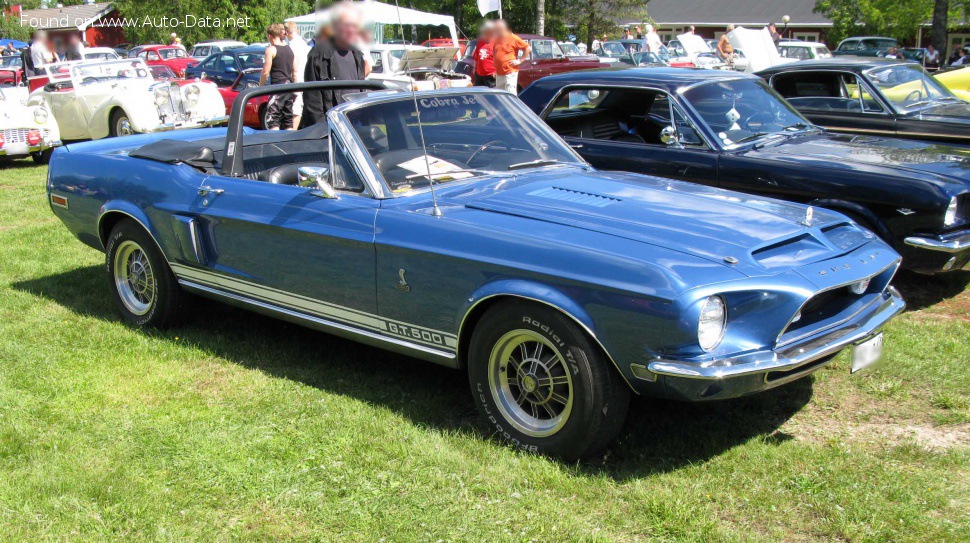
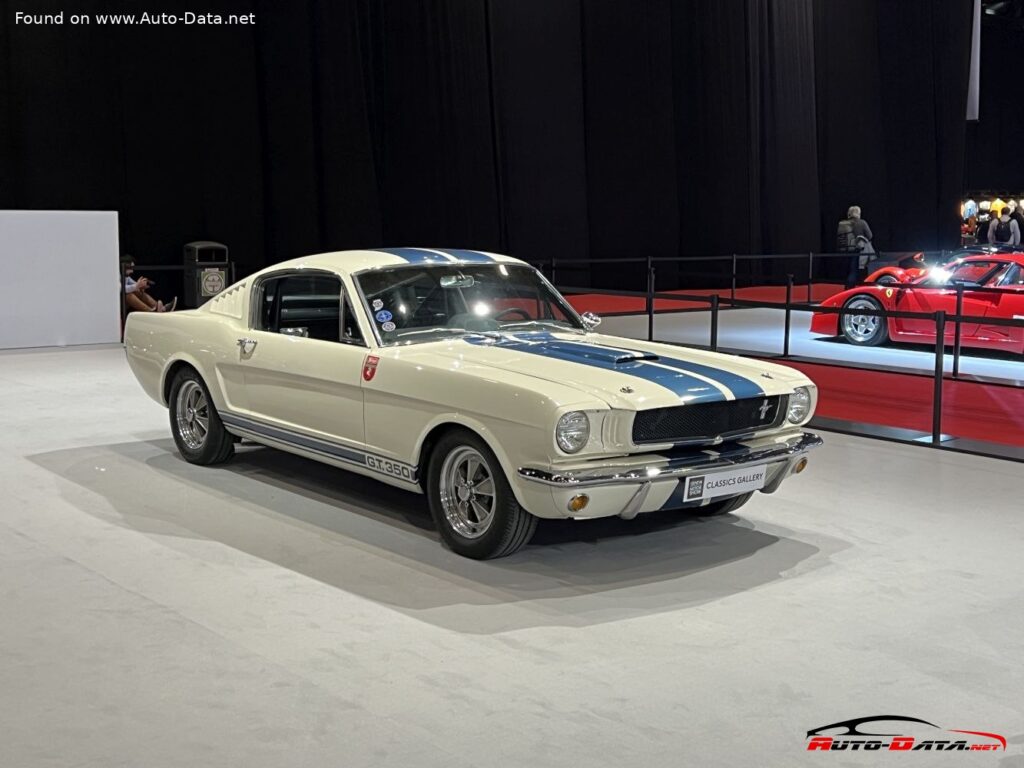
The Ford Shelby I Cobra GT 500KR 7.0 V8 (406 Hp) Automatic was not just about brute force; it was also a masterclass in aggressive, purposeful design. Built on the iconic fastback Mustang body, the GT500KR received a series of distinctive Shelby modifications that amplified its performance intent. As a classic 2-door coupe with seating for four, it retained the Mustang’s fundamental appeal while injecting a heavy dose of Shelby’s racing DNA.
Its exterior dimensions, measuring 186.61 inches (4740 mm) in length and 70.91 inches (1801 mm) in width, gave it a commanding road presence. The wheelbase of 107.99 inches (2743 mm) provided a stable platform for its high-speed endeavors. A key visual identifier was its unique fiberglass hood with functional scoops, designed to feed cold air to the carburetor and extract hot air from the engine bay. Other Shelby-specific styling cues included prominent side scoops, unique badging, and often, racing stripes that further accentuated its performance pedigree. The drag coefficient of 0.47, while not optimized for modern aerodynamics, was typical for the era and reflected the car’s blunt, powerful aesthetic.
Inside, the GT500KR featured a driver-centric cockpit, albeit with the relative simplicity characteristic of 1960s American cars. While not luxurious by modern standards, it offered comfortable bucket seats, a comprehensive gauge cluster to monitor the engine’s vitals, and a functional layout. Safety features, while rudimentary compared to today’s vehicles, included lap belts and a robust chassis. From a braking standpoint, the GT500KR came equipped with disc brakes at the front and drum brakes at the rear, a significant upgrade for the time, providing improved stopping power necessary to rein in its immense horsepower. The suspension was tuned by Shelby to handle the increased power and provide better handling dynamics, making it more capable on twisty roads than its standard Mustang counterparts, though its true forte remained the straight line.
Technical Specifications
| Category | Specification |
|---|---|
| General Information | |
| Brand | Ford |
| Model | Shelby I |
| Type (Engine) | Cobra GT 500KR 7.0 V8 (406 Hp) Automatic |
| Production Start | 1968 year |
| Production End | 1970 year |
| Powertrain Architecture | Internal Combustion engine |
| Body Type | Coupe |
| Seats | 4 |
| Doors | 2 |
| Performance Specs | |
| Fuel Type | Petrol (Gasoline) |
| Weight-to-power ratio | 4 kg/Hp, 252.5 Hp/tonne |
| Weight-to-torque ratio | 2.6 kg/Nm, 388.1 Nm/tonne |
| Engine Specs | |
| Power | 406 Hp @ 5600 rpm |
| Power per liter | 58 Hp/l |
| Torque | 624 Nm @ 3200 rpm (460.24 lb.-ft. @ 3200 rpm) |
| Engine Layout | Front, Longitudinal |
| Engine Displacement | 6997 cm3 (426.98 cu. in. / 7.0 L) |
| Number of Cylinders | 8 |
| Engine Configuration | V-engine |
| Cylinder Bore | 104.9 mm (4.13 in.) |
| Piston Stroke | 101.19 mm (3.98 in.) |
| Compression Ratio | 11.6:1 |
| Valves per Cylinder | 4 |
| Fuel Injection System | Carburetor |
| Engine Aspiration | Naturally aspirated |
| Space, Volume and Weights | |
| Kerb Weight | 1608 kg (3545.03 lbs.) |
| Fuel Tank Capacity | 64 l (16.91 US gal) |
| Dimensions | |
| Length | 4740 mm (186.61 in.) |
| Width | 1801 mm (70.91 in.) |
| Width with mirrors folded | 1306 mm (51.42 in.) |
| Wheelbase | 2743 mm (107.99 in.) |
| Front Track | 1476 mm (58.11 in.) |
| Rear (Back) Track | 1476 mm (58.11 in.) |
| Drag Coefficient (Cd) | 0.47 |
| Minimum Turning Circle | 11.6 m (38.06 ft.) |
| Drivetrain, Brakes and Suspension | |
| Drivetrain Architecture | Internal combustion engine (ICE) drives the rear wheels. |
| Drive Wheel | Rear wheel drive |
| Number of Gears / Gearbox Type | 3 gears, automatic transmission |
| Front Brakes | Disc |
| Rear Brakes | Drum |
Legacy and Market Impact
The Ford Shelby I Cobra GT 500KR 7.0 V8 (406 Hp) Automatic holds an indelible place in automotive history, symbolizing the zenith of the classic American muscle car era. Its “King of the Road” moniker was not mere marketing bravado; it genuinely represented one of the most powerful and desirable street machines available at the time. The KR’s reputation was built on its explosive performance, distinctive styling, and the legendary name of Carroll Shelby, whose touch transformed an already capable Mustang into an automotive icon.
In its primary market, the United States, the GT500KR faced stiff competition from other high-performance offerings, including the Chevrolet Camaro Z/28 and SS, Pontiac GTO, Plymouth Barracuda, and Dodge Charger R/T. Each competitor had its own loyal following, but the Shelby GT500KR distinguished itself with its unique blend of Ford’s robust engineering and Shelby’s racing expertise. It was often seen as a more refined, albeit still brutally powerful, option compared to some of its more raw rivals. The limited production numbers, particularly for the KR variant, also contributed to its exclusivity and desirability from day one.
Beyond its initial sales success, the GT500KR’s historical significance has only grown over time. It is widely considered one of the most collectible muscle cars, commanding premium prices at auctions and among enthusiasts. Its impact extends beyond mere monetary value; it has inspired countless replicas, modern interpretations, and remains a benchmark for American performance. The GT500KR is frequently featured in films, television shows, and video games, cementing its status in popular culture as the quintessential American muscle machine. Its legacy continues to influence Ford’s performance division, with modern Shelby Mustang models often paying homage to the original “King of the Road” through their power, design, and aggressive spirit. The 1968-1970 Shelby GT500KR is more than just a car; it’s a piece of American history, a testament to an era when horsepower reigned supreme and automotive passion knew no bounds.