The Legendary Ford Shelby I GT 350 4.7 V8 (310 Hp) Automatic: A Classic American Icon
The Ford Shelby I GT 350 4.7 V8 (310 Hp) Automatic represents a quintessential chapter in American automotive history, embodying the raw power and rebellious spirit of the 1960s muscle car era.
Produced from 1966 to 1970, this specific iteration of the Shelby GT350 was a high-performance variant of the immensely popular Ford Mustang, meticulously engineered by the legendary Carroll Shelby and his team at Shelby American.
Positioned as a track-ready street car, the GT350 was designed to dominate both on the road and on the racetrack, transforming the already successful Mustang into a formidable performance machine.
This generation, often referred to as the “Shelby I,” laid the groundwork for the enduring legacy of Shelby-tuned Fords, marrying Ford’s robust chassis with Shelby’s racing prowess.
The GT350, particularly with its potent 4.7-liter V8 engine and automatic transmission, offered a thrilling driving experience that cemented its status as an iconic American classic.
Engine and Performance: The Heart of the Ford Shelby I GT 350
At the core of the Ford Shelby I GT 350 4.7 V8 (310 Hp) Automatic was a heavily modified version of Ford’s 289 cubic inch (4.7-liter) “Hi-Po” K-code V8 engine.
Shelby American took this already capable powerplant and elevated its output to an impressive 310 horsepower at 6000 rpm, a significant increase over the standard Mustang’s offerings.
This power was complemented by a robust 328.95 lb.-ft. of torque, peaking at 4200 rpm, ensuring strong acceleration and responsive throttle input across a wide rev range.
The engine’s configuration was a classic front, longitudinal V-engine with eight cylinders, each featuring four valves per cylinder.
Fuel delivery was handled by a traditional carburetor system, a hallmark of performance engines from that era, and the engine remained naturally aspirated, relying on atmospheric pressure for air intake.
Despite its raw power, the GT350 was engineered for more than just straight-line speed.
Its performance metrics were impressive for the time, boasting a weight-to-power ratio of approximately 9.17 pounds per horsepower (2843.96 lbs / 310 Hp), which contributed to its agile feel and spirited acceleration.
The powertrain architecture channeled power directly to the rear wheels, a classic setup for performance vehicles, providing a pure and engaging driving dynamic.
This particular model featured a 3-speed automatic transmission, offering a balance of convenience for street driving and quick shifts for more spirited excursions, a popular choice for many enthusiasts who appreciated the raw power without the constant clutch work of a manual.
This combination of a potent V8 and a well-matched automatic gearbox made the Shelby GT350 a formidable contender in the burgeoning muscle car market.
Design and Features: Form Meets Function in the Ford Shelby I GT 350
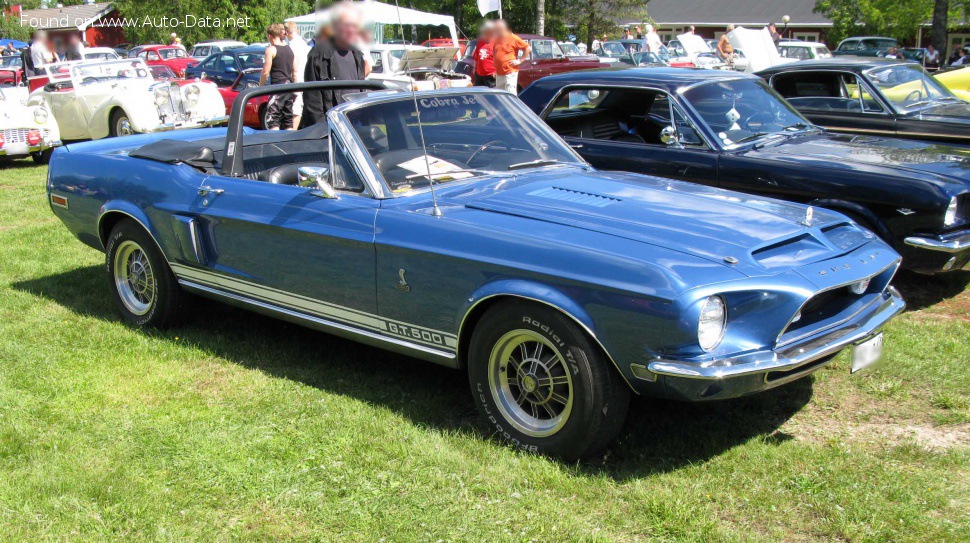
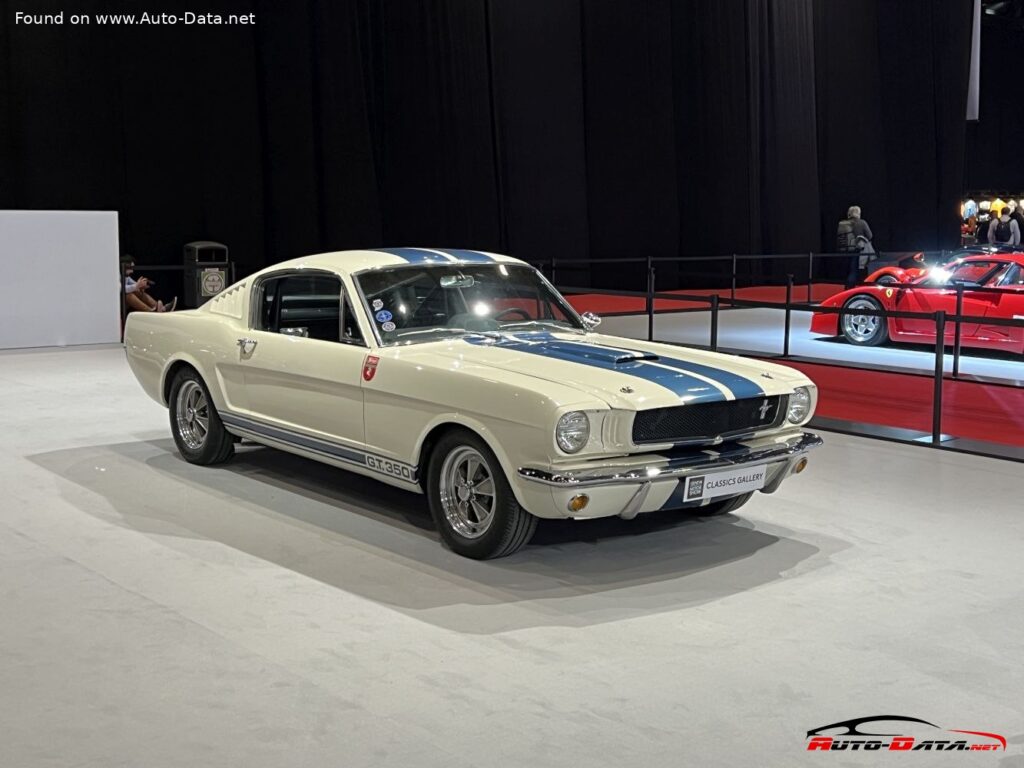
The Ford Shelby I GT 350 was instantly recognizable, building upon the already iconic fastback styling of the first-generation Ford Mustang.
However, Shelby American introduced a series of functional and aesthetic modifications that distinguished it from its lesser siblings.
The body type remained a sleek 2-door coupe, designed to accommodate four occupants, albeit with a clear focus on the driver and front passenger experience.
Visually, the GT350 often featured distinctive racing stripes, a functional hood scoop for improved engine cooling and airflow, and unique badging that proudly proclaimed its Shelby lineage.
These design cues were not merely cosmetic; they served to enhance the car’s aerodynamic profile and cooling capabilities, reflecting its racing pedigree.
Beyond the visual enhancements, Shelby made significant improvements to the car’s underpinnings.
The suspension was recalibrated for sharper handling, featuring revised spring rates, larger anti-roll bars, and adjustable Koni shock absorbers to provide a more controlled and aggressive ride.
Braking performance was also upgraded, with disc brakes fitted on both the front and rear axles, a significant improvement for the era and crucial for managing the car’s increased power.
The GT350’s dimensions, measuring 181.61 inches in length, 68.19 inches in width, and 51.18 inches in height, gave it a compact yet muscular stance.
Its wheelbase of 107.99 inches contributed to its nimble handling, while the 0.47 drag coefficient, though not ultra-low by modern standards, was competitive for a performance car of the 1960s.
The interior, while retaining much of the Mustang’s layout, often included special Shelby-branded gauges, a wood-rimmed steering wheel, and racing-style seatbelts, all reinforcing its performance-oriented character.
Technical Specifications: Ford Shelby I GT 350 4.7 V8 (310 Hp) Automatic
| Category | Specification |
|---|---|
| Brand | Ford |
| Model | Shelby I GT 350 4.7 V8 (310 Hp) Automatic |
| Generation | Shelby I |
| Production Start | 1966 |
| Production End | 1970 |
| Powertrain Architecture | Internal Combustion Engine |
| Body Type | Coupe |
| Seats | 4 |
| Doors | 2 |
| Performance Specs | |
| Fuel Type | Petrol (Gasoline) |
| Weight-to-Power Ratio | 9.17 lbs/Hp (4.2 kg/Hp) |
| Engine Specs | |
| Power | 310 Hp @ 6000 rpm |
| Power per Liter | 65.6 Hp/l |
| Torque | 328.95 lb.-ft. @ 4200 rpm (446 Nm) |
| Engine Layout | Front, Longitudinal |
| Engine Displacement | 4.7 Liters (288.46 cu. in. / 4727 cm3) |
| Number of Cylinders | 8 |
| Engine Configuration | V-engine |
| Cylinder Bore | 4 in. (101.6 mm) |
| Piston Stroke | 2.87 in. (72.89 mm) |
| Compression Ratio | 10.5:1 |
| Number of Valves per Cylinder | 4 |
| Fuel Injection System | Carburetor |
| Engine Aspiration | Naturally Aspirated |
| Space, Volume, and Weights | |
| Kerb Weight | 2843.96 lbs (1290 kg) |
| Fuel Tank Capacity | 16.11 US gal (61 l) |
| Dimensions | |
| Length | 181.61 in. (4613 mm) |
| Width | 68.19 in. (1732 mm) |
| Height | 51.18 in. (1300 mm) |
| Wheelbase | 107.99 in. (2743 mm) |
| Front Track | 56.5 in. (1435 mm) |
| Rear Track | 57.01 in. (1448 mm) |
| Drag Coefficient (Cd) | 0.47 |
| Minimum Turning Circle | 38.06 ft. (11.6 m) |
| Drivetrain, Brakes, and Suspension | |
| Drivetrain Architecture | Internal Combustion Engine drives the rear wheels |
| Drive Wheel | Rear-wheel drive |
| Number of Gears/Gearbox Type | 3 gears, Automatic Transmission |
| Front Brakes | Disc |
| Rear Brakes | Disc |
Legacy and Market Impact: The Enduring Allure of the Shelby GT350
The Ford Shelby I GT 350 4.7 V8 (310 Hp) Automatic, along with its manual counterparts, carved out an indelible niche in automotive history.
It was instrumental in establishing the Ford Mustang’s performance credibility, proving that Ford’s “pony car” could compete with, and often outperform, more established sports cars.
Carroll Shelby’s magic touch transformed a mass-produced vehicle into a legitimate high-performance machine, giving birth to a new breed of American muscle cars that emphasized raw power and aggressive styling.
The GT350’s racing successes, particularly in SCCA (Sports Car Club of America) Trans-Am racing, further cemented its reputation as a serious performance contender.
In its primary market, the United States, the Shelby GT350 faced stiff competition from a growing stable of muscle cars.
Rivals included the Chevrolet Camaro Z/28, Pontiac GTO, Plymouth Barracuda, and Dodge Challenger, all vying for supremacy in the hearts and garages of performance enthusiasts.
However, the GT350 stood out with its unique blend of Mustang familiarity and Shelby’s bespoke engineering.
Its reputation for exhilarating performance, distinctive styling, and limited production numbers made it highly desirable from its inception.
Today, the Ford Shelby I GT 350 is a highly sought-after collector’s item, commanding significant prices at auction and among enthusiasts.
Its historical significance lies not only in its performance figures but also in its cultural impact.
It represents an era of automotive freedom and innovation, a time when horsepower was king and driving was an visceral experience.
The GT350’s legacy continues to influence modern performance vehicles, with subsequent generations of Mustangs and Shelby models paying homage to this foundational icon.
It remains a testament to Carroll Shelby’s vision and Ford’s willingness to push the boundaries of performance, solidifying its place as one of the most revered American muscle cars ever built.