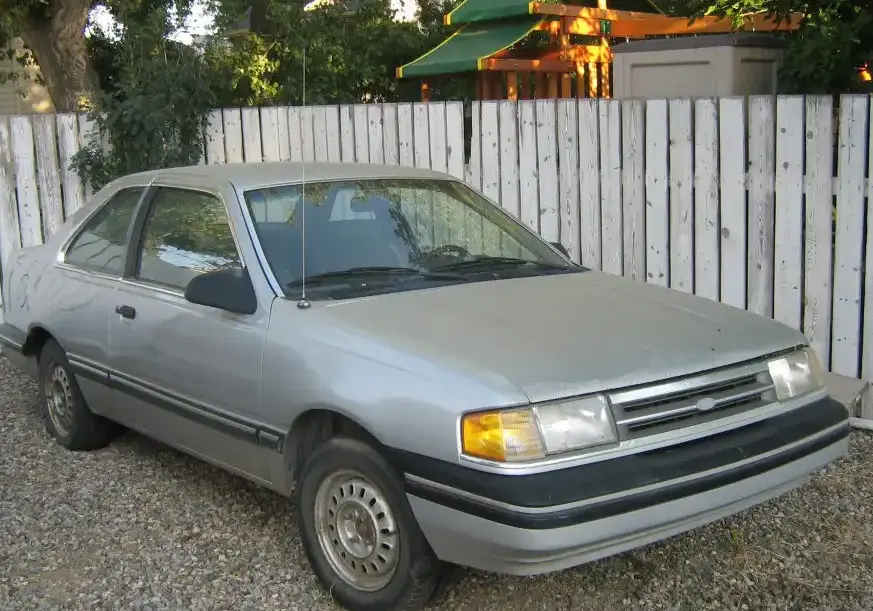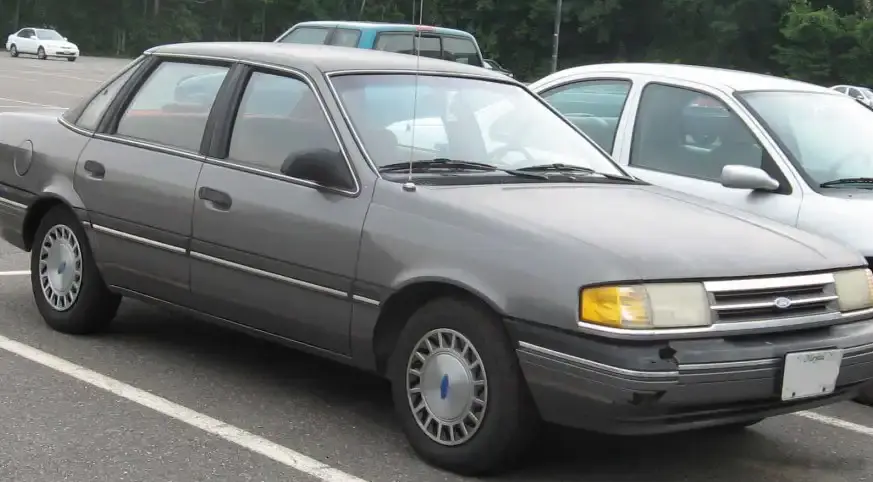
The Ford Tempo 3.0 V6, produced between 1992 and 1995, represented a significant step up in performance for the compact Ford Tempo line. Positioned as the top-tier engine option, it aimed to provide a more refined and powerful driving experience compared to the base four-cylinder models. This variant was primarily marketed towards buyers seeking a comfortable and reasonably quick sedan without the expense of larger Ford offerings like the Taurus. It was a late-life update to the Tempo, which had been introduced in 1988 as a replacement for the Ford Topaz and Mercury Topaz.
Technical Specifications
| Brand | Ford |
| Model | Tempo |
| Generation | Tempo |
| Type (Engine) | 3.0 V6 (132 Hp) |
| Start of production | 1992 |
| End of production | 1995 |
| Powertrain Architecture | Internal Combustion engine |
| Body type | Sedan |
| Seats | 5 |
| Doors | 4 |
| Fuel consumption (urban) | 15 l/100 km (15.7 US mpg, 18.8 UK mpg, 6.7 km/l) |
| Fuel consumption (extra urban) | 10 l/100 km (23.5 US mpg, 28.2 UK mpg, 10 km/l) |
| Fuel Type | Petrol (Gasoline) |
| Maximum speed | 170 km/h (105.63 mph) |
| Weight-to-power ratio | 8.9 kg/Hp, 111.9 Hp/tonne |
| Weight-to-torque ratio | 5.8 kg/Nm, 172.9 Nm/tonne |
| Power | 132 Hp @ 4800 rpm |
| Power per litre | 44.2 Hp/l |
| Torque | 204 Nm @ 3000 rpm (150.46 lb.-ft. @ 3000 rpm) |
| Engine layout | Front, Transverse |
| Engine Model/Code | Vulcan |
| Engine displacement | 2986 cm3 (182.22 cu. in.) |
| Number of cylinders | 6 |
| Engine configuration | V-engine |
| Cylinder Bore | 89 mm (3.5 in.) |
| Piston Stroke | 80 mm (3.15 in.) |
| Compression ratio | 9.3:1 |
| Number of valves per cylinder | 2 |
| Fuel injection system | Multi-port manifold injection |
| Engine aspiration | Naturally aspirated engine |
| Valvetrain | OHC |
| Engine oil capacity | 4.3 l (4.54 US qt | 3.78 UK qt) |
| Coolant | 8.5 l (8.98 US qt | 7.48 UK qt) |
| Kerb Weight | 1180 kg (2601.45 lbs.) |
| Trunk (boot) space – minimum | 365 l (12.89 cu. ft.) |
| Fuel tank capacity | 60 l (15.85 US gal | 13.2 UK gal) |
| Length | 4490 mm (176.77 in.) |
| Width | 1735 mm (68.31 in.) |
| Height | 1340 mm (52.76 in.) |
| Wheelbase | 2540 mm (100 in.) |
| Front track | 1395 mm (54.92 in.) |
| Rear (Back) track | 1460 mm (57.48 in.) |
| Drivetrain Architecture | The Internal combustion engine (ICE) drives the front wheels of the vehicle. |
| Drive wheel | Front wheel drive |
| Number of gears and type of gearbox | 5 gears, manual transmission |
| Front suspension | Coil spring |
| Rear suspension | Coil spring |
| Front brakes | Ventilated discs |
| Rear brakes | Drum |
| Assisting systems | ABS (Anti-lock braking system) |
| Steering type | Steering rack and pinion |
| Power steering | Hydraulic Steering |
| Tires size | 185/65 R15 |
Powertrain & Engine Architecture
The heart of the Tempo 3.0 V6 was Ford’s Vulcan engine, a 3.0-liter (2986 cc) naturally aspirated V6. This engine, known for its durability and relatively simple design, featured a 90-degree V-configuration with two valves per cylinder operated by an overhead camshaft (OHC). The Vulcan engine utilized multi-port fuel injection, contributing to improved fuel efficiency and smoother power delivery compared to earlier carbureted designs. The engine produced 132 horsepower at 4800 rpm and 204 Nm (150.46 lb-ft) of torque at 3000 rpm. The five-speed manual transmission was the standard pairing, offering drivers full control over the engine’s power band.
Driving Characteristics
The 3.0 V6 significantly enhanced the Tempo’s driving experience. While not a sports car, the engine provided ample power for comfortable highway cruising and confident acceleration in city traffic. The five-speed manual transmission allowed drivers to keep the engine in its optimal power range, resulting in a more engaging driving experience than the base four-cylinder models. The gear ratios were fairly conservative, prioritizing fuel economy and smooth operation over outright performance. Compared to the four-cylinder Tempos, the V6 offered a noticeable reduction in engine noise and vibration, contributing to a more refined ride. The front-wheel-drive layout provided predictable handling, although it wasn’t particularly sporty.
Equipment & Trim Levels
The 3.0 V6 Tempo typically came with a higher level of standard equipment than the base models. This included features like air conditioning, power steering, and an upgraded sound system. Interior upholstery was typically cloth, with options for upgraded materials available. Dashboard configurations were relatively simple, reflecting the Tempo’s position as an economy-focused vehicle. Optional extras included features like a sunroof, cruise control, and upgraded wheels. The trim level was generally positioned as a mid-range offering, bridging the gap between the basic four-cylinder models and more luxurious vehicles in Ford’s lineup.
Chassis & Braking
The Tempo 3.0 V6 utilized a relatively conventional chassis design. Front suspension consisted of coil springs, while the rear suspension also employed coil springs. The front brakes were ventilated discs, providing adequate stopping power, while the rear brakes were drums. An anti-lock braking system (ABS) was available, enhancing safety and control during emergency braking situations. The steering system was a rack and pinion setup with hydraulic power assistance, providing responsive and easy steering. The tires were typically 185/65 R15, offering a balance of comfort and handling.
Market Reception & Comparison
The Tempo 3.0 V6 received generally positive reviews from automotive critics. It was praised for its smooth engine, comfortable ride, and improved performance compared to the base models. However, some critics noted that the interior was somewhat basic and lacked the refinement of some competitors. Fuel economy was considered reasonable for a V6 engine of that era, averaging around 15 l/100 km in urban driving and 10 l/100 km on the highway. Compared to the four-cylinder Tempos, the V6 offered a significant performance upgrade but came at a higher price point. It also required slightly more maintenance due to the increased complexity of the V6 engine.
Legacy
The Ford Tempo 3.0 V6, while not a groundbreaking vehicle, holds a place in automotive history as a solid and reliable family sedan. The Vulcan V6 engine proved to be particularly durable, and many examples remain on the road today. In the used car market, these Tempos are often sought after by enthusiasts looking for a simple, affordable, and reliable vehicle. The 3.0 V6 variant is generally considered to be the most desirable Tempo model due to its superior performance and refinement. While not a collector’s item, it represents a well-built and practical car from a bygone era.