Technical Specifications
| Brand | Ford |
| Model | Tourneo Connect |
| Generation | Tourneo Connect I |
| Type (Engine) | 1.8 TDCi (90 Hp) |
| Start of production | 2002 |
| End of production | 2013 |
| Powertrain Architecture | Internal Combustion engine |
| Body type | Minivan |
| Seats | 5 |
| Doors | 5 |
| Fuel Type | Diesel |
| Acceleration 0 – 100 km/h | 16.3 sec |
| Acceleration 0 – 62 mph | 16.3 sec |
| Acceleration 0 – 60 mph | 15.5 sec |
| Maximum speed | 155 km/h (96.31 mph) |
| Weight-to-power ratio | 16.6 kg/Hp, 60.4 Hp/tonne |
| Weight-to-torque ratio | 6.8 kg/Nm, 147.7 Nm/tonne |
| Power | 90 Hp @ 4000 rpm |
| Power per litre | 51.3 Hp/l |
| Torque | 220 Nm @ 1700 rpm (162.26 lb.-ft. @ 1700 rpm) |
| Engine layout | Front, Transverse |
| Engine Model/Code | HCPA, HCPB, HCPC, HCPD |
| Engine displacement | 1753 cm3 (106.97 cu. in.) |
| Number of cylinders | 4 |
| Engine configuration | Inline |
| Cylinder Bore | 82.5 mm (3.25 in.) |
| Piston Stroke | 82 mm (3.23 in.) |
| Compression ratio | 18.5:1 |
| Number of valves per cylinder | 2 |
| Fuel injection system | Diesel Commonrail |
| Engine aspiration | Turbocharger, Intercooler |
| Valvetrain | OHC |
| Engine oil capacity | 5.6 l (5.92 US qt | 4.93 UK qt) |
| Coolant | 7 l (7.4 US qt | 6.16 UK qt) |
| Kerb Weight | 1490 kg (3284.89 lbs.) |
| Max. weight | 2110 kg (4651.75 lbs.) |
| Max load | 620 kg (1366.87 lbs.) |
| Fuel tank capacity | 60 l (15.85 US gal | 13.2 UK gal) |
| Length | 4278 mm (168.43 in.) |
| Width | 1795 mm (70.67 in.) |
| Height | 1814 mm (71.42 in.) |
| Wheelbase | 2664 mm (104.88 in.) |
| Front track | 1505 mm (59.25 in.) |
| Rear (Back) track | 1552 mm (61.1 in.) |
| Drivetrain Architecture | The Internal combustion engine (ICE) drives the front wheels of the vehicle. |
| Drive wheel | Front wheel drive |
| Number of gears and type of gearbox | 5 gears, manual transmission |
| Front suspension | Wishbone |
| Rear suspension | Leaf spring |
| Front brakes | Disc |
| Rear brakes | Drum |
| Steering type | Steering rack and pinion |
| Power steering | Hydraulic Steering |
| Tires size | 195/65 R15 |
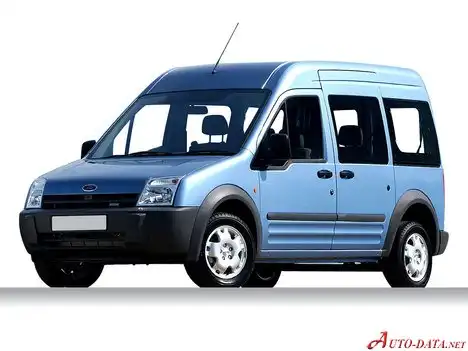
The Ford Tourneo Connect, launched in 2002, marked Ford’s entry into the compact leisure activity vehicle (LAV) segment in Europe. Based on the Ford Focus platform – specifically the C170 series – the Tourneo Connect aimed to provide a practical and affordable option for families and businesses needing a versatile vehicle. The 1.8 TDCi 90 hp variant, produced from 2002 through 2013, served as the entry-level engine option, prioritizing fuel efficiency and affordability over outright performance. It was a key model in establishing the Tourneo Connect’s presence in the European market, competing with vehicles like the Renault Kangoo and Citroën Berlingo.
Powertrain & Engine Architecture
The 1.8 TDCi engine, utilizing engine codes HCPA, HCPB, HCPC, and HCPD depending on specific market and emissions requirements, was a four-cylinder, inline diesel engine. It featured a turbocharger with an intercooler to enhance power output and efficiency. The engine employed a common rail direct injection system, delivering fuel directly into the combustion chamber at high pressure for improved combustion and reduced emissions. The overhead camshaft (OHC) valvetrain operated two valves per cylinder. This engine was known for its relatively simple design, contributing to its durability and ease of maintenance. The 90 hp version was primarily paired with a five-speed manual transmission, although a four-speed automatic transmission was also available, albeit less common. The automatic transmission was chosen for its convenience, appealing to drivers prioritizing ease of use over sporty performance. The four-speed automatic, while providing smooth shifts, lacked the responsiveness of more modern transmissions.
Driving Characteristics
The 1.8 TDCi 90 hp Tourneo Connect offered modest performance. Acceleration was leisurely, with 0-60 mph times around 15.5 seconds. The engine’s 220 Nm (162 lb-ft) of torque, available from 1700 rpm, provided adequate pulling power for everyday driving and carrying loads. The automatic transmission, while smooth, contributed to slower acceleration due to its less-aggressive shift programming compared to the manual version. The gear ratios were optimized for fuel economy rather than outright speed. Compared to the higher-output 110 hp version of the 1.8 TDCi, the 90 hp model felt noticeably slower, particularly when fully loaded. However, the lower-powered engine offered improved fuel economy and reduced stress on the drivetrain. The automatic transmission, while convenient, did diminish the overall responsiveness of the vehicle.
Equipment & Trim Levels
The 1.8 TDCi 90 hp variant typically occupied the entry-level position in the Tourneo Connect lineup. Standard equipment generally included power steering, central locking, and an adjustable steering column. Interior upholstery was typically cloth, and the dashboard featured a functional, if somewhat basic, design. Optional extras included air conditioning, electric windows, and a radio/CD player. Higher trim levels, such as the ‘Trend’ or ‘Titanium’ offered more luxurious features like alloy wheels, upgraded interior trim, and additional safety equipment. The base trim focused on providing essential functionality at an affordable price point, making it an attractive option for budget-conscious buyers.
Chassis & Braking
The Tourneo Connect utilized a front-wheel-drive layout with a MacPherson strut front suspension and a leaf spring rear suspension. The leaf spring setup, while cost-effective, provided a somewhat firmer ride compared to more sophisticated independent rear suspension systems. Braking was typically accomplished with disc brakes on the front wheels and drum brakes on the rear. Hydraulic power steering was standard. The suspension was tuned for comfort and practicality, prioritizing ride quality over sporty handling. Stabilizer bars were often included to reduce body roll during cornering, but the overall handling characteristics were geared towards everyday usability rather than performance driving. The drum brakes on the rear were a cost-saving measure common in entry-level trims.
Market Reception & Comparison
The 1.8 TDCi 90 hp Tourneo Connect was generally well-received as a practical and affordable option in the compact LAV segment. Critics praised its spacious interior, versatility, and fuel efficiency. However, the engine’s modest power output was often cited as a drawback, particularly when the vehicle was fully loaded. Compared to the 110 hp version, the 90 hp model offered better fuel economy – typically around 4.5-5.5 liters per 100 kilometers (52-63 mpg) – but at the expense of performance. The automatic transmission, while convenient, further reduced acceleration and fuel economy compared to the manual gearbox. The 1.9 TDI versions, available in some markets, offered a more powerful and refined driving experience, but at a higher price point. The 1.8 TDCi 90 hp model carved a niche for itself as the sensible, economical choice.
Legacy
The 1.8 TDCi engine, in its various iterations, proved to be a relatively reliable powertrain. While common rail diesel engines can be susceptible to issues with injectors and the high-pressure fuel pump, the 1.8 TDCi generally demonstrated good longevity with regular maintenance. In the used car market, the 1.8 TDCi 90 hp Tourneo Connect remains a popular choice for budget-conscious buyers seeking a practical and versatile vehicle. Its affordability, fuel efficiency, and relatively simple mechanical design make it an attractive option for those needing a dependable workhorse or family vehicle. However, potential buyers should be aware of the potential for age-related issues, such as wear and tear on suspension components and the possibility of needing to address common diesel engine maintenance items, like injector cleaning and turbocharger servicing. Despite its age, the Tourneo Connect 1.8 TDCi 90 hp continues to offer a compelling value proposition in the used car market.