
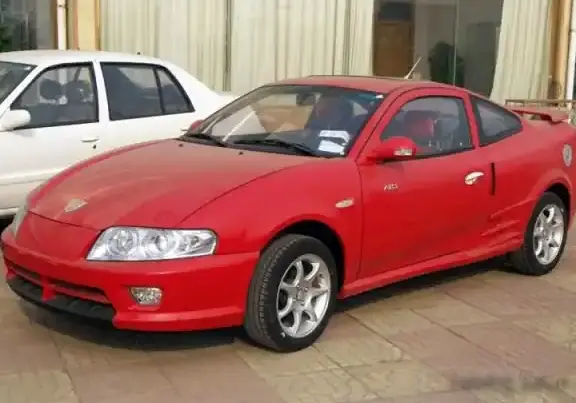
The Geely Beauty Leopard 1.3, producing 86 horsepower, was a coupe manufactured by the Chinese automaker Geely between 2003 and 2006. Positioned as an entry-level offering within the Beauty Leopard range, it represented Geely’s early ambitions in the passenger car market, aiming to provide affordable and stylish transportation. The vehicle was primarily sold within China, and to a lesser extent, in select export markets. It was Geely’s attempt to create a visually appealing and relatively modern coupe at a competitive price point, targeting younger buyers and those seeking a more fashionable alternative to traditional sedans.
Technical Specifications
| Brand | Geely |
| Model | Beauty Leopard |
| Generation | Beauty Leopard |
| Type (Engine) | 1.3 (86 Hp) |
| Start of production | 2003 |
| End of production | 2006 |
| Powertrain Architecture | Internal Combustion engine |
| Body type | Coupe |
| Maximum speed | 180 km/h (111.85 mph) |
| Weight-to-power ratio | 11.4 kg/Hp, 87.8 Hp/tonne |
| Weight-to-torque ratio | 8.9 kg/Nm, 112.2 Nm/tonne |
| Power | 86 Hp @ 6000 rpm |
| Power per litre | 64.1 Hp/l |
| Torque | 110 Nm @ 5200 rpm (81.13 lb.-ft. @ 5200 rpm) |
| Engine displacement | 1342 cm3 (81.89 cu. in.) |
| Number of cylinders | 4 |
| Number of valves per cylinder | 4 |
| Engine aspiration | Naturally aspirated engine |
| Kerb Weight | 980 kg (2160.53 lbs) |
| Length | 4110 mm (161.81 in) |
| Width | 1690 mm (66.54 in) |
| Height | 1325 mm (52.17 in) |
| Front track | 1410 mm (55.51 in) |
| Rear track | 1470 mm (57.87 in) |
| Minimum turning circle | 10.5 m (34.45 ft) |
| Drivetrain Architecture | Front wheel drive |
| Front brakes | Disc |
| Rear brakes | Drum |
| Tires size | 175/60 R14 |
| Wheel rims size | 14 |
Powertrain & Engine Architecture
The Geely Beauty Leopard 1.3 was powered by a 1.3-liter, naturally aspirated four-cylinder engine. This engine, internally designated with various codes depending on the specific production year, was a relatively simple design, utilizing a single overhead camshaft (SOHC) valvetrain with four valves per cylinder. Fuel delivery was managed by a multi-point fuel injection system, a common setup for vehicles of this era and price point. The engine’s 86 horsepower output at 6000 rpm and 110 Nm (81.13 lb-ft) of torque at 5200 rpm were modest, reflecting the car’s positioning as an affordable coupe. The engine was paired with a four-speed automatic transmission, which was the sole transmission option for this variant. This automatic transmission was chosen to appeal to buyers prioritizing ease of use over sporty driving dynamics.
Driving Characteristics
The driving experience of the Beauty Leopard 1.3 Automatic was characterized by its smooth, but unhurried, acceleration. The four-speed automatic transmission, while providing convenience, lacked the responsiveness of a manual gearbox or a more modern automatic with additional gears. Gear ratios were tuned for fuel efficiency and comfortable cruising rather than outright performance. The 0 to 60 mph time was estimated to be around 12-13 seconds. Compared to potential higher-output versions (which were never officially offered), the 1.3L engine felt noticeably underpowered, especially when fully loaded or tackling inclines. The front-wheel-drive configuration provided predictable handling, but lacked the dynamic capabilities of rear-wheel-drive or all-wheel-drive systems.
Equipment & Trim Levels
The 1.3-liter Beauty Leopard typically came with a fairly basic level of standard equipment. Interior features generally included cloth upholstery, a simple dashboard layout with analog gauges, and manual air conditioning. Power windows and central locking were often included, but features like power mirrors or a radio/CD player were sometimes optional extras. The trim level was generally considered the base trim, with limited opportunities for customization. Optional extras could include upgraded audio systems, alloy wheels (a relatively rare sight on this model), and different exterior color options. The interior plastics were of a typical quality for a budget-oriented vehicle of the time.
Chassis & Braking
The Beauty Leopard 1.3 utilized a relatively conventional chassis design. The front suspension consisted of MacPherson struts, while the rear suspension employed a torsion beam setup. This configuration was chosen for its cost-effectiveness and simplicity. The braking system featured disc brakes on the front wheels and drum brakes on the rear wheels. This combination was adequate for the car’s weight and performance, but lacked the stopping power and feel of a fully disc brake system. The 14-inch wheels were fitted with 175/60 R14 tires, providing a reasonable balance between ride comfort and handling. A stabilizer bar was included at the front to reduce body roll during cornering.
Market Reception & Comparison
The Geely Beauty Leopard 1.3 received mixed reviews from automotive critics. While praised for its attractive styling and affordable price, it was often criticized for its underpowered engine and basic interior. Compared to other vehicles in its class, such as locally produced sedans from established brands, the Beauty Leopard offered a more stylish alternative, but lacked the refinement and performance of some competitors. Fuel economy was a strong point, with the 1.3-liter engine achieving reasonable mileage for its time. Reliability was generally considered average, with some reports of minor mechanical issues. The automatic transmission, while convenient, was sometimes criticized for its sluggishness.
Legacy
The Geely Beauty Leopard 1.3, while not a groundbreaking vehicle, played a significant role in establishing Geely as a legitimate automaker in the Chinese market. It demonstrated Geely’s ability to design and manufacture a relatively modern-looking and affordable coupe. In the used car market today, the Beauty Leopard 1.3 is relatively rare and typically commands low prices. The 1.3-liter engine and four-speed automatic transmission are generally considered reliable, but maintenance can be challenging due to the limited availability of spare parts. The car is often sought after by enthusiasts looking for a unique and affordable classic Chinese automobile.
