
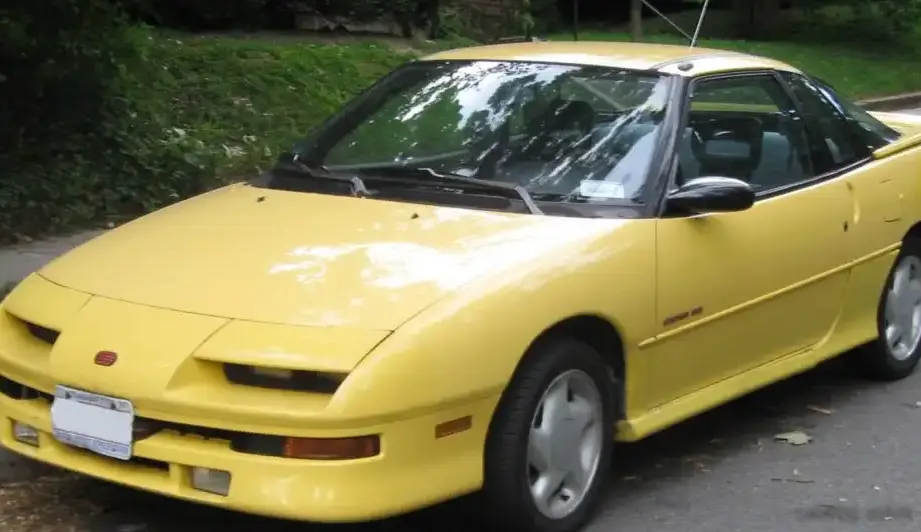
The Geo Storm 1.6i Turbo, produced between 1990 and 1993, was a compact, sporty coupe marketed by Geo – a brand created by General Motors as part of its effort to compete with Japanese imports in the North American market. Positioned as the performance variant of the Storm lineup, the 1.6i Turbo aimed to offer an affordable and engaging driving experience. It was based on the Isuzu Impulse, a result of GM’s partnership with Isuzu, and shared many of its mechanical components. The Storm, and particularly the Turbo model, represented a departure from Geo’s typically economy-focused offerings, attempting to capture a younger demographic seeking a stylish and relatively quick coupe.
Technical Specifications
| Brand | Geo |
| Model | Storm |
| Generation | Storm |
| Type (Engine) | 1.6i Turbo (130 Hp) |
| Start of production | 1990 |
| End of production | 1993 |
| Powertrain Architecture | Internal Combustion engine |
| Body type | Coupe |
| Seats | 4 |
| Doors | 2 |
| Fuel consumption (urban) | 13 l/100 km (18.1 US mpg) |
| Fuel consumption (extra urban) | 8 l/100 km (29.4 US mpg) |
| Fuel Type | Petrol (Gasoline) |
| Acceleration 0 – 100 km/h | 12.4 sec |
| Acceleration 0 – 62 mph | 12.4 sec |
| Acceleration 0 – 60 mph | 11.8 sec |
| Maximum speed | 200 km/h (124.27 mph) |
| Weight-to-power ratio | 7.8 kg/Hp |
| Power | 130 Hp |
| Power per litre | 81.9 Hp/l |
| Engine layout | Front, Transverse |
| Engine displacement | 1588 cm3 (96.91 cu. in.) |
| Number of cylinders | 4 |
| Engine configuration | Inline |
| Fuel injection system | Multi-port manifold injection |
| Engine aspiration | Turbocharger |
| Engine oil capacity | 3.8 l (4.02 US qt) |
| Coolant capacity | 7 l (7.4 US qt) |
| Kerb Weight | 1010 kg (2226.67 lbs.) |
| Trunk (boot) space – minimum | 310 l (10.95 cu. ft.) |
| Trunk (boot) space – maximum | 620 l (21.9 cu. ft.) |
| Fuel tank capacity | 47 l (12.42 US gal) |
| Length | 4150 mm (163.39 in.) |
| Width | 1695 mm (66.73 in.) |
| Height | 1300 mm (51.18 in.) |
| Wheelbase | 2450 mm (96.46 in.) |
| Front track | 1430 mm (56.3 in.) |
| Rear track | 1450 mm (57.09 in.) |
| Minimum turning circle | 11.2 m (36.75 ft.) |
| Drivetrain | Front wheel drive |
| Number of gears | 5 |
| Gearbox type | Manual transmission |
| Front suspension | Coil spring |
| Rear suspension | Coil spring |
| Front brakes | Ventilated discs |
| Rear brakes | Drum |
| Assisting systems | ABS (Anti-lock braking system) |
| Steering type | Steering rack and pinion |
| Power steering | Hydraulic |
| Tires size | 205/50 R15 |
| Wheel rims size | 15 |
Powertrain & Engine Architecture
The heart of the Geo Storm 1.6i Turbo was its 1.6-liter, inline-four cylinder engine, designated as the 4ZE1. This engine was sourced from Isuzu and featured a single overhead camshaft (SOHC) valvetrain and multi-port fuel injection. The addition of a Garrett turbocharger significantly boosted power output to 130 horsepower and 137 lb-ft of torque. The turbocharger provided a noticeable increase in performance compared to the naturally aspirated 1.6-liter engine found in the base Storm models. The engine utilized an electronic fuel injection system, contributing to improved fuel efficiency and reduced emissions. The 5-speed manual transmission was the only transmission option available with the Turbo model, designed to handle the increased power and provide a more engaging driving experience.
Driving Characteristics
The 1.6i Turbo offered a distinctly more spirited driving experience than its naturally aspirated counterparts. While not a high-performance sports car, the turbocharger provided a substantial boost in acceleration, making highway merging and overtaking maneuvers considerably easier. The 0-60 mph time of around 11.8 seconds was respectable for its time and class. The five-speed manual transmission allowed drivers to fully exploit the engine’s powerband. Turbo lag was present, typical of turbochargers of that era, but manageable. Handling was generally considered competent, with the front-wheel-drive layout providing predictable behavior. The suspension, while not particularly sophisticated, offered a reasonable balance between ride comfort and handling.
Equipment & Trim Levels
The Geo Storm 1.6i Turbo was generally well-equipped for its price point. Standard features included power steering, a rear defroster, and an AM/FM stereo. The interior featured cloth upholstery and a relatively simple dashboard layout. Optional extras included air conditioning, a sunroof, and upgraded sound systems. The Turbo model often featured unique badging and styling cues to differentiate it from the base Storm. The interior was functional and focused on providing a comfortable driving environment, rather than luxury.
Chassis & Braking
The Storm 1.6i Turbo utilized a front-wheel-drive chassis with independent coil spring suspension in the front and a coil spring rear suspension. The front brakes were ventilated discs, providing adequate stopping power, while the rear brakes were drums. An anti-lock braking system (ABS) was available as an option, enhancing safety. The chassis was relatively lightweight, contributing to the car’s nimble handling. The suspension was tuned for a balance between ride comfort and handling, leaning towards the firmer side to complement the car’s sporty aspirations.
Market Reception & Comparison
The Geo Storm 1.6i Turbo was generally well-received by automotive critics, who praised its affordability, sporty handling, and turbocharged engine. It was often compared to other compact coupes of the era, such as the Honda Civic Si and the Toyota Corolla GT-S. While the Storm Turbo offered comparable performance to some of these rivals, it often came at a lower price point. However, some critics noted the interior quality was not as refined as some of its competitors. Fuel economy was reasonable for a turbocharged vehicle, averaging around 18 mpg in the city and 29 mpg on the highway.
Legacy
The Geo Storm 1.6i Turbo, while not a long-lived model, left a lasting impression on enthusiasts seeking an affordable and engaging coupe. The 4ZE1 engine, while prone to occasional issues with the turbocharger and oil leaks, proved to be relatively durable when properly maintained. Today, the Storm Turbo is gaining recognition as a collectible car, particularly among those who appreciate its unique styling and turbocharged performance. Finding well-maintained examples can be challenging, but the Storm Turbo remains a relatively affordable entry point into the world of turbocharged sports coupes. Its legacy lies in offering a fun-to-drive experience at a budget-friendly price, a characteristic that continues to appeal to enthusiasts today.
