
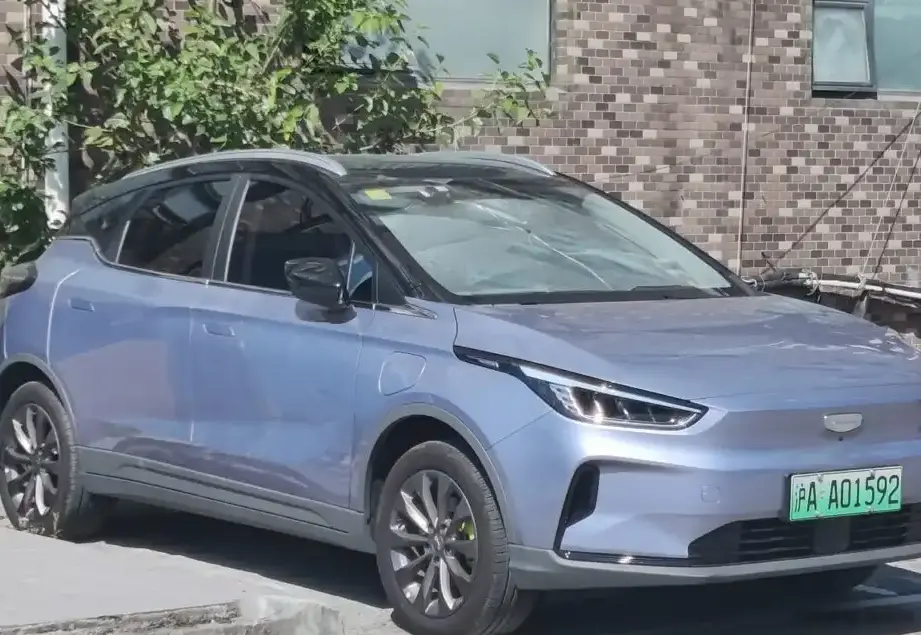
The Geometry C 70 kWh (204 Hp) Electric is a compact SUV produced by Geometry, a sub-brand of the Chinese manufacturer Zeekr (owned by Geely). Introduced in 2019, the C represented Geometry’s initial foray into the burgeoning electric vehicle market, specifically targeting consumers seeking an affordable and practical all-electric crossover. Production continued through September 2022. The vehicle is based on Geely’s BMA (B-segment Modular Architecture) platform, adapted for a fully electric powertrain. It was primarily marketed in China and select export markets, aiming to provide a competitive alternative to established EV offerings.
Technical Specifications
| Brand | Geometry |
| Model | C/M6 |
| Generation | C |
| Type (Engine) | 70 kWh (204 Hp) Electric |
| Start of production | 2019 |
| End of production | September, 2022 |
| Powertrain Architecture | BEV (Electric Vehicle) |
| Body type | SUV |
| Seats | 5 |
| Doors | 5 |
| Fuel Type | Electricity |
| Acceleration 0 – 100 km/h | 7 sec |
| Acceleration 0 – 62 mph | 7 sec |
| Acceleration 0 – 60 mph | 6.7 sec |
| Maximum speed | 150 km/h (93.21 mph) |
| Weight-to-power ratio | 8.2 kg/Hp, 122.5 Hp/tonne |
| Weight-to-torque ratio | 5.4 kg/Nm, 186.2 Nm/tonne |
| Gross battery capacity | 70 kWh |
| Battery technology | Lithium-ion (Li-Ion) |
| Battery location | Below the floor |
| All-electric range (NEDC) | 550 km (341.75 mi) |
| Average Energy consumption (WLTP) | 16.5 kWh/100 km (26.55 kWh/100 mi) |
| Average Energy consumption (MPGe) | 127 MPGe |
| Average Energy consumption (km/kWh) | 6.1 km/kWh |
| Average Energy consumption (mi/kWh) | 3.8 mi/kWh |
| Electric motor power | 204 Hp |
| Electric motor Torque | 310 Nm (228.64 lb.-ft.) |
| Electric motor location | Front axle, Transverse |
| Electric motor type | Synchronous |
| System power | 204 Hp |
| System torque | 310 Nm (228.64 lb.-ft.) |
| Kerb Weight | 1665 kg (3670.7 lbs.) |
| Trunk (boot) space – minimum | 340 l (12.01 cu. ft.) |
| Trunk (boot) space – maximum | 1150 l (40.61 cu. ft.) |
| Length | 4432 mm (174.49 in.) |
| Width | 1833 mm (72.17 in.) |
| Height | 1560 mm (61.42 in.) |
| Wheelbase | 2700 mm (106.3 in.) |
| Ride height (ground clearance) | 140 mm (5.51 in.) |
| Drivetrain Architecture | One electric motor drives the front wheels. |
| Drive wheel | Front wheel drive |
| Number of gears and type of gearbox | 1 gears, automatic transmission |
| Front suspension | Independent type McPherson |
| Rear suspension | Torsion |
| Front brakes | Ventilated discs |
| Rear brakes | Disc |
| Assisting systems | ABS (Anti-lock braking system) |
| Steering type | Steering rack and pinion |
| Power steering | Electric Steering |
| Tires size | 225/50 R17; 225/45 R18 |
| Wheel rims size | 17; 18 |
Powertrain & Engine Architecture
The Geometry C utilizes a single electric motor, positioned transversely on the front axle. This motor is a synchronous type, delivering a peak output of 204 horsepower and 310 Nm (228.64 lb.-ft.) of torque. The powertrain is powered by a 70 kWh lithium-ion battery pack located under the vehicle floor, contributing to a low center of gravity and improved handling. The single-speed automatic transmission is a direct-drive system, typical of most battery electric vehicles, providing seamless acceleration. The charging port location is not widely publicized, but supports standard charging protocols for the Chinese market.
Driving Characteristics
The 70 kWh Geometry C offers brisk acceleration, achieving 0-60 mph in approximately 6.7 seconds. While not a performance-oriented EV, the instant torque delivery of the electric motor provides responsive acceleration in urban driving conditions. The single-speed transmission means there are no gear changes, resulting in a smooth and linear power delivery. Compared to potential future higher-performance variants, the 204 hp model prioritizes efficiency and range over outright speed. The front-wheel-drive configuration provides adequate traction in most conditions, but can exhibit some torque steer under hard acceleration.
Equipment & Trim Levels
The Geometry C was generally well-equipped for its price point. Standard features typically included air conditioning, power windows and locks, a touchscreen infotainment system, and basic safety features like ABS and airbags. Higher trim levels added features such as a larger touchscreen, a panoramic sunroof, leather upholstery, and advanced driver-assistance systems (ADAS) like adaptive cruise control and lane-keeping assist. Interior materials were generally of acceptable quality, focusing on practicality and durability rather than luxury.
Chassis & Braking
The Geometry C employs a McPherson strut independent suspension at the front and a torsion beam suspension at the rear. This setup provides a comfortable ride quality, suitable for everyday driving. The front brakes are ventilated discs, while the rear brakes are solid discs. The electric steering system offers light and precise steering feel. Tire sizes varied depending on the trim level, with 17-inch and 18-inch alloy wheels being common options. The vehicle’s relatively low weight, thanks to the battery pack’s placement, contributes to stable handling.
Market Reception & Comparison
The Geometry C was generally well-received in the Chinese market as an affordable and practical electric SUV. Critics praised its spacious interior, decent range, and competitive pricing. However, some reviewers noted the relatively basic interior materials and the lack of a rear-wheel-drive or all-wheel-drive option. Compared to other EVs in its class, such as the BYD Yuan Plus or the Aion Y, the Geometry C offered a compelling value proposition, particularly for budget-conscious buyers. Its energy consumption of 16.5 kWh/100km (approximately 127 MPGe) was competitive with other EVs of similar size and range.
Legacy
The Geometry C played a significant role in establishing Geometry as a viable EV brand. While production ended in 2022, the model helped to pave the way for subsequent Geometry EVs. On the used car market, the Geometry C remains a relatively affordable option for those seeking an entry-level electric SUV. The powertrain has proven to be generally reliable, with few widespread issues reported. The long-term durability of the battery pack remains a key consideration for potential buyers, as with all electric vehicles. The Geometry C represents an early example of China’s growing influence in the global electric vehicle market.
