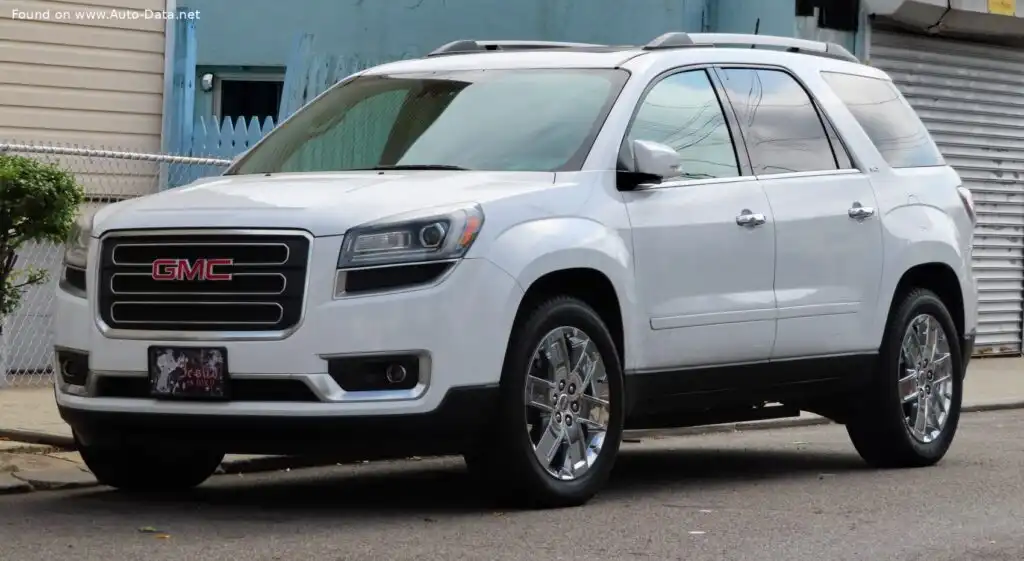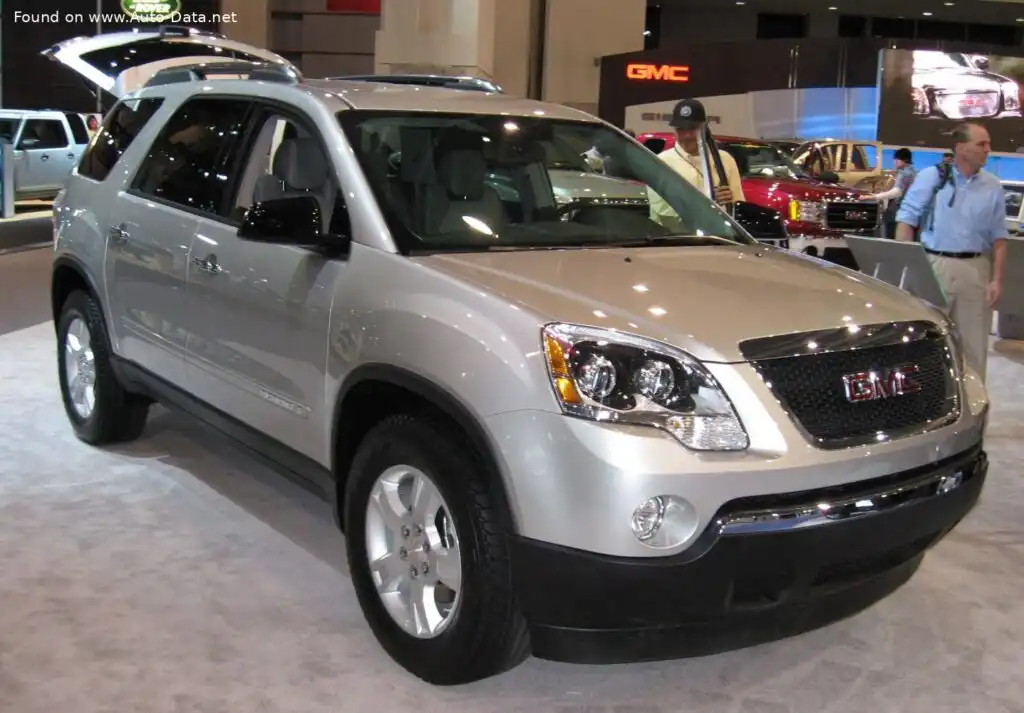
The GMC Acadia first generation, produced from 2009 to 2013, represented General Motors’ entry into the burgeoning mid-size crossover SUV market. Designed to bridge the gap between the larger Chevrolet Traverse and the smaller GMC Terrain, the Acadia offered seating for up to eight passengers and a more manageable size for urban driving. The 3.6L V6 with All-Wheel Drive and an automatic transmission was a popular configuration, positioned as a well-rounded option offering a balance of power, space, and capability. This variant aimed to appeal to families seeking a versatile vehicle for both daily commutes and longer road trips.
Technical Specifications
| Brand | GMC |
| Model | Acadia |
| Generation | Acadia I |
| Type (Engine) | 3.6 V6 (288 Hp) AWD Automatic |
| Start of production | 2009 |
| End of production | 2013 |
| Powertrain Architecture | Internal Combustion engine |
| Body type | SUV, Crossover |
| Seats | 8 |
| Doors | 5 |
| Fuel consumption (urban) | 13.8 l/100 km (17 US mpg, 20.5 UK mpg) |
| Fuel consumption (extra urban) | 9.8 l/100 km (24 US mpg, 28.8 UK mpg) |
| Fuel Type | Petrol (Gasoline) |
| Acceleration 0 – 100 km/h | 8.4 sec |
| Acceleration 0 – 62 mph | 8.4 sec |
| Acceleration 0 – 60 mph | 8 sec |
| Maximum speed | 175 km/h (108.74 mph) |
| Weight-to-power ratio | 7.6 kg/Hp, 130.9 Hp/tonne |
| Weight-to-torque ratio | 6 kg/Nm, 166.4 Nm/tonne |
| Power | 288 Hp @ 6300 rpm |
| Power per litre | 80.8 Hp/l |
| Torque | 366 Nm @ 3400 rpm (269.95 lb.-ft. @ 3400 rpm) |
| Engine Model/Code | LLT |
| Engine displacement | 3564 cm3 (217.49 cu. in.) |
| Number of cylinders | 6 |
| Engine configuration | V-engine |
| Cylinder Bore | 94 mm (3.7 in.) |
| Piston Stroke | 85.6 mm (3.37 in.) |
| Compression ratio | 10.2:1 |
| Number of valves per cylinder | 4 |
| Fuel injection system | Direct injection |
| Engine aspiration | Naturally aspirated engine |
| Engine oil capacity | 5.7 l (6.02 US qt | 5.02 UK qt) |
| Coolant | 10.8 l (11.41 US qt | 9.5 UK qt) |
| Kerb Weight | 2200 kg (4850.17 lbs.) |
| Max. weight | 2930 kg (6459.54 lbs.) |
| Max load | 730 kg (1609.37 lbs.) |
| Trunk (boot) space – minimum | 558 l (19.71 cu. ft.) |
| Trunk (boot) space – maximum | 3310 l (116.89 cu. ft.) |
| Fuel tank capacity | 83 l (21.93 US gal | 18.26 UK gal) |
| Permitted trailer load with brakes (12%) | 2041 kg (4499.63 lbs.) |
| Length | 5098 mm (200.71 in.) |
| Width | 1986 mm (78.19 in.) |
| Height | 1775 mm (69.88 in.) |
| Wheelbase | 3020 mm (118.9 in.) |
| Front track | 1710 mm (67.32 in.) |
| Rear (Back) track | 1710 mm (67.32 in.) |
| Drive wheel | All wheel drive (4×4) |
| Number of gears and type of gearbox | 6 gears, automatic transmission |
| Front suspension | Independent, type McPherson with coil spring and anti-roll bar |
| Rear suspension | Independent multi-link suspension |
| Front brakes | Ventilated discs |
| Rear brakes | Disc |
| Assisting systems | ABS (Anti-lock braking system) |
| Steering type | Steering rack and pinion |
| Power steering | Hydraulic Steering |
| Tires size | 255/65 R18; 255/60 R19 |
| Wheel rims size | 18; 19 |
INTRODUCTION
The 2009-2013 GMC Acadia, built on the GM Theta Premium platform (also known as the 1HX0/A3 platform), was a significant vehicle for GMC. It aimed to provide a more upscale alternative to mainstream crossovers like the Honda Pilot and Toyota Highlander. The 3.6-liter V6 engine paired with an automatic transmission and all-wheel drive was a common configuration, representing a middle-ground option within the Acadia lineup. It sat between the base front-wheel-drive models and the potential for optional features and higher trim levels.
Powertrain & Engine Architecture
The heart of this Acadia variant is the GM LLT 3.6-liter V6 engine. This engine is a 60-degree V-engine featuring an aluminum cylinder block and aluminum cylinder heads. It utilizes direct fuel injection (SIDI – Spark Ignition Direct Injection) which improves efficiency and power output compared to traditional port fuel injection. The LLT engine produces 288 horsepower at 6300 rpm and 270 lb-ft of torque at 3400 rpm. The engine employs a variable valve timing (VVT) system to optimize performance across the rev range. The engine is mated to a six-speed automatic transmission (6T70) which provides smooth shifting and contributes to the vehicle’s overall drivability. This transmission is known for its reliability, but some units experienced issues with solenoid failures over time.
Driving Characteristics
The 3.6L V6 and six-speed automatic combination in the Acadia provided adequate, though not exhilarating, performance. Acceleration from 0-60 mph took around 8 seconds, making it competitive with other mid-size crossovers. The automatic transmission was tuned for comfort and smooth operation, prioritizing fuel economy over aggressive shifting. Compared to the base front-wheel-drive Acadia, the all-wheel-drive system added weight and slightly reduced fuel efficiency, but it provided enhanced traction in inclement weather and on slippery surfaces. The gear ratios were optimized for highway cruising, offering relaxed performance at higher speeds. While not a sporty vehicle, the Acadia offered a comfortable and composed ride, making it well-suited for long-distance travel.
Equipment & Trim Levels
The 3.6L AWD Acadia was typically offered in SLE, SLT, and Denali trim levels. The SLE trim served as the entry point, featuring standard amenities such as tri-zone automatic climate control, a six-speaker audio system, and power windows and locks. The SLT trim added features like leather upholstery, heated front seats, a power liftgate, and a seven-inch touchscreen infotainment system. The top-of-the-line Denali trim offered premium features such as unique exterior styling, a more luxurious interior with upgraded leather, and a Bose audio system. Optional extras across all trims included a rear-seat entertainment system, navigation, and a sunroof.
Chassis & Braking
The Acadia’s chassis featured an independent front suspension with McPherson struts and a multi-link independent rear suspension. This setup provided a comfortable ride and decent handling characteristics. The all-wheel-drive system utilized an automatic limited-slip differential to distribute torque between the front and rear axles as needed. Braking duties were handled by ventilated discs at all four corners, providing adequate stopping power. Anti-lock brakes (ABS) were standard, along with electronic stability control. The Acadia’s weight, exceeding 4,800 pounds, meant that the braking system was working hard, and stopping distances were typical for a vehicle of this size.
Market Reception & Comparison
The GMC Acadia was generally well-received by critics and consumers alike. It was praised for its spacious interior, comfortable ride, and upscale features. However, some reviewers noted that the 3.6L V6 engine could feel strained when fully loaded or when climbing steep hills. Compared to the Chevrolet Traverse, the Acadia offered a more refined interior and a more upscale image. Fuel economy was average for the segment, with the AWD models returning around 17 mpg in the city and 24 mpg on the highway. Reliability was generally good, although some owners reported issues with the transmission and electrical systems.
Legacy
The first-generation GMC Acadia established GMC as a serious player in the mid-size crossover SUV market. The 3.6L V6 and six-speed automatic powertrain proved to be relatively reliable, and many examples are still on the road today. While not known for exceptional performance or fuel economy, this powertrain combination offered a good balance of practicality, comfort, and capability. In the used car market, these Acdias represent a relatively affordable option for families seeking a spacious and versatile SUV. Regular maintenance, including transmission fluid changes, is crucial for ensuring the long-term reliability of this powertrain.