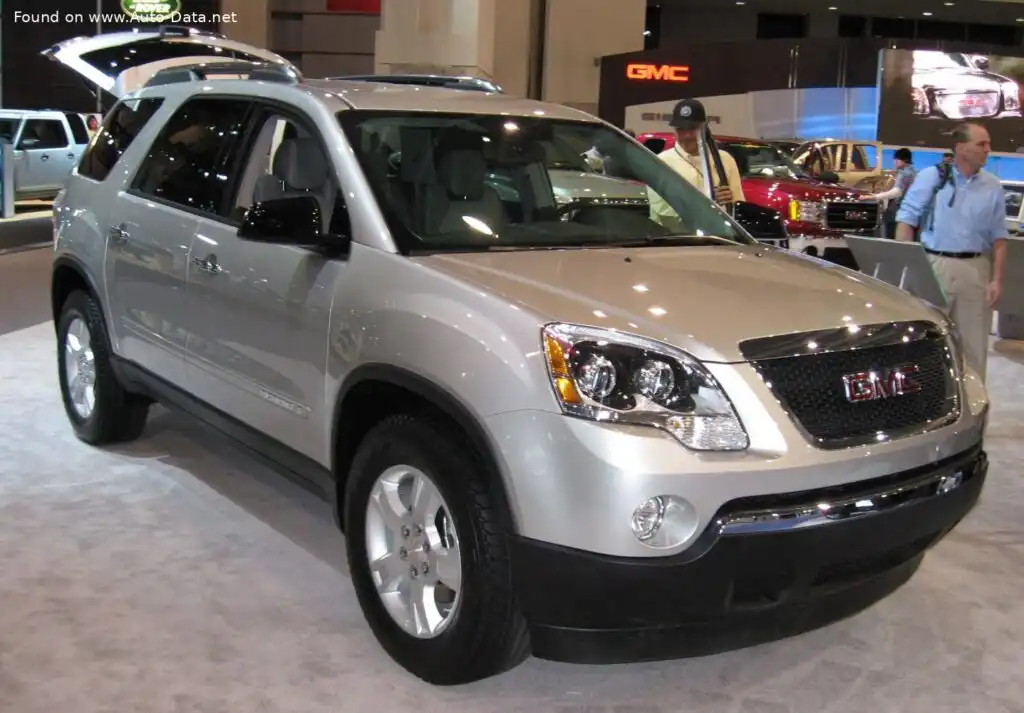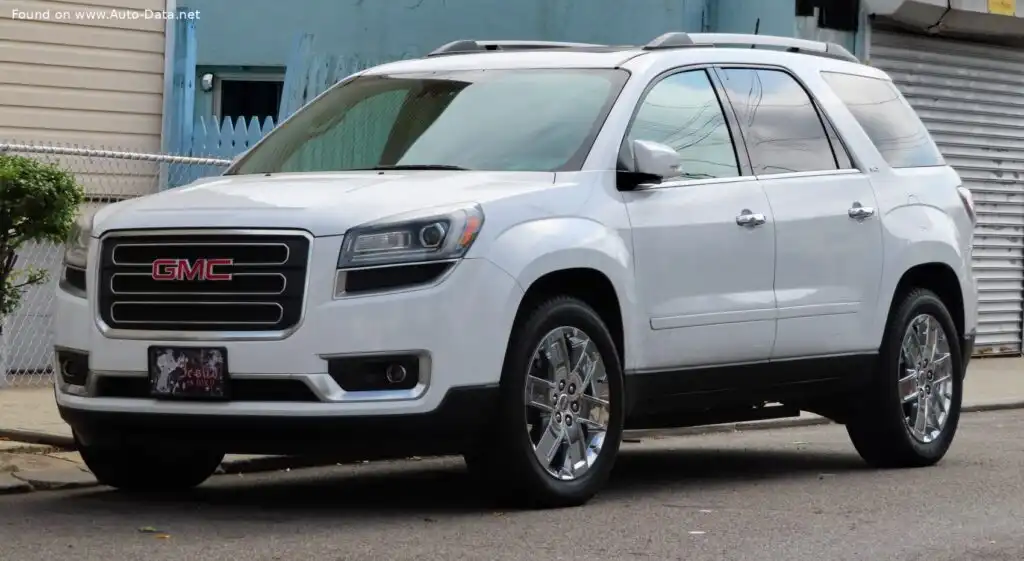
The GMC Acadia II 2.5, produced from 2016 to 2019, represented a significant downsize and refinement of GMC’s mid-size crossover SUV offering. Positioned as a more accessible entry point into the Acadia lineup, the 2.5-liter engine and six-speed automatic transmission combination aimed to balance fuel efficiency with adequate performance for family transportation. This generation (often referred to as the second generation) moved away from the larger, truck-based platform of the first Acadia, adopting a unibody construction based on the GM C1XX platform, shared with models like the Chevrolet Traverse and Buick Enclave. The 2.5L variant served as the base engine option, offering a more economical alternative to the available 3.6-liter V6.
Technical Specifications
| Brand | GMC |
| Model | Acadia |
| Generation | Acadia II |
| Type (Engine) | 2.5 (193 Hp) Automatic |
| Start of production | 2016 |
| End of production | 2019 |
| Powertrain Architecture | Internal Combustion engine |
| Body type | SUV, Crossover |
| Seats | 7 |
| Doors | 5 |
| Fuel consumption (urban) | 11.2 l/100 km (21 US mpg) |
| Fuel consumption (extra urban) | 9 l/100 km (26.1 US mpg) |
| Fuel Type | Petrol (Gasoline) |
| Weight-to-power ratio | 9.3 kg/Hp |
| Weight-to-torque ratio | 7 kg/Nm |
| Power | 193 Hp @ 6300 rpm |
| Torque | 255 Nm @ 4000 rpm (188.08 lb.-ft. @ 4000 rpm) |
| Engine layout | Front, Transverse |
| Engine Model/Code | LCV |
| Engine displacement | 2457 cm3 (149.94 cu. in.) |
| Number of cylinders | 4 |
| Engine configuration | Inline |
| Cylinder Bore | 88 mm (3.46 in.) |
| Piston Stroke | 101 mm (3.98 in.) |
| Number of valves per cylinder | 4 |
| Fuel injection system | Direct injection |
| Engine aspiration | Naturally aspirated engine |
| Valvetrain | DOHC, VVT |
| Engine oil capacity | 4.7 l (4.97 US qt | 4.14 UK qt) |
| Coolant | 9.2 l (9.72 US qt | 8.09 UK qt) |
| Kerb Weight | 1794 kg (3955.09 lbs.) |
| Trunk (boot) space – minimum | 362 l (12.78 cu. ft.) |
| Trunk (boot) space – maximum | 2237 l (79 cu. ft.) |
| Fuel tank capacity | 72 l (19.02 US gal | 15.84 UK gal) |
| Length | 4917 mm (193.58 in.) |
| Width | 1915 mm (75.39 in.) |
| Height | 1745 mm (68.7 in.) |
| Wheelbase | 2858 mm (112.52 in.) |
| Front track | 1638 mm (64.49 in.) |
| Rear (Back) track | 1638 mm (64.49 in.) |
| Ride height (ground clearance) | 182 mm (7.17 in.) |
| Minimum turning circle | 11.8 m (38.71 ft.) |
| Drivetrain Architecture | Front wheel drive |
| Number of gears | 6 |
| Gearbox type | automatic transmission Hydra-Matic |
| Front suspension | Independent, type McPherson with coil spring and anti-roll bar |
| Rear suspension | Independent multi-link suspension |
| Front brakes | Ventilated discs |
| Rear brakes | Ventilated discs |
| Assisting systems | ABS (Anti-lock braking system) |
| Steering type | Steering rack and pinion |
| Power steering | Electric Steering |
| Tires size | 245/65 R17; 235/65 R18; 235/55 R20 |
| Wheel rims size | 17; 18; 20 |
Powertrain & Engine Architecture
The heart of the Acadia 2.5 is the LCV 2.5-liter inline-four cylinder engine. This engine utilizes direct fuel injection, a technology that improves fuel efficiency and power output by injecting fuel directly into the combustion chamber. The engine also features a Double Overhead Camshaft (DOHC) valvetrain with Variable Valve Timing (VVT), further optimizing engine performance across a wider RPM range. The six-speed Hydra-Matic automatic transmission was the sole transmission offering with this engine. This transmission is known for its smooth shifting characteristics and reliability. The transmission’s gear ratios were tuned for fuel economy and everyday drivability, rather than outright performance.
Driving Characteristics
The 193 horsepower and 255 lb-ft of torque produced by the 2.5-liter engine provided adequate, but not exhilarating, performance for the Acadia II. Acceleration from a standstill was modest, and passing maneuvers required careful planning. Compared to the available 3.6-liter V6, the 2.5L felt noticeably less powerful, especially when fully loaded with passengers and cargo. The automatic transmission generally shifted smoothly, but could sometimes feel hesitant during quick acceleration. The focus was clearly on providing a comfortable and efficient driving experience, prioritizing fuel economy over sporty handling. The front-wheel-drive configuration contributed to a more fuel-efficient setup, but also limited traction in adverse weather conditions.
Equipment & Trim Levels
The Acadia 2.5 typically came standard with features like a rearview camera, a 7-inch touchscreen infotainment system with Apple CarPlay and Android Auto compatibility, and tri-zone automatic climate control. Higher trim levels, such as the SLE and SLT, added features like leather upholstery, heated front seats, a power liftgate, and advanced safety technologies like blind-spot monitoring and rear cross-traffic alert. Interior upholstery generally consisted of cloth in the base models, with leather options available on higher trims. Dashboard configurations were relatively consistent across trim levels, with variations primarily in trim materials and available technology packages.
Chassis & Braking
The Acadia II utilized an independent suspension system at all four corners, with a McPherson strut setup in the front and a multi-link suspension in the rear. This suspension design provided a comfortable ride quality, absorbing bumps and imperfections in the road effectively. Front and rear ventilated disc brakes provided adequate stopping power for the vehicle’s weight class. Anti-lock Braking System (ABS) was standard equipment. Stabilizer bars were included both front and rear to reduce body roll during cornering, though the Acadia was not designed to be a particularly sporty vehicle.
Market Reception & Comparison
Critics generally praised the Acadia II for its spacious interior, comfortable ride, and improved fuel economy compared to the first-generation model. However, the 2.5-liter engine received mixed reviews. While appreciated for its fuel efficiency, some reviewers found it underpowered, particularly when tasked with hauling a full load of passengers or towing a trailer. Compared to competitors like the Honda Pilot and Toyota Highlander, the Acadia 2.5 offered a more affordable price point, but lacked the same level of refinement and performance. The V6-equipped Acadia models were consistently favored by reviewers seeking more power and capability.
Legacy
The GMC Acadia II 2.5L automatic powertrain has proven to be reasonably reliable in the used car market. The 2.5-liter engine is generally considered durable, with few widespread mechanical issues reported. However, like any vehicle, regular maintenance is crucial to ensure long-term reliability. Common maintenance items include oil changes, coolant flushes, and transmission fluid services. The Hydra-Matic transmission is also generally reliable, but can be susceptible to issues if not properly maintained. Today, the Acadia II 2.5 represents a value-oriented option for families seeking a spacious and comfortable crossover SUV, though potential buyers should be aware of its modest performance capabilities.