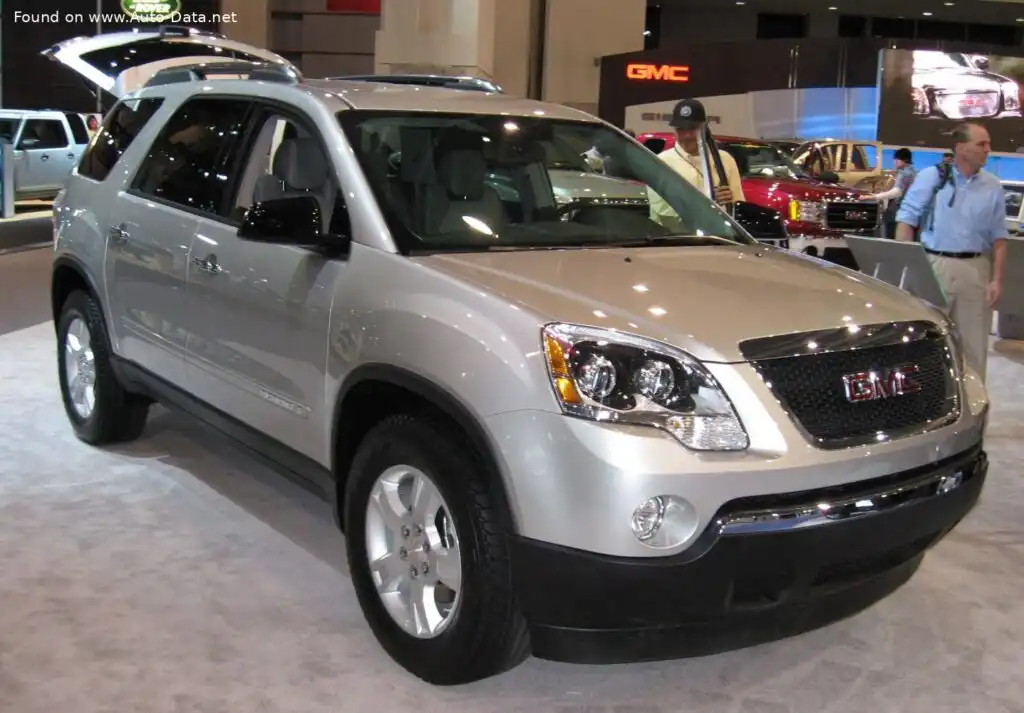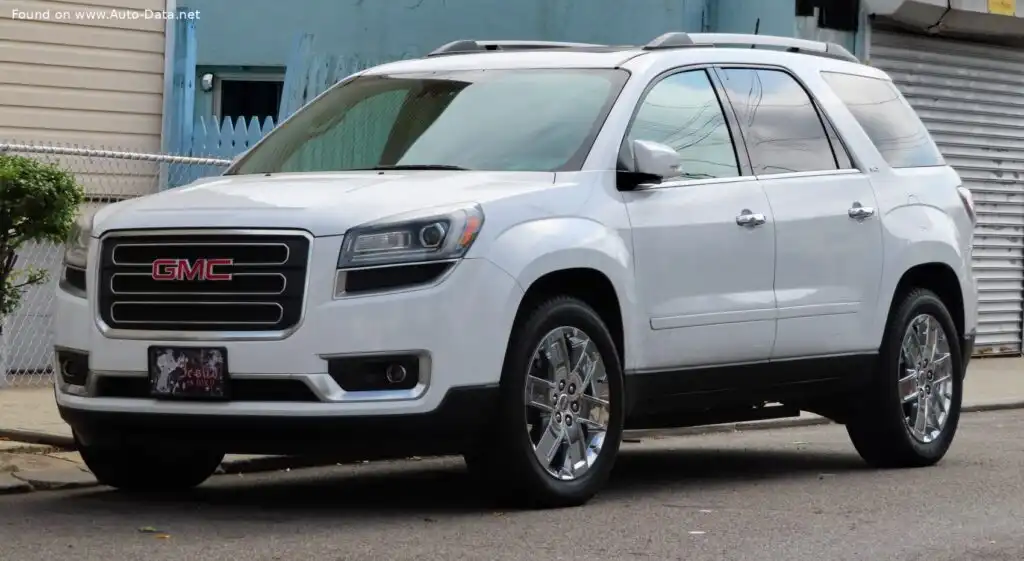
The GMC Acadia II, specifically the 3.6-liter V6 variant producing 310 horsepower and equipped with all-wheel drive and an automatic transmission, represents a significant iteration in GMC’s mid-size crossover SUV lineup. Introduced for the 2016 model year and continuing through 2019, this version of the Acadia aimed to balance family-friendly practicality with a more refined driving experience. It was positioned as a mainstream offering within the Acadia range, slotting between the base four-cylinder models and the potential for more luxurious trim packages. This generation marked a shift for the Acadia, becoming smaller and lighter than its predecessor, focusing on improved fuel efficiency and handling.
Technical Specifications
| Brand | GMC |
| Model | Acadia |
| Generation | Acadia II |
| Type (Engine) | 3.6 V6 (310 Hp) AWD Automatic |
| Start of production | 2016 |
| End of production | 2019 |
| Powertrain Architecture | Internal Combustion engine |
| Body type | SUV, Crossover |
| Seats | 7 |
| Doors | 5 |
| Fuel consumption (urban) | 13 l/100 km (18.1 US mpg, 21.7 UK mpg, 7.7 km/l) |
| Fuel consumption (extra urban) | 9.4 l/100 km (25 US mpg, 30.1 UK mpg, 10.6 km/l) |
| Fuel Type | Petrol (Gasoline) |
| Power | 310 Hp @ 6600 rpm |
| Power per litre | 85 Hp/l |
| Torque | 373 Nm @ 5000 rpm (275.11 lb.-ft. @ 5000 rpm) |
| Engine layout | Front, Transverse |
| Engine Model/Code | LGX |
| Engine displacement | 3649 cm3 (222.68 cu. in.) |
| Number of cylinders | 6 |
| Engine configuration | V-engine |
| Cylinder Bore | 95 mm (3.74 in.) |
| Piston Stroke | 85.8 mm (3.38 in.) |
| Number of valves per cylinder | 4 |
| Fuel injection system | Direct injection |
| Engine aspiration | Naturally aspirated engine |
| Valvetrain | DOHC, VVT |
| Engine oil capacity | 5.7 l (6.02 US qt | 5.02 UK qt) |
| Coolant | 11.4 l (12.05 US qt | 10.03 UK qt) |
| Trunk (boot) space – minimum | 362 l (12.78 cu. ft.) |
| Trunk (boot) space – maximum | 2237 l (79 cu. ft.) |
| Fuel tank capacity | 83 l (21.93 US gal | 18.26 UK gal) |
| Length | 4917 mm (193.58 in.) |
| Width | 1915 mm (75.39 in.) |
| Height | 1745 mm (68.7 in.) |
| Wheelbase | 2858 mm (112.52 in.) |
| Front track | 1638 mm (64.49 in.) |
| Rear (Back) track | 1638 mm (64.49 in.) |
| Ride height (ground clearance) | 182 mm (7.17 in.) |
| Minimum turning circle (turning diameter) | 11.8 m (38.71 ft.) |
| Drive wheel | All wheel drive (4×4) |
| Number of gears and type of gearbox | 6 gears, automatic transmission Hydra-Matic |
| Front suspension | Independent, type McPherson with coil spring and anti-roll bar |
| Rear suspension | Independent multi-link suspension |
| Front brakes | Ventilated discs |
| Rear brakes | Ventilated discs |
| Assisting systems | ABS (Anti-lock braking system) |
| Steering type | Steering rack and pinion |
| Power steering | Electric Steering |
| Tires size | 245/65 R17; 235/65 R18; 235/55 R20 |
| Wheel rims size | 17; 18; 20 |
Powertrain & Engine Architecture
At the heart of this Acadia variant lies the LGX 3.6-liter V6 engine. This engine is a naturally aspirated, 24-valve DOHC (Double Overhead Camshaft) powerplant featuring direct fuel injection and Variable Valve Timing (VVT). The LGX engine is part of GM’s LFX family, known for its relatively smooth operation and decent power output. The direct injection system contributes to improved fuel efficiency and responsiveness. The engine produces 310 horsepower at 6,600 rpm and 275 lb-ft of torque at 5,000 rpm. This power is channeled through a six-speed Hydra-Matic automatic transmission, which was a staple in GM vehicles for many years. The transmission is designed for smooth shifts and adequate responsiveness, though it isn’t known for being particularly sporty. The all-wheel-drive system is primarily front-wheel drive, engaging the rear wheels when slip is detected, enhancing traction in inclement weather.
Driving Characteristics
The 3.6L V6 and six-speed automatic combination in the Acadia II delivers adequate performance for everyday driving. Acceleration is reasonably brisk, but it doesn’t offer the same level of urgency as some competitors with turbocharged engines. The automatic transmission is tuned for comfort and fuel economy, meaning it prioritizes smooth shifts over aggressive downshifts. The gear ratios are optimized for highway cruising, providing a relaxed driving experience at higher speeds. Compared to the base four-cylinder Acadia, the V6 offers a significant improvement in acceleration and overall responsiveness. However, it doesn’t quite match the performance of larger SUVs or those with more powerful engine options. The all-wheel-drive system provides enhanced stability and traction, particularly in slippery conditions, but adds some weight and slightly reduces fuel economy.
Equipment & Trim Levels
The 3.6L V6 AWD Acadia was typically offered in SLE, SLT, and Denali trim levels. The SLE trim served as the entry point, featuring standard amenities such as tri-zone automatic climate control, a 7-inch touchscreen infotainment system with Apple CarPlay and Android Auto compatibility, and a rearview camera. The SLT trim added features like leather upholstery, heated front seats, a power liftgate, and a Bose premium sound system. The Denali trim, the most luxurious option, included unique exterior styling cues, upgraded interior materials, and additional convenience features. Optional extras across all trims included a panoramic sunroof, navigation system, and advanced safety technologies like forward collision alert and lane departure warning.
Chassis & Braking
The Acadia II utilizes a unibody construction, contributing to its lighter weight compared to the previous generation. The front suspension features independent McPherson struts with coil springs and an anti-roll bar, while the rear suspension employs an independent multi-link setup. This suspension configuration provides a comfortable ride quality, absorbing bumps and irregularities in the road surface effectively. Braking duties are handled by ventilated discs on all four wheels, providing adequate stopping power. The Acadia II also incorporates an Anti-lock Braking System (ABS) as standard equipment. Steering is rack-and-pinion with electric power assist, offering a light and responsive feel.
Market Reception & Comparison
The GMC Acadia II 3.6L V6 AWD was generally well-received by automotive critics. It was praised for its comfortable ride, spacious interior, and user-friendly technology. However, some reviewers noted that the engine could feel strained when fully loaded or during aggressive acceleration. Fuel economy was considered average for its class, with EPA estimates around 18 mpg city and 25 mpg highway. Compared to competitors like the Honda Pilot and Toyota Highlander, the Acadia offered a more affordable price point and a more distinctive styling. However, some rivals offered more refined interiors and more fuel-efficient engine options.
Legacy
The LGX 3.6L V6 engine and six-speed automatic transmission combination proved to be relatively reliable in the Acadia II. While some owners have reported minor issues with the fuel system or transmission, these are not widespread concerns. The Acadia II, in general, has maintained a decent reputation for dependability. On the used car market, these models represent a good value proposition for families seeking a spacious and comfortable crossover SUV. The 3.6L V6 variant remains a popular choice due to its balance of performance, fuel economy, and reliability. As with any used vehicle, a thorough inspection by a qualified mechanic is recommended before purchase.