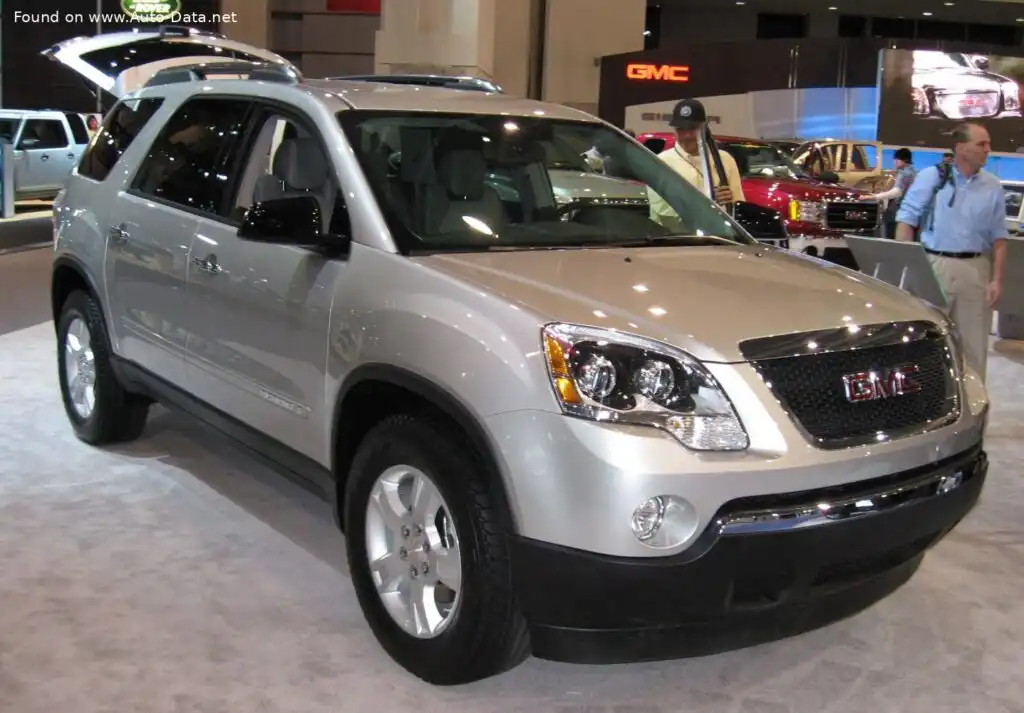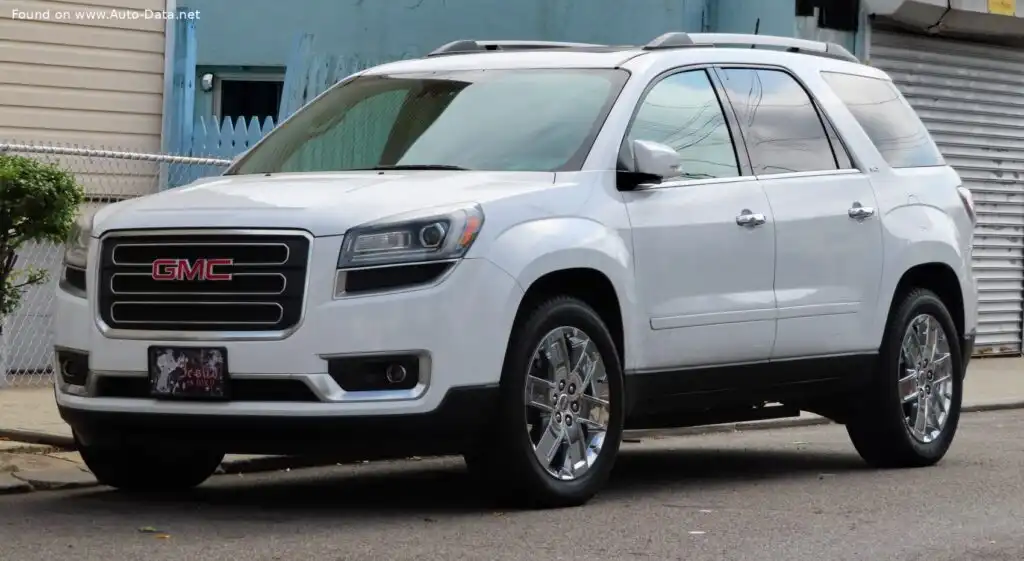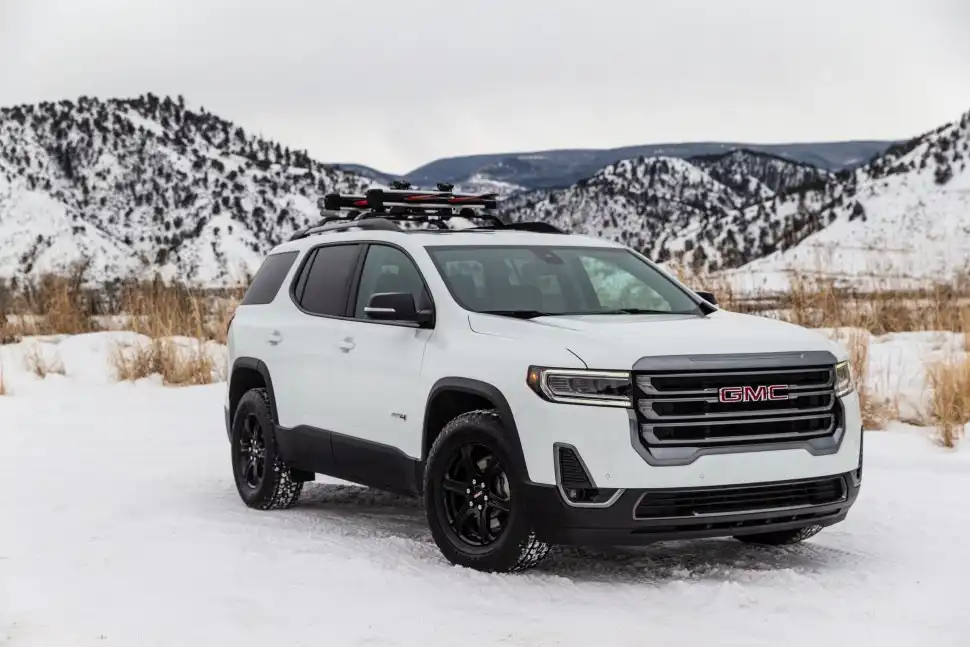
The GMC Acadia II, specifically the facelifted version produced from 2020 to 2023, represented a significant refinement of GMC’s mid-size crossover SUV offering. Among the various powertrain options available, the 3.6-liter V6 engine paired with a 9-speed automatic transmission became a popular choice for American families seeking a balance of power, space, and relative fuel efficiency. This configuration positioned itself as a mid-range offering within the Acadia lineup, slotting above the base turbocharged four-cylinder engine and below potential Denali trim levels with enhanced features. The 2020 facelift brought updated styling, improved technology, and a focus on enhancing the overall driving experience.
Technical Specifications
| Brand | GMC |
| Model | Acadia |
| Generation | Acadia II (facelift 2020) |
| Type (Engine) | 3.6 V6 (310 Hp) Automatic |
| Start of production | 2020 |
| End of production | 2023 |
| Powertrain Architecture | Internal Combustion engine |
| Body type | SUV, Crossover |
| Seats | 7 |
| Doors | 5 |
| Fuel consumption (urban) | 12.4 l/100 km (19 US mpg) |
| Fuel consumption (extra urban) | 8.7 l/100 km (27 US mpg) |
| Fuel Type | Petrol (Gasoline) |
| Weight-to-power ratio | 6.1 kg/Hp |
| Weight-to-torque ratio | 5.1 kg/Nm |
| Power | 310 Hp @ 6600 rpm |
| Power per litre | 85 Hp/l |
| Torque | 373 Nm @ 5000 rpm (275.11 lb.-ft. @ 5000 rpm) |
| Engine Model/Code | LGX |
| Engine displacement | 3649 cm3 (222.68 cu. in.) |
| Number of cylinders | 6 |
| Engine configuration | V-engine |
| Cylinder Bore | 95 mm (3.74 in.) |
| Piston Stroke | 85.6 mm (3.37 in.) |
| Number of valves per cylinder | 4 |
| Fuel injection system | Direct injection |
| Engine aspiration | Naturally aspirated engine |
| Valvetrain | DOHC, VVT |
| Engine oil capacity | 5.7 l (6.02 US qt | 5.02 UK qt) |
| Coolant | 10.6 l (11.2 US qt | 9.33 UK qt) |
| Kerb Weight | 1899 kg (4186.58 lbs.) |
| Trunk (boot) space – minimum | 362 l (12.78 cu. ft.) |
| Trunk (boot) space – maximum | 2237 l (79 cu. ft.) |
| Fuel tank capacity | 72 l (19.02 US gal | 15.84 UK gal) |
| Permitted trailer load with brakes (12%) | 1814 kg (3999.19 lbs.) |
| Length | 4917 mm (193.58 in.) |
| Width | 1915 mm (75.39 in.) |
| Height | 1676 mm (65.98 in.) |
| Wheelbase | 2858 mm (112.52 in.) |
| Front track | 1638 mm (64.49 in.) |
| Rear (Back) track | 1638 mm (64.49 in.) |
| Ride height (ground clearance) | 183 mm (7.2 in.) |
| Minimum turning circle (turning diameter) | 11.8 m (38.71 ft.) |
| Drivetrain Architecture | Front wheel drive |
| Number of gears and type of gearbox | 9 gears, automatic transmission Hydra-Matic 9T65 |
| Front suspension | Independent, type McPherson with coil spring and anti-roll bar |
| Rear suspension | Independent multi-link spring suspension with stabilizer |
| Front brakes | Ventilated discs, 320 mm |
| Rear brakes | Ventilated discs, 315 mm |
| Assisting systems | ABS (Anti-lock braking system) |
| Steering type | Steering rack and pinion |
| Power steering | Electric Steering |
| Tires size | 245/65 R17; 255/65 R17; 235/65 R18; 235/55 R20 |
| Wheel rims size | 17; 18; 20 |
Powertrain & Engine Architecture
The heart of this Acadia variant is the LGX 3.6-liter V6 engine. This engine is a naturally aspirated, 24-valve DOHC (Double Overhead Camshaft) engine featuring direct fuel injection and Variable Valve Timing (VVT). The direct injection system allows for precise fuel delivery, improving both power and fuel economy. The engine’s aluminum block and cylinder heads contribute to weight reduction. The 9-speed Hydra-Matic 9T65 automatic transmission was a key component, offering a wide gear ratio spread for optimized acceleration and highway cruising. This transmission replaced the earlier 8-speed unit, aiming for smoother shifts and improved efficiency. The transmission’s programming was tuned to balance performance with fuel consumption, offering both a ‘Drive’ mode for everyday use and a manual shift mode for more driver control.
Driving Characteristics
The 310 horsepower and 275 lb-ft of torque provided by the LGX V6 and 9-speed automatic delivered a comfortable and capable driving experience. Acceleration from 0 to 60 mph typically took around 7.5-8.0 seconds, making it competitive within its class. The 9-speed transmission, while generally smooth, could occasionally exhibit some hunting for the right gear, particularly during moderate acceleration. Compared to the turbocharged four-cylinder Acadia, the V6 offered significantly more readily available power, especially when fully loaded with passengers and cargo. It also felt more refined and less strained during highway passing maneuvers. Compared to higher-trim Acadia models with available all-wheel drive, the front-wheel-drive configuration of this variant prioritized fuel economy, but at the expense of some traction in inclement weather.
Equipment & Trim Levels
The 3.6L V6 Automatic Acadia was typically offered in SLE, SLT, and AT4 trim levels. Standard features on the SLE trim included tri-zone automatic climate control, an 8-inch touchscreen infotainment system with Apple CarPlay and Android Auto compatibility, and a suite of safety features like automatic emergency braking and lane keep assist. The SLT trim added features like leather upholstery, heated front seats, a power liftgate, and a larger touchscreen display. The AT4 trim focused on a more rugged appearance and included features like unique exterior styling, a more capable suspension, and enhanced traction control settings. Optional extras across all trims included a panoramic sunroof, a rear-seat entertainment system, and a premium Bose audio system.
Chassis & Braking
The Acadia II utilized a unibody construction for improved rigidity and reduced weight. The front suspension featured an independent McPherson strut design with coil springs and an anti-roll bar, while the rear suspension employed an independent multi-link setup with a stabilizer bar. This configuration aimed to provide a comfortable ride while maintaining reasonable handling characteristics. Braking duties were handled by ventilated discs on all four wheels, providing adequate stopping power for the vehicle’s weight. The standard ABS (Anti-lock Braking System) and electronic stability control systems enhanced safety and control during emergency braking situations.
Market Reception & Comparison
Critics generally praised the Acadia II’s spacious interior, comfortable ride, and user-friendly technology. The 3.6L V6 engine was considered a strong performer, offering ample power for most driving situations. However, some reviewers noted that the 9-speed automatic transmission could be occasionally hesitant. Compared to competitors like the Honda Pilot and Toyota Highlander, the Acadia offered a more stylish exterior design and a more luxurious interior, but some found its handling less engaging. Fuel economy was competitive within the segment, averaging around 20-25 mpg in combined driving conditions. Reliability reports were generally positive, with few major issues reported with the LGX V6 engine and 9T65 transmission.
Legacy
The 2020-2023 GMC Acadia 3.6L V6 Automatic has established itself as a reliable and practical family SUV in the used car market. The LGX V6 engine is known for its durability and relatively low maintenance costs. While the 9-speed transmission has received some criticism, it has proven to be generally dependable with proper maintenance. These Acadia models continue to offer a compelling combination of space, comfort, and features at a reasonable price point, making them a popular choice for buyers seeking a mid-size crossover SUV.