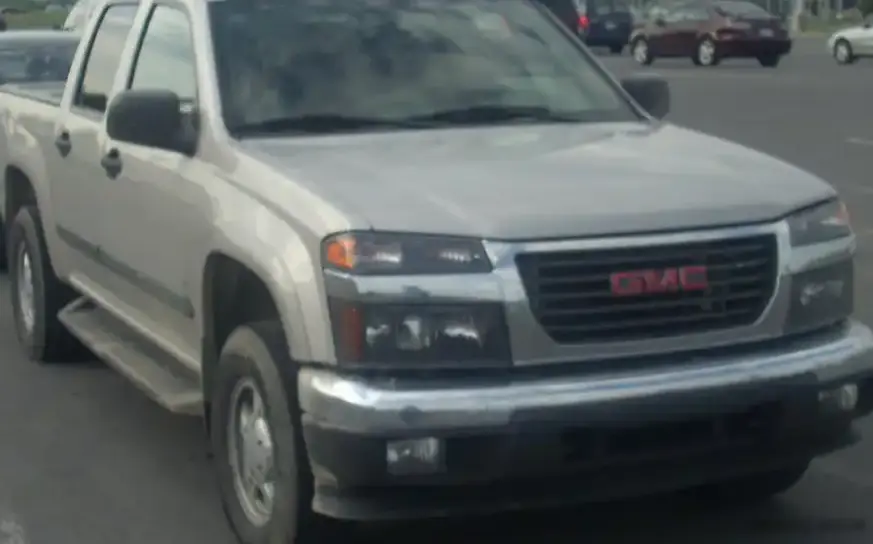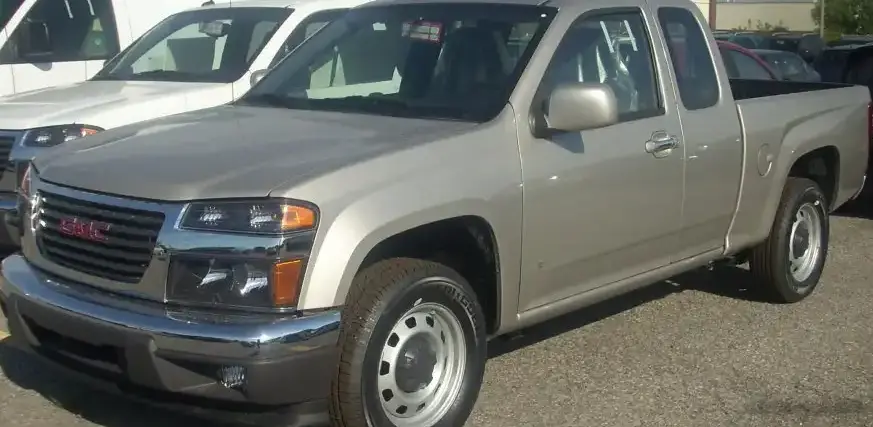
The GMC Canyon I Extended Cab, specifically the 2.8-liter (175 hp) 4WD Automatic variant, was produced from 2004 to 2006. This mid-size pickup truck represented GMC’s entry into the increasingly popular compact pickup segment, sharing its platform with the Chevrolet Colorado. Positioned as a versatile option for both work and personal use, the 2.8L engine and automatic transmission combination aimed to provide a balance of capability and ease of driving. It served as the base engine option for the Canyon, offering a more affordable alternative to the more powerful inline-five and V6 engines available in higher trim levels.
Technical Specifications
| Brand | GMC |
| Model | Canyon |
| Generation | Canyon I Extended Cab |
| Type (Engine) | 2.8 (175 Hp) 4WD Automatic |
| Start of production | 2004 |
| End of production | 2006 |
| Powertrain Architecture | Internal Combustion engine |
| Body type | Pick-up |
| Seats | 4-5 |
| Doors | 4 |
| Fuel Type | Petrol (Gasoline) |
| Weight-to-power ratio | 10.2 kg/Hp, 98.5 Hp/tonne |
| Weight-to-torque ratio | 7.1 kg/Nm, 141.2 Nm/tonne |
| Power | 175 Hp @ 5600 rpm |
| Power per litre | 63.2 Hp/l |
| Torque | 251 Nm @ 2800 rpm (185.13 lb.-ft. @ 2800 rpm) |
| Maximum engine speed | 6300 rpm |
| Engine layout | Front, Transverse |
| Engine Model/Code | LK5 Vortec 2800 |
| Engine displacement | 2770 cm3 (169.04 cu. in.) |
| Number of cylinders | 4 |
| Engine configuration | Inline |
| Cylinder Bore | 93 mm (3.66 in.) |
| Piston Stroke | 102 mm (4.02 in.) |
| Compression ratio | 10:1 |
| Number of valves per cylinder | 4 |
| Fuel injection system | Multi-port manifold injection |
| Engine aspiration | Naturally aspirated engine |
| Valvetrain | DOHC, CVVT |
| Engine oil capacity | 4.7 l (4.97 US qt | 4.14 UK qt) |
| Coolant | 9.8 l (10.36 US qt | 8.62 UK qt) |
| Kerb Weight | 1777 kg (3917.61 lbs.) |
| Max. weight | 2404 kg (5299.91 lbs.) |
| Max load | 627 kg (1382.3 lbs.) |
| Trunk (boot) space – minimum | 1243 l (43.9 cu. ft.) |
| Fuel tank capacity | 74.2 l (19.6 US gal | 16.32 UK gal) |
| Length | 5260 mm (207.09 in.) |
| Width | 1717 mm (67.6 in.) |
| Height | 1646 mm (64.8 in.) |
| Wheelbase | 3198 mm (125.91 in.) |
| Front track | 1460 mm (57.48 in.) |
| Rear (Back) track | 1460 mm (57.48 in.) |
| Ride height (ground clearance) | 216 mm (8.5 in.) |
| Minimum turning circle (turning diameter) | 13.6 m (44.62 ft.) |
| Drive wheel | All wheel drive (4×4) |
| Number of gears and type of gearbox | 4 gears, automatic transmission Hydra-Matic |
| Front suspension | Independent coil spring |
| Rear suspension | Leaf spring |
| Front brakes | Ventilated discs |
| Rear brakes | Drum |
| Assisting systems | ABS (Anti-lock braking system) |
| Steering type | Steering rack and pinion |
| Power steering | Hydraulic Steering |
| Tires size | 205/75 R15; 225/70 R15 |
| Wheel rims size | 15 |
Powertrain & Engine Architecture
The heart of this Canyon variant is the LK5 Vortec 2800 engine, a 2.8-liter inline-four cylinder powerplant. This engine utilized a cast iron block with an aluminum cylinder head, incorporating dual overhead camshafts (DOHC) and variable valve timing (CVVT) for improved efficiency and responsiveness. The multi-port fuel injection system delivered fuel directly to each cylinder, optimizing combustion. The engine produced 175 horsepower at 5600 rpm and 185 lb-ft of torque at 2800 rpm. The Hydra-Matic 4-speed automatic transmission was the sole transmission option for this configuration. This transmission was known for its smooth shifting characteristics, but lacked the fuel efficiency of more modern transmissions with higher gear counts.
Driving Characteristics
The 2.8L engine, paired with the 4-speed automatic, provided adequate, but not exhilarating, performance. Acceleration was modest, and passing maneuvers required careful planning. The automatic transmission’s gear ratios were tuned for everyday driving and towing capability, rather than outright speed. Compared to the optional 3.5L inline-five or 4.2L V6 engines, the 2.8L felt noticeably less powerful, especially when fully loaded or tackling steep inclines. However, the lower engine weight contributed to slightly better handling and fuel economy. The 4WD system provided enhanced traction in inclement weather and on unpaved surfaces.
Equipment & Trim Levels
The 2.8L engine was typically found in the base and mid-level trim packages of the Canyon Extended Cab. Standard features generally included air conditioning, a basic audio system, and cloth upholstery. Extended Cab models offered a small rear seat area suitable for occasional passengers. Optional extras included power windows and locks, cruise control, an upgraded audio system, and alloy wheels. The interior was functional and durable, prioritizing practicality over luxury. The dashboard layout was straightforward, with easy-to-use controls.
Chassis & Braking
The Canyon I utilized a body-on-frame construction, providing a robust and durable platform. The front suspension consisted of independent coil springs, while the rear suspension employed leaf springs. This setup prioritized load-carrying capacity and durability over refined ride quality. The braking system featured ventilated discs at the front and drum brakes at the rear. Anti-lock Braking System (ABS) was standard, enhancing safety during emergency braking situations. The steering system was a hydraulic rack-and-pinion setup, providing responsive and predictable handling.
Market Reception & Comparison
Critics generally viewed the 2.8L Canyon as a competent, but unremarkable, pickup truck. The engine was considered adequate for light-duty tasks, but struggled when faced with heavier loads or demanding terrain. Fuel economy was average for its class. Compared to the more powerful engine options, the 2.8L offered a lower price point, making it an attractive option for budget-conscious buyers. However, many reviewers recommended opting for the inline-five or V6 engines if towing or hauling were primary concerns. The 2.8L automatic was often seen as a good choice for those prioritizing simplicity and ease of use.
Legacy
The 2.8L Vortec engine, while not known for its longevity or high performance, proved to be reasonably reliable in the Canyon. Common issues included oil leaks and occasional sensor failures. The Hydra-Matic 4-speed automatic transmission was generally durable, but could experience issues with harsh shifting as it aged. Today, these Canyons are relatively affordable on the used car market. They represent a practical and capable option for those seeking a basic, no-frills pickup truck. However, potential buyers should be aware of the engine’s limitations and the potential for age-related maintenance issues. The 2.8L Canyon serves as a reminder of a time when mid-size pickups prioritized functionality and affordability over luxury and performance.