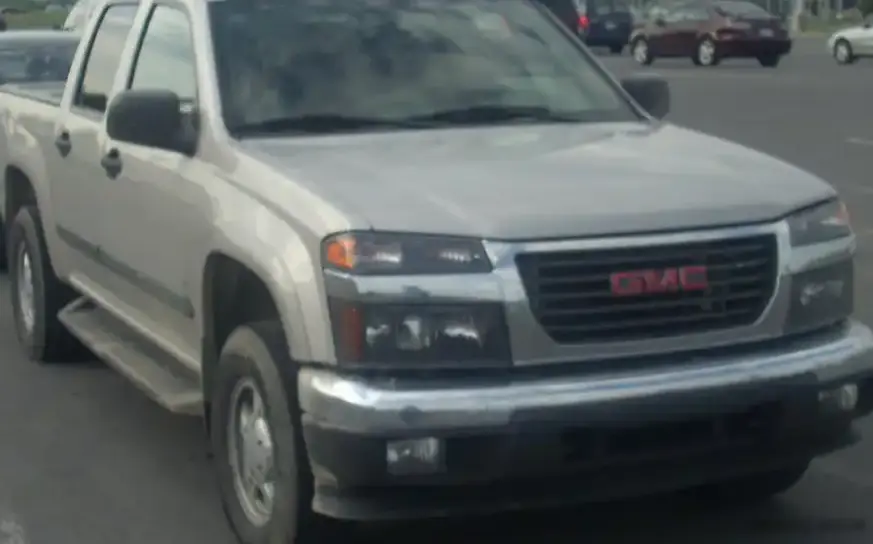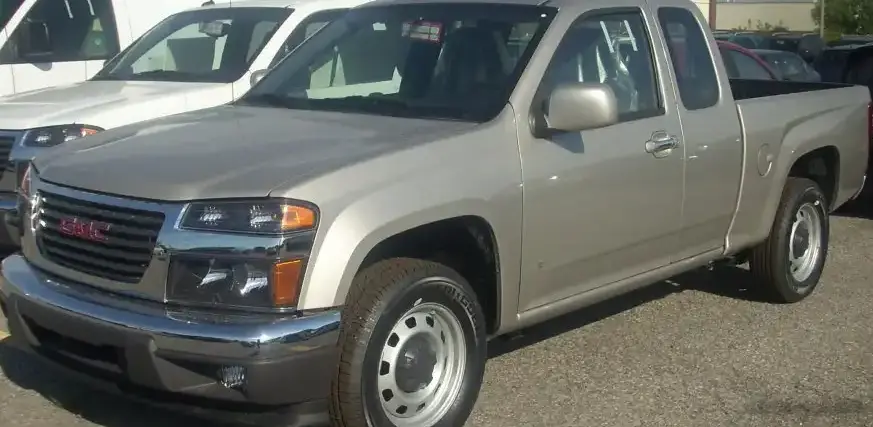
The GMC Canyon I Extended Cab, produced from 2004 to 2006, represented GMC’s entry into the burgeoning mid-size pickup truck market in North America. Positioned below the full-size Sierra, the Canyon aimed to offer a more manageable and fuel-efficient alternative without sacrificing the utility expected of a truck. The 3.5-liter (220 hp) variant, equipped with a five-speed manual transmission, occupied a middle ground in the Canyon lineup, offering a balance between affordability and capability. It served as a step up from the base 2.8-liter four-cylinder engine, while remaining more accessible than the higher-output 4.2-liter inline-six. This configuration was targeted towards buyers needing a versatile truck for both work and personal use.
Technical Specifications
| Brand | GMC |
| Model | Canyon |
| Generation | Canyon I Extended Cab |
| Type (Engine) | 3.5 (220 Hp) |
| Start of production | 2004 |
| End of production | 2006 |
| Powertrain Architecture | Internal Combustion engine |
| Body type | Pick-up |
| Seats | 4-5 |
| Doors | 4 |
| Fuel Type | Petrol (Gasoline) |
| Weight-to-power ratio | 7.5 kg/Hp, 133.5 Hp/tonne |
| Weight-to-torque ratio | 5.4 kg/Nm, 185.1 Nm/tonne |
| Power | 220 Hp @ 5600 rpm |
| Power per litre | 63.6 Hp/l |
| Torque | 305 Nm @ 2800 rpm, 224.96 lb.-ft. @ 2800 rpm |
| Maximum engine speed | 6300 rpm |
| Engine layout | Front, Longitudinal |
| Engine Model/Code | L52 Vortec 3500 |
| Engine displacement | 3460 cm3, 211.14 cu. in. |
| Number of cylinders | 5 |
| Engine configuration | Inline |
| Cylinder Bore | 93 mm, 3.66 in. |
| Piston Stroke | 102 mm, 4.02 in. |
| Compression ratio | 10:1 |
| Number of valves per cylinder | 4 |
| Fuel injection system | Multi-port manifold injection |
| Engine aspiration | Naturally aspirated engine |
| Valvetrain | DOHC, CVVT |
| Engine oil capacity | 5.6 l, 5.92 US qt | 4.93 UK qt |
| Coolant | 10 l, 10.57 US qt | 8.8 UK qt |
| Kerb Weight | 1648 kg, 3633.22 lbs |
| Max. weight | 2268 kg, 5000.08 lbs |
| Max load | 620 kg, 1366.87 lbs |
| Trunk (boot) space – minimum | 1243 l, 43.9 cu. ft |
| Fuel tank capacity | 74.2 l, 19.6 US gal | 16.32 UK gal |
| Length | 5260 mm, 207.09 in |
| Width | 1717 mm, 67.6 in |
| Height | 1646 mm, 64.8 in |
| Wheelbase | 3198 mm, 125.91 in |
| Front track | 1460 mm, 57.48 in |
| Rear (Back) track | 1460 mm, 57.48 in |
| Ride height (ground clearance) | 216 mm, 8.5 in |
| Minimum turning circle (turning diameter) | 13.6 m, 44.62 ft |
| Drivetrain Architecture | The Internal combustion engine (ICE) drives the rear wheels of the vehicle. |
| Drive wheel | Rear wheel drive |
| Number of gears and type of gearbox | 5 gears, manual transmission |
| Front suspension | Independent coil spring |
| Rear suspension | Leaf spring |
| Front brakes | Ventilated discs |
| Rear brakes | Drum |
| Assisting systems | ABS (Anti-lock braking system) |
| Steering type | Steering rack and pinion |
| Power steering | Hydraulic Steering |
| Tires size | 205/75 R15; 225/70 R15 |
| Wheel rims size | 15 |
Introduction
The GMC Canyon I Extended Cab 3.5, produced between 2004 and 2006, was a key component of GMC’s strategy to compete in the increasingly popular mid-size pickup segment. Built on the GMT325 platform shared with the Chevrolet Colorado, the Canyon offered a more compact and maneuverable alternative to full-size trucks like the Sierra. The Extended Cab configuration provided additional passenger space compared to the standard cab, making it suitable for families or crews. The 3.5-liter engine, paired with a five-speed manual transmission, represented a balance between performance and fuel economy, appealing to a broad range of buyers. This variant aimed to provide a capable work truck with acceptable everyday driving characteristics.
Powertrain & Engine Architecture
The heart of the Canyon 3.5 was the L52 Vortec 3500 inline-five cylinder engine. This engine, a member of GM’s Vortec family, featured a cast iron block and aluminum cylinder heads. It utilized a multi-port fuel injection system for precise fuel delivery and a double overhead camshaft (DOHC) valvetrain with variable valve timing (CVVT) to optimize performance and efficiency across the rev range. The 3.5-liter engine produced 220 horsepower at 5600 rpm and 305 Nm (224.96 lb-ft) of torque at 2800 rpm. The five-speed manual transmission offered a relatively deep first gear for hauling and towing, while higher gears were geared for highway cruising. The transmission’s gear ratios were designed to maximize the engine’s torque output and provide reasonable fuel economy.
Driving Characteristics
The 3.5-liter engine and five-speed manual transmission combination in the Canyon offered a reasonably engaging driving experience. While not as powerful as the available 4.2-liter inline-six, the 3.5-liter provided adequate power for everyday driving and light-duty tasks. Acceleration was respectable, though not particularly brisk. The manual transmission allowed for greater driver control and engagement, especially when navigating hilly terrain or towing a small trailer. The gear ratios were well-suited to the engine’s torque curve, providing good low-end grunt for starting from a stop or climbing inclines. Compared to the automatic transmission option, the manual offered improved fuel economy and a more direct connection to the powertrain. However, it lacked the convenience of an automatic in stop-and-go traffic.
Equipment & Trim Levels
The Canyon I Extended Cab 3.5 typically came standard with features such as air conditioning, power windows and locks, and an AM/FM stereo. The interior featured durable cloth upholstery and a functional dashboard layout. Optional extras included a premium sound system, cruise control, and alloy wheels. Higher trim levels, such as the SLE and SLT, added features like leather upholstery, heated seats, and a power sunroof. The Extended Cab configuration provided a small rear seat suitable for occasional passengers or extra storage. The interior design prioritized practicality and durability over luxury, reflecting the truck’s intended use.
Chassis & Braking
The Canyon I featured a body-on-frame construction, providing a robust and durable platform. The front suspension utilized independent coil springs, while the rear suspension employed leaf springs. This configuration offered a good balance between ride comfort and load-carrying capacity. The front brakes were ventilated discs, providing ample stopping power, while the rear brakes were drum brakes. An anti-lock braking system (ABS) was standard, enhancing safety and control during emergency braking situations. The steering system was a rack-and-pinion setup with hydraulic power assist, providing precise and responsive steering feel. The Canyon’s chassis was designed to handle a variety of tasks, from daily commuting to light hauling and towing.
Market Reception & Comparison
The GMC Canyon I Extended Cab 3.5 received generally positive reviews from automotive critics. It was praised for its maneuverability, fuel efficiency, and comfortable ride. However, some critics noted that the 3.5-liter engine could feel underpowered when fully loaded or towing a trailer. Compared to the 2.8-liter four-cylinder engine, the 3.5-liter offered a significant performance boost. Compared to the 4.2-liter inline-six, it provided slightly less power but offered better fuel economy. The Canyon competed directly with the Chevrolet Colorado, Toyota Tacoma, Nissan Frontier, and Ford Ranger. The Canyon often offered a more competitive price point than some of its rivals, making it an attractive option for budget-conscious buyers.
Legacy
The GMC Canyon I Extended Cab 3.5 has proven to be a relatively reliable vehicle, with many examples still on the road today. The L52 Vortec 3500 engine is known for its durability and longevity, provided it receives regular maintenance. Common issues include oil leaks and sensor failures, but these are generally not major concerns. In the used car market, the Canyon 3.5 represents a good value for buyers seeking a capable and affordable mid-size pickup truck. Its compact size and maneuverability make it well-suited for urban environments, while its truck-like capabilities allow it to handle a variety of tasks. The availability of parts and service is generally good, making it a practical choice for those looking for a dependable workhorse.