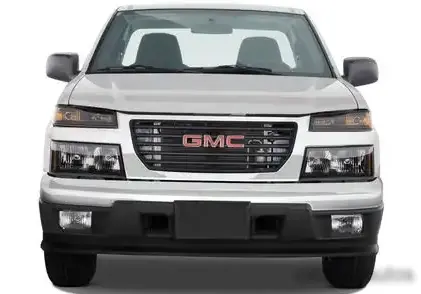
The GMC Canyon, introduced for the 2004 model year, represented General Motors’ entry into the burgeoning mid-size pickup truck market. Positioned below the full-size Sierra, the Canyon was designed to appeal to buyers seeking a more manageable and fuel-efficient truck for everyday use. The Regular Cab configuration, offered throughout its initial production run from 2004 to 2006, provided a no-frills, work-oriented option. Among the engine choices available, the 2.8-liter inline-four cylinder engine paired with a four-wheel drive system and a five-speed manual transmission, represented the base level offering, prioritizing affordability and practicality over outright performance. This configuration aimed at buyers needing a capable truck for light-duty tasks and occasional off-road use.
Technical Specifications
| Brand | GMC |
| Model | Canyon |
| Generation | Canyon I Regular Cab |
| Type (Engine) | 2.8 (175 Hp) 4WD |
| Start of production | 2004 |
| End of production | 2006 |
| Powertrain Architecture | Internal Combustion engine |
| Body type | Pick-up |
| Seats | 2-3 |
| Doors | 2 |
| Fuel Type | Petrol (Gasoline) |
| Weight-to-power ratio | 9.4 kg/Hp |
| Weight-to-torque ratio | 6.5 kg/Nm |
| Power | 175 Hp @ 5600 rpm |
| Power per litre | 63.2 Hp/l |
| Torque | 251 Nm @ 2800 rpm (185.13 lb.-ft. @ 2800 rpm) |
| Maximum engine speed | 6300 rpm |
| Engine layout | Front, Transverse |
| Engine Model/Code | LK5 Vortec 2800 |
| Engine displacement | 2770 cm3 (169.04 cu. in.) |
| Number of cylinders | 4 |
| Engine configuration | Inline |
| Cylinder Bore | 93 mm (3.66 in.) |
| Piston Stroke | 102 mm (4.02 in.) |
| Compression ratio | 10:1 |
| Number of valves per cylinder | 4 |
| Fuel injection system | Multi-port manifold injection |
| Engine aspiration | Naturally aspirated engine |
| Valvetrain | DOHC, CVVT |
| Engine oil capacity | 4.7 l (4.97 US qt | 4.14 UK qt) |
| Coolant | 9.8 l (10.36 US qt | 8.62 UK qt) |
| Kerb Weight | 1638 kg (3611.17 lbs.) |
| Max. weight | 2336 kg (5150 lbs.) |
| Max load | 698 kg (1538.83 lbs.) |
| Trunk (boot) space – minimum | 1243 l (43.9 cu. ft.) |
| Fuel tank capacity | 74.2 l (19.6 US gal | 16.32 UK gal) |
| Permitted trailer load with brakes (12%) | 952 kg (2098.8 lbs.) |
| Length | 4897 mm (192.8 in.) |
| Width | 1717 mm (67.6 in.) |
| Height | 1646 mm (64.8 in.) |
| Wheelbase | 2825 mm (111.22 in.) |
| Front track | 1514 mm (59.61 in.) |
| Rear (Back) track | 1460 mm (57.48 in.) |
| Ride height (ground clearance) | 216 mm (8.5 in.) |
| Minimum turning circle (turning diameter) | 12.4 m (40.68 ft.) |
| Drive wheel | All wheel drive (4×4) |
| Number of gears and type of gearbox | 5 gears, manual transmission |
| Front suspension | Independent coil spring |
| Rear suspension | Leaf spring |
| Front brakes | Ventilated discs |
| Rear brakes | Drum |
| Assisting systems | ABS (Anti-lock braking system) |
| Steering type | Steering rack and pinion |
| Power steering | Hydraulic Steering |
| Tires size | 205/75 R15; 225/70 R15 |
| Wheel rims size | 15 |
Powertrain & Engine Architecture
The heart of this Canyon variant was the LK5 Vortec 2800, a 2.8-liter inline-four cylinder engine. This engine utilized a cast iron block with an aluminum cylinder head, incorporating dual overhead camshafts (DOHC) and variable valve timing (CVVT) for improved efficiency and responsiveness. The multi-port fuel injection system delivered fuel directly to each cylinder, optimizing combustion. The engine produced 175 horsepower at 5600 rpm and 251 Nm (185.13 lb-ft) of torque at 2800 rpm. The five-speed manual transmission provided a relatively deep gear ratio spread, prioritizing fuel economy and low-end torque for hauling and towing. While not a performance-oriented setup, the combination was designed for durability and practicality.
Driving Characteristics
The 2.8-liter engine and manual transmission combination in the Canyon Regular Cab offered a functional, if not exhilarating, driving experience. Acceleration was modest, with the truck feeling noticeably slower than its V6-powered siblings. The manual transmission allowed for greater driver control, but the relatively long throws and somewhat notchy feel weren’t as refined as some competitors. The four-wheel drive system provided enhanced traction in slippery conditions, making it suitable for light off-road use and inclement weather. The leaf spring rear suspension, while robust, contributed to a somewhat firm ride, particularly when unladen. The gear ratios were optimized for work, providing adequate torque for hauling moderate loads, but requiring frequent shifting during highway driving.
Equipment & Trim Levels
The base-level Canyon Regular Cab 2.8 4WD was typically sparsely equipped, reflecting its affordability. Standard features generally included air conditioning, a basic AM/FM radio, and vinyl upholstery. Power windows and locks were often optional extras. The interior was functional and durable, prioritizing practicality over luxury. Optional packages could add features like a CD player, upgraded cloth upholstery, and cruise control. The Regular Cab configuration featured a bench seat capable of seating up to three passengers, although space was limited. The dashboard layout was straightforward and easy to use, with clearly labeled controls.
Chassis & Braking
The Canyon utilized a body-on-frame construction, providing a robust and durable platform. The front suspension consisted of independent coil springs, offering a reasonable level of ride comfort. The rear suspension employed leaf springs, chosen for their load-carrying capacity. Braking duties were handled by ventilated discs at the front and drum brakes at the rear. An anti-lock braking system (ABS) was standard, enhancing safety during emergency braking situations. The steering system was a hydraulic rack-and-pinion setup, providing responsive and predictable handling. The truck’s relatively high ground clearance of 216 mm (8.5 in.) allowed for moderate off-road capability.
Market Reception & Comparison
Critics generally viewed the Canyon 2.8 as a competent but unremarkable offering. The engine was considered adequate for basic tasks but lacked the power and refinement of the available V6 engines. Fuel economy was a strong point, however, making it an attractive option for budget-conscious buyers. Compared to the Canyon’s V6 counterparts, the 2.8-liter model offered significantly lower performance but at a considerably lower price point. Competitors like the Ford Ranger and Toyota Tacoma offered more refined interiors and more powerful engine options, but often at a higher cost. The Canyon 2.8 appealed to buyers prioritizing affordability and practicality over performance and luxury.
Legacy
The 2.8-liter LK5 Vortec engine, while not known for being a powerhouse, proved to be a relatively reliable powertrain. Common issues included minor oil leaks and occasional sensor failures, but major mechanical problems were infrequent. Today, these Canyons are often found as work trucks or affordable transportation options. Their simplicity and durability make them relatively easy to maintain and repair. While not highly sought after by collectors, well-maintained examples of the Canyon 2.8 4WD Regular Cab represent a practical and affordable entry point into the mid-size pickup truck market. The engine’s longevity and the truck’s overall robustness contribute to its continued presence on roads and job sites.