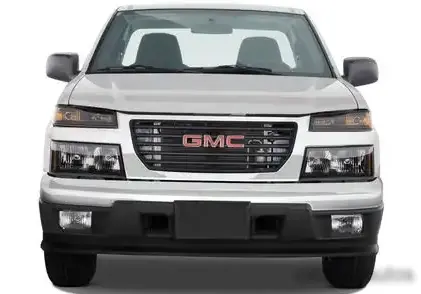
The GMC Canyon I Regular Cab, specifically the 2.9-liter (185 hp) 4WD Automatic variant, was a mid-size pickup truck produced by General Motors from 2007 to 2012. Positioned as an entry-level offering within the Canyon lineup, it provided a more affordable and fuel-conscious alternative to the more powerful V6 and diesel options. This generation Canyon, sharing a platform with the Chevrolet Colorado, represented GMC’s attempt to capture a segment of the pickup market seeking a smaller, more manageable truck than the full-size Sierra. The Regular Cab configuration, with its two or three-passenger capacity, catered to buyers prioritizing utility over passenger space.
Technical Specifications
| Brand | GMC |
| Model | Canyon |
| Generation | Canyon I Regular Cab |
| Type (Engine) | 2.9 (185 Hp) 4WD Automatic |
| Start of production | 2007 |
| End of production | 2012 |
| Powertrain Architecture | Internal Combustion engine |
| Body type | Pick-up |
| Seats | 2-3 |
| Doors | 2 |
| Fuel consumption (urban) | 14.7 l/100 km (16 US mpg, 19.2 UK mpg) |
| Fuel consumption (extra urban) | 10.2 l/100 km (23.1 US mpg, 27.7 UK mpg) |
| Fuel Type | Petrol (Gasoline) |
| Weight-to-power ratio | 9.1 kg/Hp |
| Weight-to-torque ratio | 6.5 kg/Nm |
| Power | 185 Hp @ 5600 rpm |
| Power per litre | 63.3 Hp/l |
| Torque | 258 Nm @ 2800 rpm (190.29 lb.-ft. @ 2800 rpm) |
| Maximum engine speed | 6300 rpm |
| Engine layout | Front, Transverse |
| Engine Model/Code | LLV |
| Engine displacement | 2921 cm3 (178.25 cu. in.) |
| Number of cylinders | 4 |
| Engine configuration | Inline |
| Cylinder Bore | 95.5 mm (3.76 in.) |
| Piston Stroke | 102 mm (4.02 in.) |
| Compression ratio | 10:1 |
| Number of valves per cylinder | 4 |
| Fuel injection system | Multi-port manifold injection |
| Engine aspiration | Naturally aspirated engine |
| Valvetrain | DOHC, CVVT |
| Engine oil capacity | 4.7 l (4.97 US qt | 4.14 UK qt) |
| Coolant | 9.8 l (10.36 US qt | 8.62 UK qt) |
| Kerb Weight | 1685 kg (3714.79 lbs.) |
| Max. weight | 2336 kg (5150 lbs.) |
| Max load | 651 kg (1435.21 lbs.) |
| Trunk (boot) space – minimum | 1245 l (43.97 cu. ft.) |
| Fuel tank capacity | 74.2 l (19.6 US gal | 16.32 UK gal) |
| Length | 4886 mm (192.36 in.) |
| Width | 1742 mm (68.58 in.) |
| Height | 1718 mm (67.64 in.) |
| Wheelbase | 2827 mm (111.3 in.) |
| Front track | 1515 mm (59.65 in.) |
| Rear (Back) track | 1520 mm (59.84 in.) |
| Ride height (ground clearance) | 201.6 mm (7.94 in.) |
| Minimum turning circle (turning diameter) | 12.4 m (40.68 ft.) |
| Drive wheel | All wheel drive (4×4) |
| Number of gears and type of gearbox | 4 gears, automatic transmission Hydra-Matic |
| Front suspension | Independent coil spring |
| Rear suspension | Leaf spring |
| Front brakes | Ventilated discs |
| Rear brakes | Drum |
| Assisting systems | ABS (Anti-lock braking system) |
| Steering type | Steering rack and pinion |
| Power steering | Hydraulic Steering |
| Tires size | 225/70 R15; 235/75 R15 |
| Wheel rims size | 6.5J x 15 |
Powertrain & Engine Architecture
The heart of this Canyon variant was the 2.9-liter (2921 cc) inline-four cylinder engine, designated the LLV engine code by General Motors. This engine featured a cast iron block and aluminum cylinder head, incorporating dual overhead camshafts (DOHC) and Continuously Variable Valve Timing (CVVT) on both intake and exhaust valves. The LLV utilized a multi-port fuel injection system, delivering fuel directly into the intake ports. The engine produced 185 horsepower at 5600 rpm and 190 lb-ft of torque at 2800 rpm. The Hydra-Matic 4L60-E four-speed automatic transmission was the sole transmission option for this configuration. This transmission was known for its durability but lacked the efficiency of more modern transmissions with higher gear counts.
Driving Characteristics
The 2.9-liter engine and four-speed automatic combination provided adequate, but not exhilarating, performance. Acceleration was modest, and passing maneuvers required careful planning. The automatic transmission’s gear ratios were geared more towards fuel economy than outright performance. Compared to the optional 4.3-liter V6, the 2.9L felt significantly underpowered, especially when towing or carrying a substantial load. The lower power output did, however, contribute to better fuel economy. The 4WD system provided enhanced traction in inclement weather and on unpaved surfaces, making it a practical choice for those living in regions with challenging driving conditions.
Equipment & Trim Levels
The 2.9-liter Regular Cab Canyon typically came with a relatively basic set of standard features. These generally included air conditioning, a basic AM/FM stereo, vinyl upholstery, and manual windows and locks. Optional extras included power windows and locks, cruise control, an upgraded stereo system, and a towing package. The interior was functional and durable, prioritizing practicality over luxury. Trim levels were often differentiated by the addition of these optional features, with higher trims offering more comfort and convenience items.
Chassis & Braking
The Canyon I utilized a body-on-frame construction, providing a robust and durable platform. The front suspension consisted of independent coil springs, while the rear suspension employed leaf springs. This setup prioritized load-carrying capacity over ride comfort. Braking duties were handled by ventilated discs at the front and drum brakes at the rear. An Anti-lock Braking System (ABS) was standard, enhancing safety during emergency braking situations. The steering system was a hydraulic rack-and-pinion setup, providing reasonably precise steering feel.
Market Reception & Comparison
Critics generally viewed the 2.9-liter Canyon as a competent, but unremarkable, pickup truck. The engine was often criticized for its lack of power, particularly when compared to the V6 options. However, the 2.9L’s fuel economy was a definite plus. Compared to the V6, the 2.9L offered a lower purchase price and better gas mileage, making it an attractive option for budget-conscious buyers who didn’t require significant towing capacity or performance. The 2.9L was also generally considered more reliable than the 4.3L V6, with fewer reported issues related to engine components.
Legacy
The 2.9-liter LLV engine, while not known for its performance, proved to be a relatively durable and reliable powerplant. Many examples of the 2.9L Canyon are still on the road today, a testament to its longevity. In the used car market, these models are often sought after by those looking for an affordable and dependable pickup truck. Maintenance is generally straightforward and parts are readily available. However, potential buyers should be aware of the engine’s limited power output and the aging four-speed automatic transmission. Overall, the GMC Canyon I Regular Cab 2.9L 4WD Automatic represents a practical and affordable entry point into the world of pickup trucks.