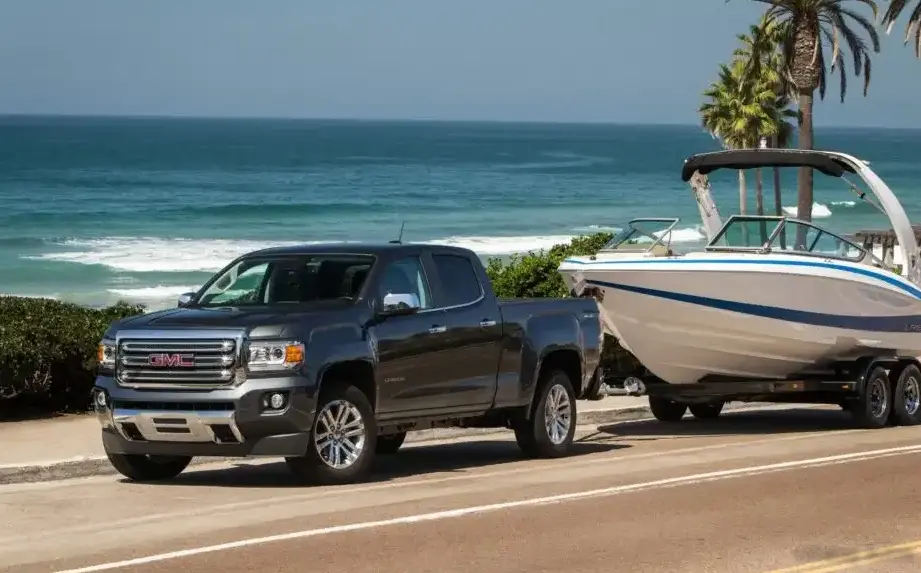
The GMC Canyon II Crew Cab Long Box, specifically equipped with the 2.8-liter Duramax turbodiesel engine producing 181 horsepower and paired with a 6-speed automatic transmission and four-wheel drive, was a mid-size pickup truck sold in North America from 2016 to 2018. This configuration represented a balance between capability, fuel efficiency, and affordability within the Canyon lineup, targeting buyers who needed a versatile truck for both work and personal use. It was part of the second generation of the Canyon, which shared a platform with the Chevrolet Colorado.
Technical Specifications
| Brand | GMC |
| Model | Canyon |
| Generation | Canyon II Crew cab Long box |
| Type (Engine) | 2.8 Duramax TD (181 Hp) 4WD Automatic |
| Start of production | 2016 |
| End of production | 2018 |
| Powertrain Architecture | Internal Combustion engine |
| Body type | Pick-up |
| Seats | 5 |
| Doors | 4 |
| Fuel consumption (urban) | 11.8 l/100 km (19.9 US mpg) |
| Fuel consumption (extra urban) | 8.1 l/100 km (29 US mpg) |
| Fuel Type | Diesel |
| Weight-to-power ratio | 11.9 kg/Hp |
| Weight-to-torque ratio | 4.3 kg/Nm |
| Power | 181 Hp @ 3400 rpm |
| Power per litre | 65.2 Hp/l |
| Torque | 500 Nm @ 2000 rpm (368.78 lb.-ft. @ 2000 rpm) |
| Maximum engine speed | 5000 rpm |
| Engine layout | Front, Longitudinal |
| Engine Model/Code | LWN |
| Engine displacement | 2776 cm3 (169.4 cu. in.) |
| Number of cylinders | 4 |
| Engine configuration | Inline |
| Cylinder Bore | 94 mm (3.7 in.) |
| Piston Stroke | 100 mm (3.94 in.) |
| Compression ratio | 16.5:1 |
| Number of valves per cylinder | 4 |
| Fuel injection system | Diesel Commonrail |
| Engine aspiration | Turbocharger, Intercooler |
| Valvetrain | DOHC |
| Engine oil capacity | 5.7 l (6.02 US qt | 5.02 UK qt) |
| Coolant capacity | 10.6 l (11.2 US qt | 9.33 UK qt) |
| Kerb Weight | 2154 kg (4748.76 lbs.) |
| Max. weight | 2812 kg (6199.4 lbs.) |
| Max load | 658 kg (1450.64 lbs.) |
| Trunk (boot) space – maximum | 1414 l (49.93 cu. ft.) |
| Fuel tank capacity | 79.5 l (21 US gal | 17.49 UK gal) |
| Permitted trailer load with brakes (12%) | 3447 kg (7599.33 lbs.) |
| Length | 5705 mm (224.61 in.) |
| Width | 1886 mm (74.25 in.) |
| Height | 1791 mm (70.51 in.) |
| Wheelbase | 3569 mm (140.51 in.) |
| Front track | 1586 mm (62.44 in.) |
| Rear (Back) track | 1586 mm (62.44 in.) |
| Ride height (ground clearance) | 214 mm (8.43 in.) |
| Minimum turning circle (turning diameter) | 13.6 m (44.62 ft.) |
| Front brakes | Disc, 310×27 mm |
| Rear brakes | Disc, 324×18 mm |
| Number of gears and type of gearbox | 6 gears, automatic transmission Hydra-Matic |
Powertrain & Engine Architecture
The heart of this Canyon variant is the 2.8-liter (2776 cc) Duramax turbodiesel engine, designated with the engine code LWN. This engine is an inline-four cylinder design, featuring a cast iron block and aluminum cylinder head. It utilizes a common rail direct fuel injection system, delivering fuel at extremely high pressures for optimized combustion. The engine is equipped with a variable geometry turbocharger (VGT) and an intercooler to enhance power and efficiency. The double overhead camshaft (DOHC) valvetrain, with four valves per cylinder, contributes to improved breathing and overall performance. The 6-speed Hydra-Matic automatic transmission was chosen for its smooth shifting and durability, providing a balance between fuel economy and usability. This transmission is electronically controlled, adapting shift points based on driving conditions and throttle input.
Driving Characteristics
The 181 horsepower and 368 lb-ft of torque produced by the 2.8-liter Duramax, when coupled with the 6-speed automatic, provided a capable and relatively refined driving experience. While not as quick as the gasoline-powered V6 versions of the Canyon, this diesel offered significantly more low-end torque, making it well-suited for towing and hauling. The automatic transmission’s gear ratios were tuned for everyday driving, prioritizing fuel efficiency over outright acceleration. Compared to a manual transmission equipped Canyon, the automatic offered greater convenience, especially in stop-and-go traffic. However, some drivers noted a slight reduction in responsiveness and fuel economy compared to the manual option. The 4WD system provided enhanced traction in inclement weather and off-road conditions.
Equipment & Trim Levels
The 2.8 Duramax with automatic transmission was typically offered in mid-range trim levels, such as the SLE and SLT. Standard features generally included air conditioning, power windows and locks, a basic infotainment system with a touchscreen display, and a rearview camera. Higher trim levels, like the SLT, added features such as leather upholstery, heated front seats, a premium audio system, and advanced safety technologies like lane departure warning and forward collision alert. Optional extras included a navigation system, a sunroof, and various appearance packages.
Chassis & Braking
The Canyon II utilized a body-on-frame construction, providing a robust and durable platform. The front suspension consisted of independent coil springs, while the rear suspension employed a rigid axle with leaf springs. This setup was designed to balance ride comfort with load-carrying capacity. Braking duties were handled by disc brakes on all four wheels, with ABS (Anti-lock Braking System) as standard equipment. The size of the brake rotors varied slightly depending on the trim level, but generally measured 310mm at the front and 324mm at the rear. The steering system was a rack-and-pinion setup with electric power steering, offering a responsive and comfortable driving experience.
Market Reception & Comparison
The 2.8-liter Duramax Canyon received generally positive reviews, particularly for its fuel efficiency and towing capability. Critics praised the engine’s smooth operation and ample torque, making it a strong competitor to other mid-size diesel pickups. Compared to the gasoline-powered V6 Canyon, the Duramax offered superior fuel economy, especially during highway driving. However, the diesel engine carried a higher initial cost. Against competitors like the Toyota Tacoma and Nissan Frontier, the Canyon offered a more refined interior and a more comfortable ride, but some reviewers noted that the Tacoma held its value better.
Legacy
The 2.8-liter Duramax engine proved to be a reliable and durable powertrain. While some early models experienced issues with diesel particulate filter (DPF) clogging, these were largely addressed through software updates and improved maintenance procedures. Today, used GMC Canyon II models equipped with this engine and automatic transmission are sought after by buyers looking for a capable and fuel-efficient pickup truck. Proper maintenance, including regular oil changes and DPF servicing, is crucial for ensuring the long-term reliability of this powertrain. The Canyon II, in general, helped to revitalize the mid-size pickup truck segment in North America, offering a compelling alternative to full-size trucks for buyers who didn’t need the extra capacity.