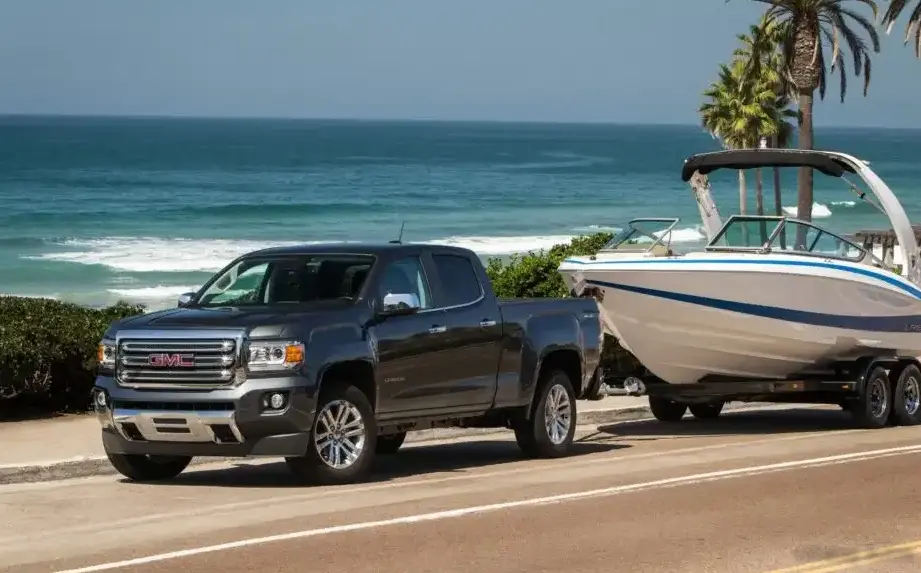
The GMC Canyon II Crew Cab Long Box, specifically equipped with the 2.8-liter Duramax turbodiesel engine producing 181 horsepower and paired with a six-speed automatic transmission, was a mid-size pickup truck sold in North America from 2016 to 2018. This configuration represented a key offering within the Canyon II lineup, targeting buyers seeking a balance of fuel efficiency, towing capability, and everyday usability in a smaller package than full-size trucks like the GMC Sierra. It occupied a middle ground in the Canyon range, positioned above the base 2.5-liter gasoline engine and below the more powerful 3.6-liter V6 options.
Technical Specifications
| Brand | GMC |
| Model | Canyon |
| Generation | Canyon II Crew cab Long box |
| Type (Engine) | 2.8 Duramax TD (181 Hp) Automatic |
| Start of production | 2016 |
| End of production | 2018 |
| Powertrain Architecture | Internal Combustion engine |
| Body type | Pick-up |
| Seats | 5 |
| Doors | 4 |
| Fuel consumption (urban) | 10.7 l/100 km (22 US mpg) |
| Fuel consumption (extra urban) | 7.6 l/100 km (30.9 US mpg) |
| Fuel Type | Diesel |
| Weight-to-power ratio | 11.3 kg/Hp |
| Weight-to-torque ratio | 4.1 kg/Nm |
| Power | 181 Hp @ 3400 rpm |
| Torque | 500 Nm @ 2000 rpm (368.78 lb.-ft. @ 2000 rpm) |
| Maximum engine speed | 5000 rpm |
| Engine layout | Front, Longitudinal |
| Engine Model/Code | LWN |
| Engine displacement | 2776 cm3 (169.4 cu. in.) |
| Number of cylinders | 4 |
| Engine configuration | Inline |
| Cylinder Bore | 94 mm (3.7 in.) |
| Piston Stroke | 100 mm (3.94 in.) |
| Compression ratio | 16.5:1 |
| Number of valves per cylinder | 4 |
| Fuel injection system | Diesel Commonrail |
| Engine aspiration | Turbocharger, Intercooler |
| Valvetrain | DOHC |
| Engine oil capacity | 5.7 l (6.02 US qt | 5.02 UK qt) |
| Coolant capacity | 10.6 l (11.2 US qt | 9.33 UK qt) |
| Kerb Weight | 2052 kg (4523.89 lbs.) |
| Max. weight | 2722 kg (6000.98 lbs.) |
| Max load | 670 kg (1477.1 lbs.) |
| Trunk (boot) space – maximum | 1414 l (49.93 cu. ft.) |
| Fuel tank capacity | 79.5 l (21 US gal | 17.49 UK gal) |
| Permitted trailer load with brakes (12%) | 3493 kg (7700.75 lbs.) |
| Length | 5705 mm (224.61 in.) |
| Width | 1886 mm (74.25 in.) |
| Height | 1793 mm (70.59 in.) |
| Wheelbase | 3569 mm (140.51 in.) |
| Front track | 1586 mm (62.44 in.) |
| Rear (Back) track | 1586 mm (62.44 in.) |
| Ride height (ground clearance) | 214 mm (8.43 in.) |
| Minimum turning circle | 13.6 m (44.62 ft.) |
| Drivetrain Architecture | Rear wheel drive |
| Number of gears and type of gearbox | 6 gears, automatic transmission Hydra-Matic |
| Front suspension | Independent coil spring |
| Rear suspension | Rigid axle suspension, Leaf spring |
| Front brakes | Disc, 324×18 mm |
| Rear brakes | Disc, 324×18 mm |
| Tires size | 265/70 R16; 255/65 R17; 265/60 R18 |
| Wheel rims size | 7J x 16; 8J x 17; 8.5J x 18 |
INTRODUCTION
The GMC Canyon II, launched for the 2015 model year, represented GMC’s entry into the resurgent mid-size pickup truck segment. Built on the GM 820 platform (shared with the Chevrolet Colorado), the Canyon aimed to offer a more refined and upscale experience than its Chevrolet sibling. The 2.8-liter Duramax turbodiesel engine, introduced in 2016, was a significant addition to the Canyon lineup, providing a compelling alternative to gasoline engines for buyers prioritizing fuel economy and towing capacity. The Crew Cab configuration, combined with the long bed, offered a practical combination of passenger space and cargo versatility. This specific 181-horsepower automatic variant was positioned as a sweet spot for many buyers, offering a good balance of performance and efficiency.
Powertrain & Engine Architecture
The heart of this Canyon variant is the 2.8-liter (2776 cc) inline-four cylinder Duramax turbodiesel engine, designated with the engine code LWN. This engine utilizes a common-rail direct fuel injection system, delivering fuel at extremely high pressure for optimized combustion. The engine features a single variable geometry turbocharger (VGT) and an intercooler to enhance power and efficiency. The valvetrain employs a double overhead camshaft (DOHC) design with four valves per cylinder, contributing to improved breathing and overall performance. The six-speed Hydra-Matic automatic transmission was the sole transmission option for this engine. This transmission is known for its smooth shifting and durability, and its gear ratios are tuned to maximize the engine’s torque output for both on-road driving and towing. The transmission features electronically controlled shift points and a tow/haul mode for improved performance when hauling heavy loads.
Driving Characteristics
The 181-horsepower Duramax engine, while not the most powerful option in the Canyon lineup, provided ample torque (500 Nm or 368.78 lb-ft) for everyday driving and towing. The automatic transmission, while smooth, did contribute to a slightly less engaging driving experience compared to the available manual transmission. Acceleration was adequate, but not particularly brisk. The engine’s strength lay in its mid-range power, making it well-suited for highway cruising and hauling loads. The gear ratios in the six-speed automatic were well-matched to the engine’s torque curve, providing good responsiveness in most driving situations. Compared to the 2.5L gasoline engine, the Duramax offered significantly more torque and better fuel economy. Compared to the 3.6L V6, it offered less peak horsepower but comparable towing capacity and superior fuel efficiency.
Equipment & Trim Levels
The Canyon II Crew Cab Long Box 2.8 Duramax TD Automatic was typically offered in SLE and SLT trim levels. The SLE trim included standard features such as air conditioning, power windows and locks, a basic infotainment system with a touchscreen display, and cloth upholstery. The SLT trim added features like leather upholstery, heated front seats, a more advanced infotainment system with navigation, and additional chrome exterior trim. Optional extras included a Bose premium audio system, a rear-seat entertainment system, and various trailering packages. The interior design was generally functional and well-laid-out, with a focus on durability and practicality.
Chassis & Braking
The Canyon II utilized a body-on-frame construction, providing a robust and durable platform. The front suspension featured independent coil springs, while the rear suspension employed a traditional leaf spring setup. This configuration was chosen to balance ride comfort with load-carrying capacity. Braking duties were handled by disc brakes on all four wheels, providing adequate stopping power. An Anti-lock Braking System (ABS) was standard. The Canyon’s chassis was tuned to provide a comfortable ride, but it wasn’t as refined as some unibody crossovers. The rear leaf springs could sometimes result in a slightly bumpy ride when the truck was unloaded.
Market Reception & Comparison
The 2.8-liter Duramax Canyon received generally positive reviews from automotive critics. It was praised for its fuel efficiency, towing capability, and comfortable ride. However, some critics noted that the engine could be somewhat noisy and that the automatic transmission wasn’t as responsive as some competitors. Compared to the gasoline-powered Canyon models, the Duramax offered significantly better fuel economy, particularly for buyers who frequently tow or haul heavy loads. Compared to other mid-size diesel pickups, such as the Toyota Tacoma, the Canyon offered a more refined interior and a more comfortable ride.
Legacy
The 2.8-liter Duramax engine proved to be a reliable and durable powertrain. While some early models experienced issues with diesel particulate filter (DPF) clogging, these issues were largely addressed through software updates and improved maintenance procedures. Today, used Canyon II models with the 2.8-liter Duramax engine are sought after by buyers looking for a capable and fuel-efficient pickup truck. The engine’s longevity and relatively low maintenance costs contribute to its continued popularity in the used car market. The Canyon II, in general, helped to revitalize the mid-size pickup truck segment and established GMC as a serious contender in this market.