Technical Specifications
| Brand | GMC |
| Model | Envoy |
| Generation | Envoy II XL (GMT370) |
| Type (Engine) | 5.3i V8 (290 Hp) Automatic |
| Start of production | 2003 |
| End of production | 2004 |
| Powertrain Architecture | Internal Combustion engine |
| Body type | SUV |
| Seats | 7 |
| Doors | 5 |
| Fuel Type | Petrol (Gasoline) |
| Weight-to-power ratio | 7.6 kg/Hp, 131.3 Hp/tonne |
| Weight-to-torque ratio | 5 kg/Nm, 199.7 Nm/tonne |
| Power | 290 Hp @ 5200 rpm |
| Power per litre | 54.4 Hp/l |
| Torque | 441 Nm @ 4000 rpm |
| Torque (lb-ft) | 325.26 lb.-ft. @ 4000 rpm |
| Maximum engine speed | 5900 rpm |
| Engine layout | Front, Longitudinal |
| Engine Model/Code | LH6 |
| Engine displacement | 5328 cm3 |
| Engine displacement (cu. in.) | 325.13 cu. in. |
| Number of cylinders | 8 |
| Engine configuration | V-engine |
| Cylinder Bore | 96 mm |
| Cylinder Bore (in.) | 3.78 in. |
| Piston Stroke | 92 mm |
| Piston Stroke (in.) | 3.62 in. |
| Compression ratio | 9.5:1 |
| Number of valves per cylinder | 2 |
| Fuel injection system | Multi-port manifold injection |
| Engine aspiration | Naturally aspirated engine |
| Valvetrain | OHV |
| Engine oil capacity | 5.7 l |
| Engine oil capacity (US qt) | 6.02 US qt |
| Engine oil capacity (UK qt) | 5.02 UK qt |
| Coolant | 17 l |
| Coolant (US qt) | 17.96 US qt |
| Coolant (UK qt) | 14.96 UK qt |
| Kerb Weight | 2208 kg |
| Kerb Weight (lbs) | 4867.81 lbs |
| Max. weight | 2812 kg |
| Max. weight (lbs) | 6199.4 lbs |
| Max load | 604 kg |
| Max load (lbs) | 1331.59 lbs |
| Trunk (boot) space – minimum | 631 l |
| Trunk (boot) space – minimum (cu. ft.) | 22.28 cu. ft. |
| Trunk (boot) space – maximum | 2839 l |
| Trunk (boot) space – maximum (cu. ft.) | 100.26 cu. ft. |
| Fuel tank capacity | 96 l |
| Fuel tank capacity (US gal) | 25.36 US gal |
| Fuel tank capacity (UK gal) | 21.12 UK gal |
| Permitted trailer load with brakes (12%) | 3265 kg |
| Permitted trailer load with brakes (12%) (lbs) | 7198.09 lbs |
| Length | 5271 mm |
| Length (in.) | 207.52 in. |
| Width | 1897 mm |
| Width (in.) | 74.69 in. |
| Height | 1917 mm |
| Height (in.) | 75.47 in. |
| Wheelbase | 3275 mm |
| Wheelbase (in.) | 128.94 in. |
| Front track | 1603 mm |
| Front track (in.) | 63.11 in. |
| Rear (Back) track | 1576 mm |
| Rear (Back) track (in.) | 62.05 in. |
| Ride height (ground clearance) | 203 mm |
| Ride height (ground clearance) (in.) | 7.99 in. |
| Minimum turning circle (turning diameter) | 12.6 m |
| Minimum turning circle (turning diameter) (ft) | 41.34 ft |
| Approach angle | 34.6° |
| Departure angle | 23.1° |
| Drivetrain Architecture | The Internal combustion engine (ICE) drives the rear wheels of the vehicle. |
| Drive wheel | Rear wheel drive |
| Number of gears and type of gearbox | 4 gears, automatic transmission Hydra-Matic |
| Front suspension | Double wishbone |
| Rear suspension | Independent multi-link suspension |
| Front brakes | Ventilated discs |
| Rear brakes | Disc |
| Assisting systems | ABS (Anti-lock braking system) |
| Steering type | Steering rack and pinion |
| Power steering | Hydraulic Steering |
| Tires size | 245/65 R17 |
| Wheel rims size | 7.0J x 17 |
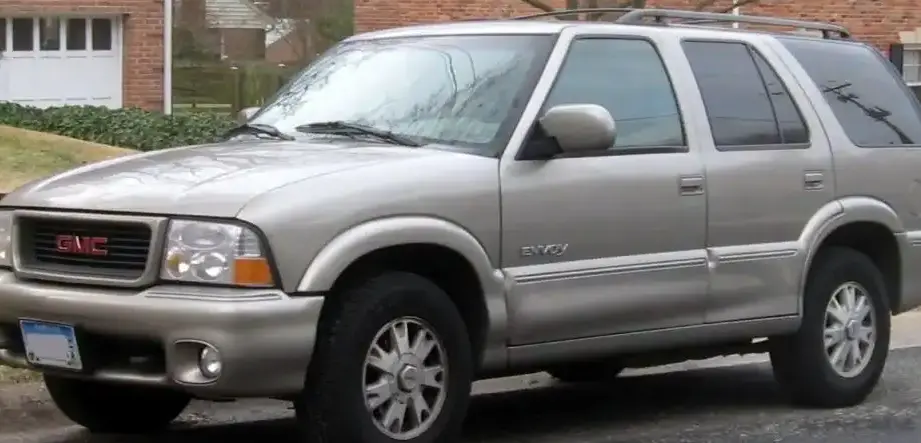
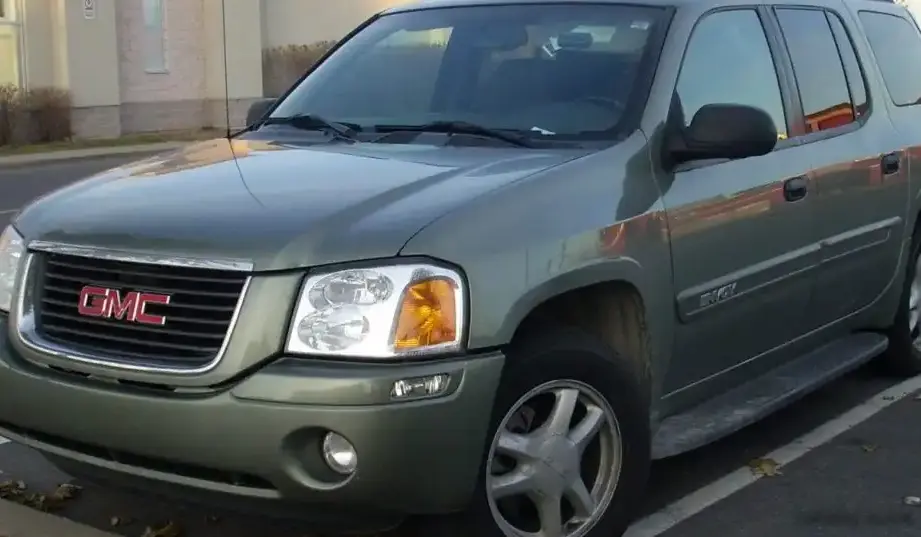
The GMC Envoy II XL, produced for the 2003 and 2004 model years, represented a significant refresh of GMC’s mid-size SUV offering. Built on the GMT370 platform, the Envoy II aimed to provide a blend of truck-based durability with improved refinement and features. The 5.3i V8 variant, equipped with a four-speed automatic transmission, was positioned as a mid-to-upper range offering within the Envoy II lineup, appealing to buyers needing substantial towing capacity and power. It served as a direct competitor to vehicles like the Ford Explorer, Chevrolet TrailBlazer, and Jeep Grand Cherokee.
Powertrain & Engine Architecture
The heart of the Envoy II XL 5.3i was the LH6 engine, a 5.3-liter (325 cubic inch) V8. This engine was a member of GM’s Vortec family, known for its robust construction and relatively simple design. The LH6 featured a cast iron block with aluminum cylinder heads, utilizing a two-valve-per-cylinder overhead valve (OHV) configuration. Fuel delivery was handled by a multi-port fuel injection system, providing precise fuel metering for optimal combustion. The engine produced 290 horsepower at 5200 rpm and 325 lb-ft of torque at 4000 rpm. The four-speed Hydra-Matic 4L60-E automatic transmission was the sole transmission option for this variant. This transmission was a well-established unit, known for its durability and smooth shifting characteristics, though it lacked the efficiency of more modern transmissions.
Driving Characteristics
The 5.3L V8 and 4L60-E automatic combination provided the Envoy II XL with ample power for everyday driving and towing. Acceleration was brisk, though not particularly sporty, with a 0-60 mph time estimated around 7.5-8.5 seconds. The automatic transmission’s gear ratios were tuned for a balance of acceleration and fuel economy. While the transmission offered a “Drive” and “Overdrive” mode, it lacked manual shift capabilities. Compared to the 4.2L inline-six engine option, the V8 offered significantly more power and torque, making it the preferred choice for those who frequently towed trailers or needed extra grunt for hauling. However, the V8’s fuel economy was noticeably lower than the six-cylinder.
Equipment & Trim Levels
The Envoy II XL 5.3i typically came standard with features such as air conditioning, power windows and locks, a CD player, and cloth upholstery. The “XL” designation indicated a step up in trim level, often including features like alloy wheels, upgraded interior trim, and a premium sound system. Optional extras included leather upholstery, a sunroof, a navigation system, and a rear entertainment system. The Envoy II also offered features like automatic headlights, heated mirrors, and a remote keyless entry system.
Chassis & Braking
The GMT370 platform utilized a body-on-frame construction, providing a robust and durable chassis. The front suspension consisted of an independent double wishbone setup, while the rear suspension employed an independent multi-link design. This suspension configuration aimed to provide a comfortable ride while maintaining reasonable handling characteristics. Braking duties were handled by ventilated discs at the front and solid discs at the rear. An Anti-lock Braking System (ABS) was standard equipment. The steering system was a hydraulic rack-and-pinion setup, offering responsive steering feel.
Market Reception & Comparison
The GMC Envoy II XL 5.3i was generally well-received by critics and consumers alike. It was praised for its powerful engine, spacious interior, and comfortable ride. However, some reviewers noted its relatively low fuel economy and somewhat dated interior design compared to newer unibody SUVs. Compared to the Chevrolet TrailBlazer (its mechanically identical sibling), the Envoy II often commanded a slightly higher price due to GMC’s positioning as a more premium brand. The V8 Envoy II offered a significant performance advantage over the base 4.2L inline-six model, but at the cost of increased fuel consumption.
Legacy
The LH6 5.3L V8 engine proved to be a reliable and durable powerplant, and many Envoy II XLs equipped with this engine are still on the road today. The 4L60-E transmission, while not the most technologically advanced, is also known for its longevity when properly maintained. However, like many vehicles of this era, the Envoy II XL is susceptible to rust, particularly in areas with harsh winters. In the used car market, the 5.3L V8 variant typically commands a higher price than the six-cylinder models, reflecting its greater power and towing capacity. The Envoy II XL represents a transitional period in SUV design, bridging the gap between traditional body-on-frame construction and the more modern unibody designs that would soon dominate the market.