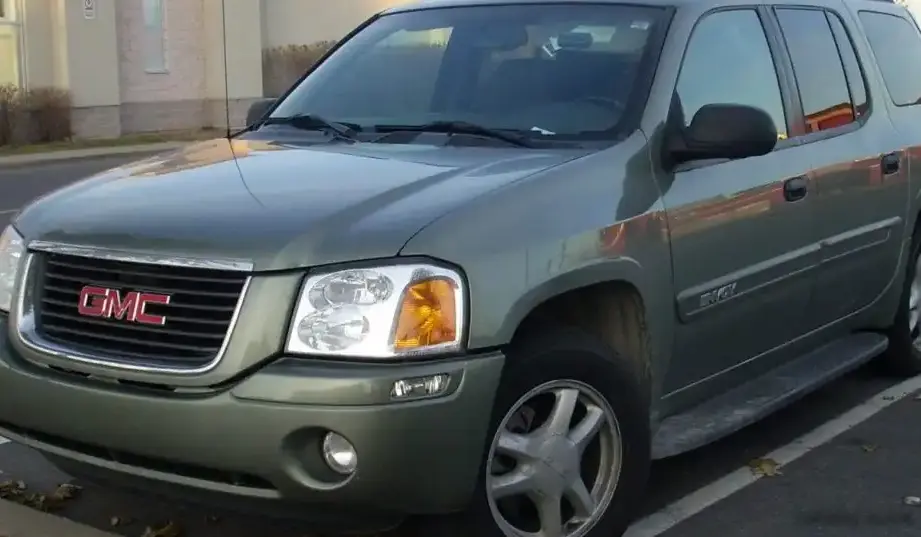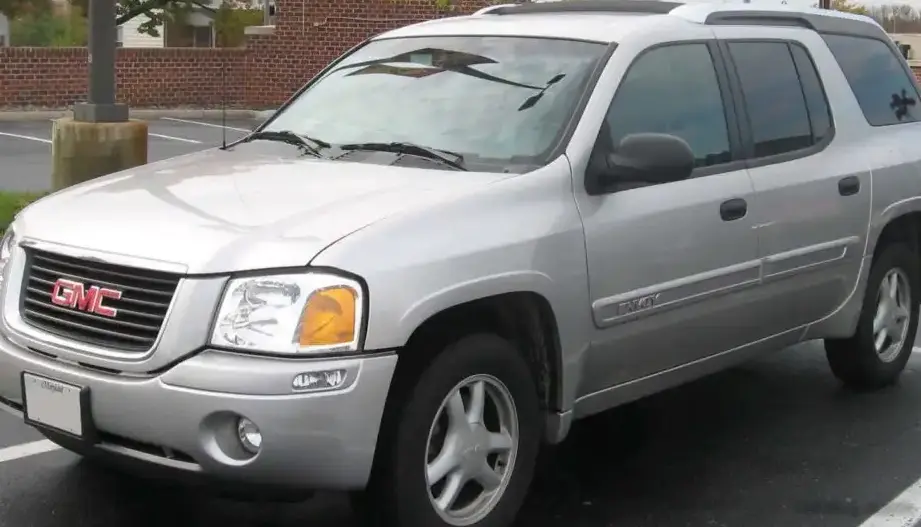
The GMC Envoy II XUV, produced for the 2004 and 2005 model years, represented a significant iteration of GMC’s mid-size SUV offering. Built on the GMT305 platform, the XUV (Cross Utility Vehicle) variant aimed to blend the comfort of an SUV with the cargo-carrying versatility of a pickup truck, featuring a unique retractable rear roof. The 5.3i V8 engine paired with an automatic transmission was the top-tier powertrain option for the Envoy II XUV, positioning it as the more powerful and capable choice within the lineup. This configuration targeted buyers seeking a robust SUV with substantial towing capacity and a premium driving experience.
Technical Specifications
| Brand | GMC |
| Model | Envoy |
| Generation | Envoy II XUV (GMT305) |
| Type (Engine) | 5.3i V8 (290 Hp) Automatic |
| Start of production | 2004 |
| End of production | 2005 |
| Powertrain Architecture | Internal Combustion engine |
| Body type | SUV |
| Seats | 5 |
| Doors | 5 |
| Fuel consumption (urban) | 15.7 l/100 km (15 US mpg, 18 UK mpg, 6.4 km/l) |
| Fuel consumption (extra urban) | 12.3 l/100 km (19.1 US mpg, 23 UK mpg, 8.1 km/l) |
| Fuel consumption (combined) | 13.8 l/100 km (17 US mpg, 20.5 UK mpg, 7.2 km/l) |
| Fuel Type | Petrol (Gasoline) |
| Weight-to-power ratio | 7.7 kg/Hp, 129.3 Hp/tonne |
| Weight-to-torque ratio | 5.1 kg/Nm, 196.6 Nm/tonne |
| Power | 290 Hp @ 5200 rpm |
| Power per litre | 54.4 Hp/l |
| Torque | 441 Nm @ 4000 rpm (325.26 lb.-ft. @ 4000 rpm) |
| Maximum engine speed | 5900 rpm |
| Engine layout | Front, Longitudinal |
| Engine Model/Code | LH6 |
| Engine displacement | 5328 cm3 (325.13 cu. in.) |
| Number of cylinders | 8 |
| Engine configuration | V-engine |
| Cylinder Bore | 96 mm (3.78 in.) |
| Piston Stroke | 92 mm (3.62 in.) |
| Compression ratio | 9.5:1 |
| Number of valves per cylinder | 4 |
| Fuel injection system | Multi-port manifold injection |
| Engine aspiration | Naturally aspirated engine |
| Valvetrain | OHV |
| Engine oil capacity | 5.7 l (6.02 US qt, 5.02 UK qt) |
| Coolant capacity | 17 l (17.96 US qt, 14.96 UK qt) |
| Kerb Weight | 2243 kg (4944.97 lbs.) |
| Max. weight | 2812 kg (6199.4 lbs.) |
| Max load | 569 kg (1254.43 lbs.) |
| Trunk (boot) space – minimum | 1387 l (48.98 cu. ft.) |
| Trunk (boot) space – maximum | 2695 l (95.17 cu. ft.) |
| Fuel tank capacity | 94.6 l (24.99 US gal, 20.81 UK gal) |
| Permitted trailer load with brakes (12%) | 2948 kg (6499.23 lbs.) |
| Length | 5293 mm (208.39 in.) |
| Width | 1897 mm (74.69 in.) |
| Height | 1956 mm (77.01 in.) |
| Wheelbase | 3275 mm (128.94 in.) |
| Front track | 1603 mm (63.11 in.) |
| Rear (Back) track | 1578 mm (62.13 in.) |
| Ride height (ground clearance) | 203 mm (7.99 in.) |
| Minimum turning circle (turning diameter) | 12.5 m (41.01 ft.) |
| Drivetrain Architecture | Rear wheel drive |
| Drive wheel | Rear wheel drive |
| Number of gears and type of gearbox | 4 gears, automatic transmission Hydra-Matic |
| Front suspension | Double wishbone |
| Rear suspension | Independent multi-link suspension |
| Front brakes | Ventilated discs |
| Rear brakes | Disc |
| Assisting systems | ABS (Anti-lock braking system) |
| Steering type | Steering rack and pinion |
| Power steering | Hydraulic Steering |
| Tires size | 245/65 R17 |
| Wheel rims size | 7.0J x 17 |
INTRODUCTION
The GMC Envoy II XUV with the 5.3L V8 engine and automatic transmission was produced for a limited time, spanning the 2004 and 2005 model years. It represented the pinnacle of the GMT305 Envoy line, offering a blend of SUV practicality and truck-like utility. The XUV’s defining feature was its retractable rear roof, transforming the vehicle from a fully enclosed SUV to an open-bed configuration, enhancing cargo flexibility. This model aimed to appeal to customers who desired the versatility of a pickup truck without sacrificing the comfort and convenience of an SUV. It sat at the top of the Envoy range, above the base 4.2L inline-six and the 5.3L V8 with two-wheel drive.
Powertrain & Engine Architecture
The heart of the Envoy II XUV 5.3i was the LH6 5.3-liter (325 cubic inch) Small-Block V8 engine. This engine, a member of GM’s Vortec family, featured a cast iron block with aluminum cylinder heads. It utilized a multi-port fuel injection system, delivering fuel directly to each cylinder for optimized combustion. The engine employed an overhead valve (OHV) valvetrain, known for its simplicity and reliability. The 5.3L V8 produced 290 horsepower at 5200 rpm and 325 lb-ft of torque at 4000 rpm. This power was channeled through a four-speed Hydra-Matic 4L60-E automatic transmission, known for its durability and smooth shifting characteristics. The transmission was electronically controlled, adapting shift points based on driving conditions and throttle input.
Driving Characteristics
The 5.3L V8 and 4L60-E automatic transmission combination provided the Envoy II XUV with ample power for everyday driving and towing. Acceleration was brisk, though not particularly sporty, with the focus being on usable torque for hauling and navigating varied terrain. The automatic transmission offered smooth and predictable shifts, contributing to a comfortable driving experience. Compared to the base 4.2L inline-six, the V8 offered significantly more power and a more relaxed driving experience, especially when fully loaded or towing. While the 5.3L wasn’t as fuel-efficient as the smaller engine, the trade-off in performance was considered worthwhile by many buyers. The rear-wheel-drive configuration provided a stable platform, but traction could be limited in adverse weather conditions.
Equipment & Trim Levels
The Envoy II XUV 5.3i typically came well-equipped, reflecting its position as the premium trim level. Standard features included air conditioning, power windows and locks, a CD player, and cloth upholstery. Leather upholstery, heated seats, a premium sound system, and a sunroof were often available as optional extras. The XUV’s retractable rear roof was a key feature, offering the flexibility to carry larger items or enjoy an open-air experience. Interior trim levels varied, with higher-end models featuring woodgrain accents and upgraded materials. The XUV also included features like automatic headlights and a trip computer.
Chassis & Braking
The Envoy II XUV utilized a body-on-frame construction, providing a robust and durable chassis. The front suspension consisted of an independent double wishbone setup, while the rear suspension employed an independent multi-link design. This configuration aimed to balance ride comfort with handling stability. Braking duties were handled by ventilated discs at the front and solid discs at the rear. An Anti-lock Braking System (ABS) was standard, enhancing safety by preventing wheel lockup during hard braking. The steering system was a rack-and-pinion setup with hydraulic power assist, providing responsive and precise steering control. The vehicle rode on 17-inch wheels with 245/65 R17 tires.
Market Reception & Comparison
The Envoy II XUV was generally well-received by automotive critics, who praised its unique versatility and powerful V8 engine. However, its relatively high price and limited production run hindered its overall sales success. Compared to other mid-size SUVs of the time, such as the Ford Explorer and the Jeep Grand Cherokee, the Envoy II XUV offered a more distinctive design and the added utility of the retractable rear roof. Fuel economy was a common criticism, as the 5.3L V8 was not particularly fuel-efficient. Reliability was generally good, though some owners reported issues with the automatic transmission and the retractable roof mechanism.
Legacy
The GMC Envoy II XUV 5.3i V8 Automatic holds a unique place in GMC’s history as a bold attempt to redefine the mid-size SUV segment. While its production run was short-lived, the XUV’s innovative design and powerful powertrain have earned it a following among collectors and enthusiasts. The LH6 5.3L V8 engine is known for its durability and relatively simple maintenance requirements, making it a reliable choice in the used car market. However, potential buyers should be aware of potential issues with the automatic transmission and the retractable roof mechanism, and ensure that these components are properly maintained. Today, well-maintained examples of the Envoy II XUV 5.3i are becoming increasingly sought after, representing a distinctive and versatile SUV from a bygone era.