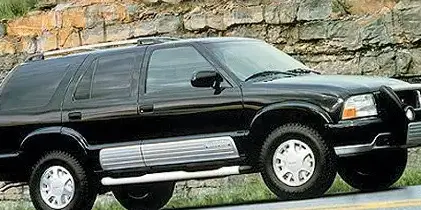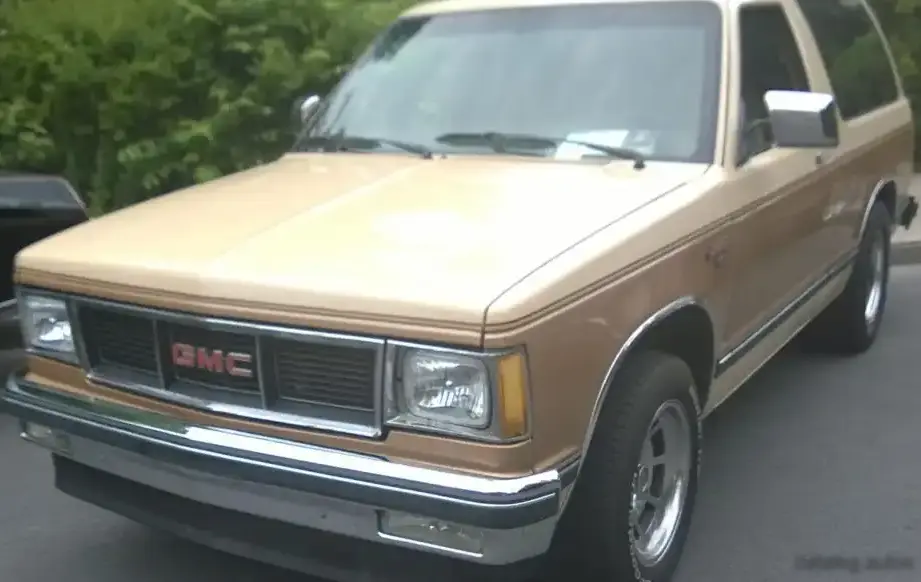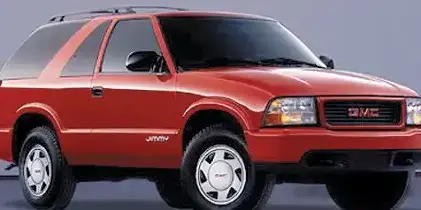
The GMC Jimmy 4.3i V6 4×4 Automatic, produced from 1994 to 2001, represents a significant iteration of GMC’s compact SUV offering. Positioned as a mid-range trim within the second generation (1991-2001) Jimmy lineup, it catered to buyers seeking a blend of off-road capability, V6 power, and the convenience of an automatic transmission. This model shared its platform with the Chevrolet Blazer and Oldsmobile Bravada, all built on the GM S-10 chassis. The 4.3i variant aimed to provide a step up in performance from the base 2.5L four-cylinder engine, while remaining more accessible than the higher-end Bravada trims.
Technical Specifications
| Brand | GMC |
| Model | Jimmy |
| Type (Engine) | 4.3i V6 (190 Hp) 4×4 Automatic |
| Start of production | 1994 |
| End of production | 2001 |
| Powertrain Architecture | Internal Combustion engine |
| Body type | SUV |
| Seats | 4 |
| Doors | 3 |
| Fuel consumption (urban) | 15.6 l/100 km (15.1 US mpg, 18.1 UK mpg, 6.4 km/l) |
| Fuel consumption (extra urban) | 11.7 l/100 km (20.1 US mpg, 24.1 UK mpg, 8.5 km/l) |
| Fuel Type | Petrol (Gasoline) |
| Weight-to-power ratio | 9.5 kg/Hp, 105.5 Hp/tonne |
| Weight-to-torque ratio | 5.3 kg/Nm, 188.2 Nm/tonne |
| Power | 190 Hp @ 4400 rpm |
| Power per litre | 44.2 Hp/l |
| Torque | 339 Nm @ 2800 rpm (250.03 lb.-ft. @ 2800 rpm) |
| Maximum engine speed | 5600 rpm |
| Engine layout | Front, Longitudinal |
| Engine Model/Code | L35 |
| Engine displacement | 4300 cm3 (262.4 cu. in.) |
| Number of cylinders | 6 |
| Engine configuration | V-engine |
| Cylinder Bore | 101.6 mm (4 in.) |
| Piston Stroke | 88.4 mm (3.48 in.) |
| Compression ratio | 9.2:1 |
| Number of valves per cylinder | 2 |
| Fuel injection system | Multi-port manifold injection |
| Engine aspiration | Naturally aspirated engine |
| Engine oil capacity | 4.3 l (4.54 US qt | 3.78 UK qt) |
| Coolant capacity | 11.1 l (11.73 US qt | 9.77 UK qt) |
| Kerb Weight | 1801 kg (3970.53 lbs.) |
| Max. weight | 2200 kg (4850.17 lbs.) |
| Max load | 399 kg (879.64 lbs.) |
| Trunk (boot) space – minimum | 447 l (15.79 cu. ft.) |
| Trunk (boot) space – maximum | 1894 l (66.89 cu. ft.) |
| Fuel tank capacity | 72 l (19.02 US gal | 15.84 UK gal) |
| Permitted trailer load with brakes (12%) | 2540 kg (5599.74 lbs.) |
| Length | 4503 mm (177.28 in.) |
| Width | 1722 mm (67.8 in.) |
| Height | 1648 mm (64.88 in.) |
| Wheelbase | 2553 mm (100.51 in.) |
| Front track | 1453 mm (57.2 in.) |
| Rear (Back) track | 1400 mm (55.12 in.) |
| Ride height (ground clearance) | 203 mm (7.99 in.) |
| Minimum turning circle (turning diameter) | 11.6 m (38.06 ft.) |
| Drive wheel | All wheel drive (4×4) |
| Number of gears and type of gearbox | 4 gears, automatic transmission |
| Front suspension | Torsion |
| Rear suspension | Leaf spring |
| Front brakes | Ventilated discs |
| Rear brakes | Disc |
| Assisting systems | ABS (Anti-lock braking system) |
| Steering type | Steering rack and pinion |
| Power steering | Hydraulic Steering |
| Tires size | 235/75 R15 |
| Wheel rims size | 7.0J x 15 |
Powertrain & Engine Architecture
The heart of the Jimmy 4.3i was the 4.3L (262 cubic inch) L35 V6 engine. This engine, a member of GM’s small-block V6 family, featured a 90-degree V-angle and a cast-iron block with aluminum cylinder heads. It utilized a multi-port fuel injection system, delivering fuel directly to each intake port for improved efficiency and power delivery. The L35 engine employed a two-valve-per-cylinder configuration and a relatively conservative 9.2:1 compression ratio. The 4L60E four-speed automatic transmission was the standard pairing for this engine. This transmission was known for its durability and relatively smooth shifting, though it wasn’t particularly fuel-efficient by modern standards. The 4L60E featured electronic control for improved shift quality and adaptability to driving conditions.
Driving Characteristics
The 190 horsepower and 250 lb-ft of torque provided by the 4.3L V6 and 4L60E automatic combination offered a noticeable improvement in acceleration and towing capacity compared to the base four-cylinder Jimmy. However, it wasn’t a particularly sporty vehicle. The automatic transmission, while convenient, resulted in some power loss and a less engaging driving experience than the available five-speed manual. The 4L60E’s gear ratios were geared more towards cruising and towing than outright performance. In real-world driving, the Jimmy 4.3i felt adequately powered for everyday use and capable of handling moderate off-road terrain. The 4×4 system, typically a part-time system with a two-speed transfer case, provided enhanced traction in slippery conditions.
Equipment & Trim Levels
The Jimmy 4.3i typically included features such as air conditioning, power steering, power brakes, and a basic audio system. Higher trim levels offered options like upgraded upholstery (often cloth or vinyl), cruise control, power windows and locks, and a tilt steering wheel. The interior design was functional but relatively basic, reflecting the Jimmy’s position as an affordable SUV. Exterior features generally included black plastic cladding around the lower body, a relatively simple grille, and modest wheel covers. Optional extras included a sunroof, upgraded sound systems, and tow packages.
Chassis & Braking
The Jimmy’s chassis utilized a body-on-frame construction, providing a robust platform for off-road use. Front suspension consisted of independent torsion bars, while the rear employed leaf springs. This setup prioritized durability and load-carrying capacity over refined handling. Braking duties were handled by ventilated discs at the front and discs at the rear, with ABS (Anti-lock Braking System) becoming increasingly common as standard equipment during the production run. The relatively heavy weight of the vehicle, combined with the leaf spring rear suspension, could result in a somewhat bouncy ride, particularly when unladen.
Market Reception & Comparison
The GMC Jimmy 4.3i V6 4×4 Automatic was generally well-received by consumers seeking a capable and affordable SUV. Critics noted its improved performance over the four-cylinder models, but also pointed out its relatively basic interior and somewhat unrefined ride. Compared to the Chevrolet Blazer, the Jimmy often carried a slightly higher price tag, reflecting GMC’s positioning as a more premium brand. The Oldsmobile Bravada, with its more luxurious appointments, represented a step up in price and refinement. Fuel economy was a common criticism, with the 4.3L V6 returning around 15-20 mpg in mixed driving. Reliability was generally good, although the 4L60E transmission could be prone to issues if not properly maintained.
Legacy
The GMC Jimmy 4.3i V6 4×4 Automatic remains a popular choice among enthusiasts and those seeking a classic SUV. The L35 V6 engine is known for its durability and relative simplicity, making it relatively easy to maintain. However, age-related issues such as corrosion, worn suspension components, and potential transmission problems are common in used examples. Today, these Jimmys are often found in the used car market at affordable prices, making them attractive options for those seeking a rugged and capable vehicle for light off-roading, weekend adventures, or as a nostalgic reminder of a bygone era of SUV design. Parts availability is generally good, thanks to the widespread use of GM components across multiple models.