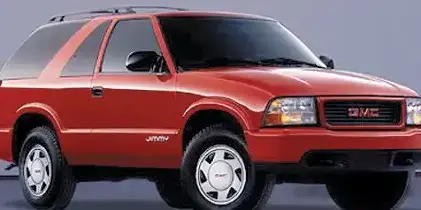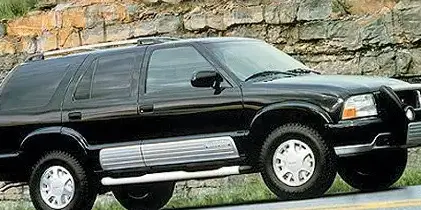
The GMC Jimmy LWB Diamond 4.3i V6 4×4 Automatic, produced from 1994 to 2001, represents a significant iteration of GMC’s popular compact SUV. Part of the second generation (1991-2001) of the Jimmy, the “LWB” designation signifies the longer wheelbase version, offering increased interior space and cargo capacity compared to the standard model. This variant, equipped with the 4.3-liter V6 engine and a four-speed automatic transmission, was positioned as a mid-range offering, balancing capability with everyday usability. It served as a key competitor to vehicles like the Ford Explorer, Chevrolet Blazer, and Jeep Cherokee in the North American market.
Technical Specifications
| Brand | GMC |
| Model | Jimmy |
| Generation | Jimmy LWB |
| Type | Diamond 4.3i V6 (190 Hp) 4×4 Automatic |
| Start of production | 1994 |
| End of production | 2001 |
| Powertrain Architecture | Internal Combustion engine |
| Body type | SUV |
| Seats | 5 |
| Doors | 5 |
| Fuel Type | Petrol (Gasoline) |
| Weight-to-power ratio | 9.9 kg/Hp, 101.3 Hp/tonne |
| Weight-to-torque ratio | 5.5 kg/Nm, 180.8 Nm/tonne |
| Power | 190 Hp @ 4400 rpm |
| Power per litre | 44.2 Hp/l |
| Torque | 339 Nm @ 2800 rpm, 250.03 lb.-ft. @ 2800 rpm |
| Maximum engine speed | 5600 rpm |
| Engine layout | Front, Longitudinal |
| Engine Model/Code | L35 |
| Engine displacement | 4300 cm3, 262.4 cu. in. |
| Number of cylinders | 6 |
| Engine configuration | V-engine |
| Cylinder Bore | 101.6 mm, 4 in. |
| Piston Stroke | 88.4 mm, 3.48 in. |
| Compression ratio | 9.2:1 |
| Number of valves per cylinder | 2 |
| Fuel injection system | Multi-port manifold injection |
| Engine aspiration | Naturally aspirated engine |
| Engine oil capacity | 4.3 l, 4.54 US qt | 3.78 UK qt |
| Coolant | 11.1 l, 11.73 US qt | 9.77 UK qt |
| Kerb Weight | 1875 kg, 4133.67 lbs. |
| Max. weight | 2427 kg, 5350.62 lbs. |
| Max load | 552 kg, 1216.95 lbs. |
| Trunk (boot) space – minimum | 1056 l, 37.29 cu. ft. |
| Trunk (boot) space – maximum | 2098 l, 74.09 cu. ft. |
| Fuel tank capacity | 68 l, 17.96 US gal | 14.96 UK gal |
| Permitted trailer load with brakes (12%) | 2540 kg, 5599.74 lbs. |
| Length | 4796 mm, 188.82 in. |
| Width | 1722 mm, 67.8 in. |
| Height | 1631 mm, 64.21 in. |
| Wheelbase | 2718 mm, 107.01 in. |
| Front track | 1453 mm, 57.2 in. |
| Rear (Back) track | 1400 mm, 55.12 in. |
| Ride height (ground clearance) | 190 mm, 7.48 in. |
| Minimum turning circle (turning diameter) | 13.0 m, 42.65 ft. |
| Drive wheel | All wheel drive (4×4) |
| Number of gears and type of gearbox | 4 gears, automatic transmission |
| Front suspension | Torsion |
| Rear suspension | Leaf spring |
| Front brakes | Ventilated discs |
| Rear brakes | Disc |
| Assisting systems | ABS (Anti-lock braking system) |
| Steering type | Steering rack and pinion |
| Power steering | Hydraulic Steering |
| Tires size | 235/70 R15 |
| Wheel rims size | 7.0J x 15 |
Powertrain & Engine Architecture
The heart of the Jimmy LWB Diamond 4.3i is the 4.3-liter (262 cubic inch) V6 engine, designated the L35. This engine is a member of GM’s small-block V6 family, known for its durability and relatively simple design. It features a 90-degree V-angle, two valves per cylinder, and a cast iron block with aluminum cylinder heads. Fuel delivery is managed by a multi-port fuel injection system, providing precise fuel metering for improved efficiency and performance. The engine produces 190 horsepower at 4400 rpm and 339 Nm (250 lb-ft) of torque at 2800 rpm. This power is then sent to all four wheels through a four-speed automatic transmission (likely the 4L60E), chosen for its ease of use and suitability for both on-road and light off-road driving. The automatic transmission’s gear ratios were tuned for a balance of acceleration and fuel economy, prioritizing usability over outright performance.
Driving Characteristics
The 190 hp and 339 Nm of torque provided by the 4.3L V6 and automatic transmission combination resulted in adequate, but not exhilarating, performance. Acceleration from 0 to 60 mph was typically in the 9-10 second range. The automatic transmission, while smooth, lacked the responsiveness of a manual gearbox, and the engine felt somewhat strained when pushed hard. However, for everyday driving and moderate towing, the powertrain proved capable and reliable. The four-wheel-drive system, typically part-time with a 2Hi, 4Hi, and 4Lo selection, provided enhanced traction in slippery conditions and allowed for light off-road exploration. Compared to the available 2.2L four-cylinder engine, the 4.3L V6 offered a significant power boost, making it a more desirable choice for those who frequently carried passengers or cargo, or engaged in towing. It didn’t match the performance of the Blazer’s optional V8, but offered a better fuel economy.
Equipment & Trim Levels
The Jimmy LWB Diamond trim level typically included features such as air conditioning, power windows and locks, an upgraded sound system, and cloth upholstery. Optional extras included a sunroof, leather seats, and a premium audio system. The interior design was functional and straightforward, prioritizing practicality over luxury. The longer wheelbase of the LWB model provided noticeably more rear legroom and cargo space compared to the standard Jimmy, making it a more comfortable and versatile vehicle for families. The dashboard layout was typical of early 1990s GM vehicles, with clearly labeled controls and a relatively simple instrument cluster.
Chassis & Braking
The Jimmy LWB utilized a body-on-frame construction, providing a robust and durable platform. The front suspension consisted of independent torsion bars, while the rear suspension employed leaf springs. This setup offered a comfortable ride on paved roads, but could feel somewhat bouncy when driving over rough terrain. Braking duties were handled by ventilated discs at the front and discs at the rear, with ABS (Anti-lock Braking System) as a standard feature. The braking system provided adequate stopping power for the vehicle’s weight and performance capabilities. Steering was via a hydraulic power-assisted rack and pinion system, offering responsive and precise handling.
Market Reception & Comparison
The GMC Jimmy LWB Diamond 4.3i V6 4×4 Automatic was generally well-received by critics and consumers alike. It was praised for its spacious interior, comfortable ride, and capable four-wheel-drive system. However, some reviewers noted its relatively lackluster performance and dated interior design. Compared to other trims in the Jimmy lineup, the 4.3L V6 Automatic offered a significant upgrade in power and towing capacity, but at the expense of fuel economy. The 2.2L four-cylinder models were more fuel-efficient, while the optional V8 offered more performance. Reliability was generally good, with the 4.3L V6 engine proving to be a durable and long-lasting powerplant.
Legacy
The GMC Jimmy LWB Diamond 4.3i V6 4×4 Automatic has maintained a modest following among enthusiasts and collectors. The 4.3L V6 engine is known for its reliability and relatively low maintenance costs. While not a particularly rare or valuable vehicle, well-maintained examples can still command reasonable prices in the used car market. The Jimmy LWB represents a classic example of a 1990s American SUV, offering a blend of practicality, capability, and affordability. Its body-on-frame construction and durable powertrain have ensured that many examples remain on the road today, serving as a testament to its enduring quality.