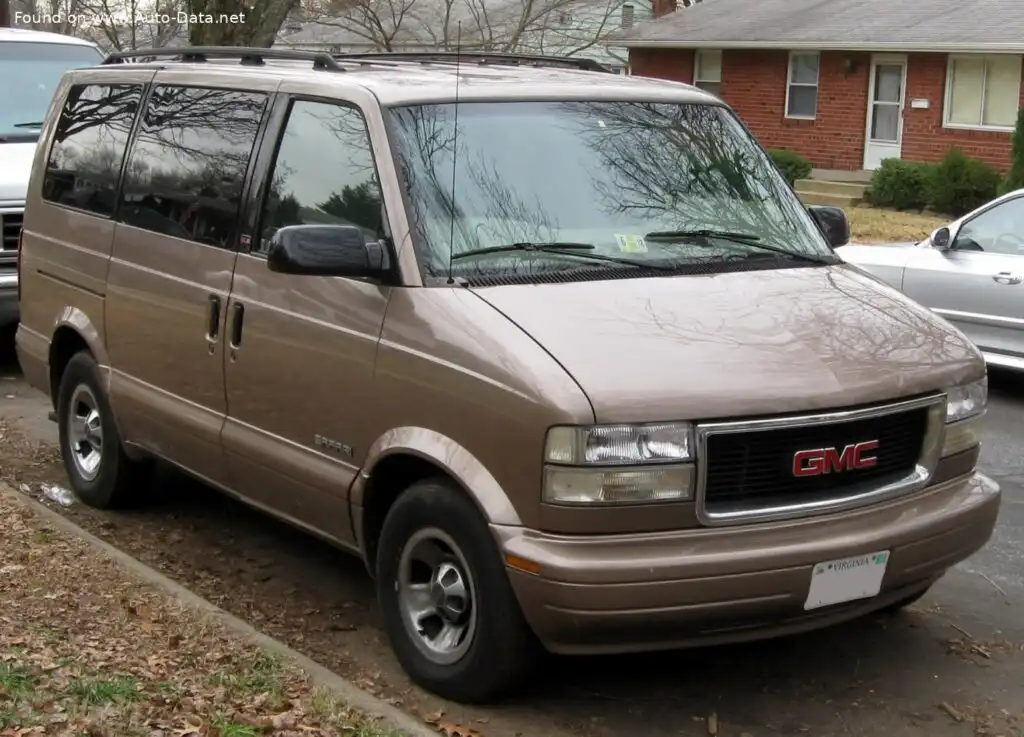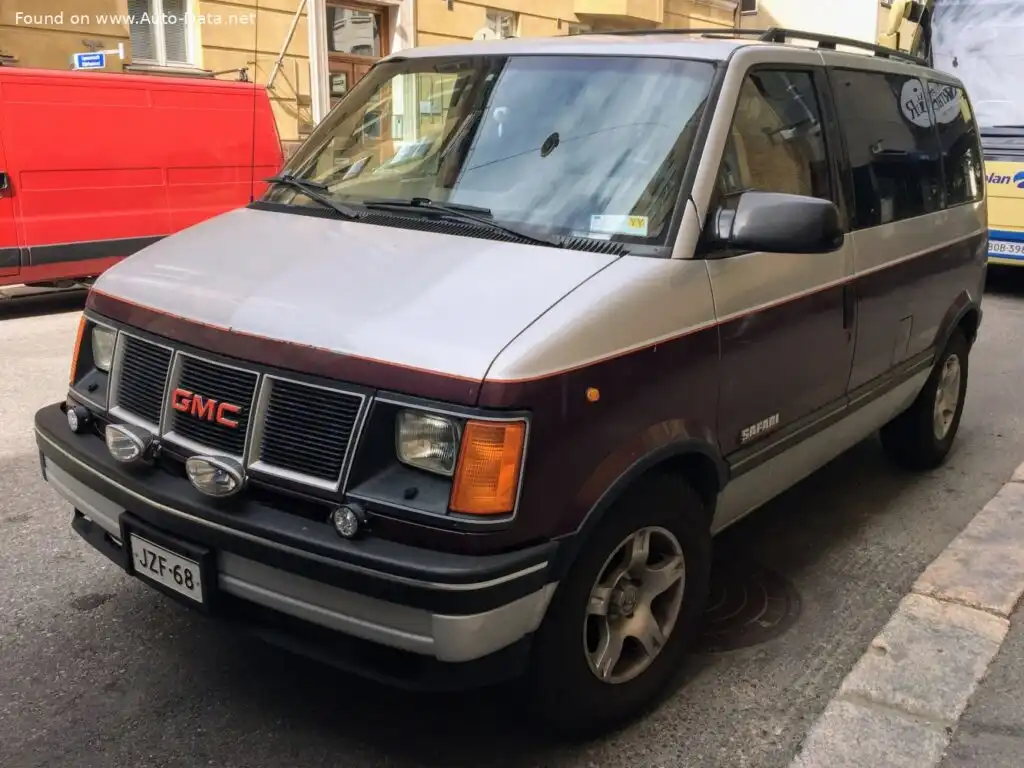
The GMC Safari I 2.5 EFi (92 Hp) Automatic, produced from 1985 to 1994, represents a significant entry in the full-size van segment for General Motors. Part of the broader Safari line, this variant occupied the lower end of the performance spectrum, aimed at buyers prioritizing affordability and practicality over outright speed. It was built on the GMT400 platform, shared with the Chevrolet Van and Oldsmobile Silhouette, and served as a workhorse vehicle for families and commercial users alike. The 2.5-liter engine and automatic transmission combination was a popular choice for those seeking a comfortable and economical driving experience, though it differed considerably from the more powerful V6 options available.
Technical Specifications
| Brand | GMC |
| Model | Safari |
| Generation | Safari I |
| Type (Engine) | 2.5 EFi (92 Hp) Automatic |
| Start of production | 1985 |
| End of production | 1994 |
| Powertrain Architecture | Internal Combustion engine |
| Body type | Minivan |
| Seats | 7 |
| Doors | 3 |
| Fuel Type | Petrol (Gasoline) |
| Power | 92 Hp @ 4400 rpm |
| Power per litre | 37.2 Hp/l |
| Torque | 182 Nm @ 2800 rpm / 134.24 lb.-ft. @ 2800 rpm |
| Engine layout | Front, Longitudinal |
| Engine Model/Code | 151 CID |
| Engine displacement | 2474 cm3 / 150.97 cu. in. |
| Number of cylinders | 4 |
| Engine configuration | Inline |
| Cylinder Bore | 101.6 mm / 4 in. |
| Piston Stroke | 76.2 mm / 3 in. |
| Compression ratio | 9.3:1 |
| Fuel injection system | Multi-port manifold injection |
| Engine aspiration | Naturally aspirated engine |
| Trunk (boot) space – minimum | 626 l / 22.11 cu. ft. |
| Trunk (boot) space – maximum | 4128 l / 145.78 cu. ft. |
| Fuel tank capacity | 64 l / 16.91 US gal | 14.08 UK gal |
| Length | 4490 mm / 176.77 in. |
| Width | 1956 mm / 77.01 in. |
| Height | 1905 mm / 75 in. |
| Wheelbase | 2819 mm / 110.98 in. |
| Front track | 1654 mm / 65.12 in. |
| Rear (Back) track | 1654 mm / 65.12 in. |
| Front overhang | 777 mm / 30.59 in. |
| Rear overhang | 894 mm / 35.2 in. |
| Drag coefficient (Cd) | 0.38 |
| Drivetrain Architecture | The Internal combustion engine (ICE) drives the rear wheels of the vehicle. |
| Drive wheel | Rear wheel drive |
| Number of gears and type of gearbox | 4 gears, automatic transmission |
| Front suspension | Independent coil spring |
| Rear suspension | Leaf spring |
| Front brakes | Disc |
| Rear brakes | Drum |
| Tires size | 195/75 R15 |
| Wheel rims size | 15 |
Powertrain & Engine Architecture
The heart of the Safari I 2.5 EFi Automatic is the 151 cubic inch (2.474 liter) inline-four cylinder engine. This engine, designated with various codes depending on the year, was a relatively simple and robust design. It featured a cast iron block and cylinder head, and utilized a multi-port fuel injection system for improved efficiency and drivability compared to earlier carbureted versions. The engine’s 9.3:1 compression ratio and single overhead camshaft design contributed to its modest power output. The four-speed automatic transmission, a TH700R4 variant, was chosen for its smoothness and ease of use, making it ideal for the target demographic. This transmission featured a torque converter and planetary gearsets, providing relatively smooth shifts, though it wasn’t known for its sporty responsiveness.
Driving Characteristics
The 92 horsepower and 182 Nm (134 lb-ft) of torque produced by the 2.5-liter engine translated to adequate, but not exhilarating, performance. Acceleration was leisurely, and passing maneuvers required careful planning. The automatic transmission’s gear ratios were optimized for fuel economy and low-end torque, rather than outright speed. Compared to the available V6 engines in the Safari lineup, this variant felt significantly underpowered, especially when fully loaded with passengers and cargo. However, the automatic transmission provided a comfortable and convenient driving experience, particularly in city traffic. The rear-wheel drive configuration offered decent handling characteristics, but the van’s high center of gravity and relatively soft suspension limited its cornering ability.
Equipment & Trim Levels
The 2.5 EFi Automatic trim typically represented the base model of the Safari I. Standard features generally included cloth upholstery, a basic AM/FM radio, and manual windows and locks. Air conditioning was often an optional extra, as were power windows and locks. The interior was designed for practicality and durability, with vinyl flooring and easily cleanable surfaces. Higher trim levels, such as the Safari SLE, offered more luxurious features like upgraded upholstery, a better sound system, and additional convenience items. The base trim focused on providing essential transportation at an affordable price point.
Chassis & Braking
The Safari I utilized a body-on-frame construction, providing a robust and durable chassis. The front suspension consisted of independent coil springs, while the rear suspension employed a traditional leaf spring setup. This configuration prioritized load-carrying capacity and ride comfort over sporty handling. The braking system featured disc brakes on the front wheels and drum brakes on the rear. While adequate for normal driving conditions, the braking performance was not particularly strong, especially when the van was heavily loaded. The 15-inch wheels were typically fitted with 195/75 R15 tires, providing a reasonable balance of ride comfort and handling.
Market Reception & Comparison
The GMC Safari I 2.5 EFi Automatic was generally well-received by buyers seeking an affordable and practical van. Critics acknowledged its spacious interior and comfortable ride, but noted its lack of power and somewhat dated styling. Compared to the V6-powered Safari models, the 2.5-liter version offered significantly lower fuel consumption, making it an attractive option for budget-conscious buyers. However, the V6 models provided a much more enjoyable driving experience, particularly on the highway. The Safari also competed with other full-size vans from Ford and Dodge, each offering similar features and price points.
Legacy
The 2.5-liter engine and automatic transmission combination in the GMC Safari I proved to be relatively reliable, although regular maintenance was essential. The engine was known for its longevity, and the automatic transmission, while not particularly sophisticated, was generally durable. Today, these vans are relatively affordable on the used car market, but finding well-maintained examples can be challenging. They remain popular with those seeking a spacious and practical vehicle for work or family use, and their simple mechanical design makes them relatively easy to repair. While not a performance icon, the Safari I 2.5 EFi Automatic served a valuable role in the full-size van segment, providing a dependable and economical transportation solution for many years.