
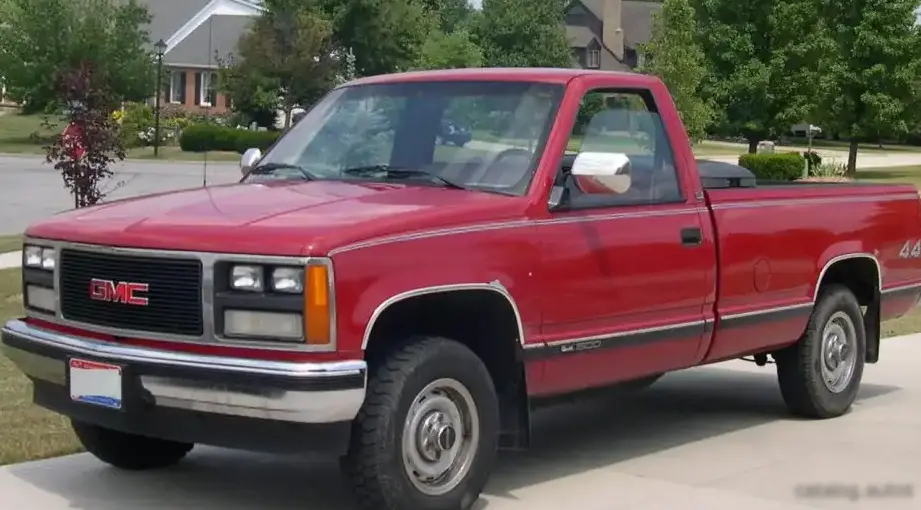
The GMC Sierra 1500, in its first generation (GMT400), represented GMC’s entry into the increasingly popular full-size pickup truck market. Produced from 1988 through 1992, this iteration of the Sierra aimed to provide a robust and capable work vehicle, competing directly with offerings from Ford and Chevrolet. The Regular Cab Long Wheelbase Wideside model, equipped with the 5.0-liter V8 engine producing 175 horsepower, occupied a significant position in the lineup, offering a balance between affordability and capability for buyers prioritizing utility over outright performance. This specific configuration was a mainstay for those needing a dependable truck for hauling and everyday tasks.
Technical Specifications
| Brand | GMC |
| Model | Sierra 1500 |
| Generation | Sierra 1500 I (GMT400) Regular cab LWB Wideside |
| Type (Engine) | 5.0 V8 (175 Hp) |
| Start of production | 1988 |
| End of production | 1992 |
| Powertrain Architecture | Internal Combustion engine |
| Body type | Pick-up |
| Seats | 3 |
| Doors | 2 |
| Fuel Type | Petrol (Gasoline) |
| Power | 175 Hp @ 4000 rpm |
| Torque | 366 Nm @ 2400 rpm / 269.95 lb.-ft. @ 2400 rpm |
| Engine layout | Front, Longitudinal |
| Number of cylinders | 8 |
| Engine configuration | V-engine |
| Cylinder Bore | 95 mm / 3.74 in. |
| Piston Stroke | 88.39 mm / 3.48 in. |
| Compression ratio | 9.3:1 |
| Fuel injection system | Single-point injection |
| Engine aspiration | Naturally aspirated engine |
| Max. weight | 2767 kg / 6100.19 lbs |
| Fuel tank capacity | 129 l / 34.08 US gal | 28.38 UK gal |
| Length | 5547 mm / 218.39 in. |
| Width | 1951 mm / 76.81 in. |
| Height | 1788 mm / 70.39 in. |
| Wheelbase | 3340 mm / 131.5 in. |
| Front overhang | 886 mm / 34.88 in. |
| Rear overhang | 1321 mm / 52.01 in. |
| Drivetrain Architecture | The Internal combustion engine (ICE) drives the rear wheels of the vehicle. |
| Drive wheel | Rear wheel drive |
| Number of gears and type of gearbox | 5 gears, manual transmission |
| Front suspension | Independent coil spring |
| Rear suspension | Rigid axle suspension, Leaf spring |
| Front brakes | Disc |
| Rear brakes | Drum |
| Tires size | 225/75 R15 |
Powertrain & Engine Architecture
The heart of this Sierra 1500 variant was the 5.0-liter (305 cubic inch) small-block Chevrolet V8 engine. Designated as the throttle body injection (TBI) system, it was a relatively simple fuel delivery method compared to multi-port fuel injection. This system utilized two injectors positioned in the throttle body, providing fuel to all eight cylinders. The engine featured a 9.3:1 compression ratio and a hydraulic lifter camshaft, contributing to its durability and relatively low maintenance requirements. The 5.0L V8 was known for its broad torque curve, making it suitable for hauling and towing. The engine was mounted longitudinally in the chassis, driving the rear wheels. The standard transmission for this model was a 5-speed manual, although a 4-speed automatic transmission was also available as an option.
Driving Characteristics
The 175 horsepower and 269 lb-ft of torque provided by the 5.0L V8, coupled with the 5-speed manual transmission, resulted in adequate, but not exhilarating, performance. Acceleration was modest, and the truck wasn’t designed for quick sprints. However, the engine’s torque allowed for confident towing and hauling capabilities. The manual transmission offered drivers more control, particularly when navigating challenging terrain or managing loads. The gear ratios were optimized for work, prioritizing low-end grunt over high-speed cruising. Compared to the available 6.2L diesel engine, the 5.0L V8 offered less torque but was significantly lighter and more responsive. Against the later fuel-injected variants, the TBI system felt somewhat less refined and offered slightly lower fuel economy.
Equipment & Trim Levels
The Sierra 1500 Regular Cab LWB Wideside with the 5.0L V8 typically represented an entry-level or mid-range trim. Standard features included a basic vinyl interior, a simple dashboard layout with analog gauges, and manual windows and locks. A AM/FM radio was standard, with an optional cassette player available. The “Wideside” designation referred to the width of the bed, offering increased cargo capacity. Optional extras included air conditioning, power steering, upgraded upholstery, and a sliding rear window. The interior was functional and durable, designed to withstand the rigors of work truck use. The exterior typically featured minimal chrome trim, reflecting its work-oriented nature.
Chassis & Braking
The GMT400 chassis featured a body-on-frame construction, providing a robust and durable platform. The front suspension utilized independent coil springs, offering a reasonable ride quality for a full-size pickup. The rear suspension employed a traditional leaf spring setup, designed to handle heavy loads. Braking duties were handled by disc brakes at the front and drum brakes at the rear. The braking system was adequate for the truck’s weight and intended use, but lacked the stopping power of more modern systems. The rear drum brakes were a cost-saving measure common in this class of vehicle at the time. The truck’s relatively simple suspension design prioritized durability and load-carrying capacity over sophisticated handling.
Market Reception & Comparison
The GMC Sierra 1500 with the 5.0L V8 and manual transmission was generally well-received as a dependable and affordable work truck. Critics noted its adequate power and torque for most tasks, but also pointed out its relatively basic interior and lack of refinement compared to some competitors. Fuel economy was typical for a full-size pickup of the era, averaging around 14-16 mpg in mixed driving. Compared to the Chevrolet C/K 1500 (which shared the same platform and engine), the Sierra offered slightly more upscale styling and trim options. The 5.0L V8 was considered a good compromise between power and fuel economy, but the diesel engine was preferred by those who frequently towed heavy loads.
Legacy
The GMT400 Sierra 1500, particularly the 5.0L V8 variant, has become a popular choice among classic truck enthusiasts. The engine is known for its reliability and relatively simple maintenance requirements. Parts availability remains good, making it relatively easy to keep these trucks on the road. While not a high-performance machine, the 5.0L V8-powered Sierra 1500 represents a solid and dependable work truck from a bygone era. Today, these trucks are often found in restored condition or used as daily drivers, appreciated for their ruggedness and classic styling. The TBI system, while dated, is relatively straightforward to diagnose and repair, contributing to the truck’s long-term viability.

