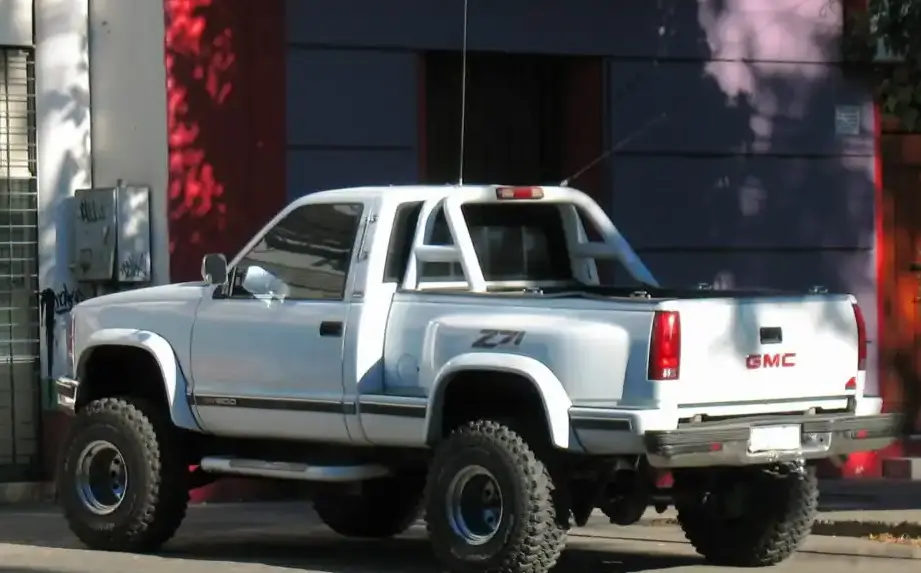
The GMC Sierra 1500, in its first generation (GMT400), represented GMC’s entry into the increasingly popular full-size pickup truck market. Produced from 1988 through 1992, this iteration of the Sierra aimed to provide a balance of capability, comfort, and value. The Regular Cab SWB (Short Wheelbase) Sportside configuration, equipped with the 4.3L V6 engine and a four-speed automatic transmission, occupied a key position in the lineup as an accessible and practical work truck option. It served as a stepping stone for buyers who didn’t require the power of the larger V8 engines or the added expense of four-wheel drive.
Technical Specifications
| Brand | GMC |
| Model | Sierra 1500 |
| Generation | Sierra 1500 I (GMT400) Regular cab SWB Sportside |
| Type (Engine) | 4.3 V6 (160 Hp) Automatic |
| Start of production | 1988 |
| End of production | 1992 |
| Powertrain Architecture | Internal Combustion engine |
| Body type | Pick-up |
| Seats | 3 |
| Doors | 2 |
| Fuel Type | Petrol (Gasoline) |
| Power | 160 Hp @ 4000 rpm |
| Torque | 319 Nm @ 2400 rpm / 235.28 lb.-ft. @ 2400 rpm |
| Engine layout | Front, Longitudinal |
| Number of cylinders | 6 |
| Engine configuration | V-engine |
| Cylinder Bore | 101.6 mm / 4 in. |
| Piston Stroke | 88.39 mm / 3.48 in. |
| Compression ratio | 9.3:1 |
| Fuel injection system | Single-point injection |
| Engine aspiration | Naturally aspirated engine |
| Max. weight | 2540 kg / 5599.74 lbs. |
| Fuel tank capacity | 95 l / 25.1 US gal | 20.9 UK gal |
| Permitted trailer load with brakes (12%) | 3402 kg / 7500.13 lbs. |
| Length | 5065 mm / 199.41 in. |
| Width | 1958 mm / 77.09 in. |
| Height | 1788 mm / 70.39 in. |
| Wheelbase | 2985 mm / 117.52 in. |
| Front overhang | 886 mm / 34.88 in. |
| Rear overhang | 1194 mm / 47.01 in. |
| Drivetrain Architecture | The Internal combustion engine (ICE) drives the rear wheels of the vehicle. |
| Drive wheel | Rear wheel drive |
| Number of gears and type of gearbox | 4 gears, automatic transmission |
| Front suspension | Independent coil spring |
| Rear suspension | Rigid axle suspension, Leaf spring |
| Front brakes | Disc |
| Rear brakes | Drum |
| Tires size | 225/75 R15 |
Introduction
The GMT400 platform, introduced in 1988, marked a significant redesign for GMC’s full-size pickup line. This generation aimed to modernize the trucks, improving interior space, ride quality, and overall refinement. The Sierra 1500, positioned as GMC’s counterpart to the Chevrolet C/K series, offered a range of configurations, including various cab styles, bed lengths, and engine options. The Regular Cab SWB Sportside with the 4.3L V6 and automatic transmission was a popular choice for buyers seeking a dependable and affordable truck for everyday use and light-duty tasks. It represented the entry point into the Sierra 1500 range, offering a balance between cost and capability.
Powertrain & Engine Architecture
The heart of this Sierra 1500 variant was the 4.3L (262 cubic inch) V6 engine. Designated with various codes depending on the year (likely a 6C or similar), this engine was a member of GM’s small-block V6 family. It featured a 90-degree V-angle and utilized a cast iron block with aluminum cylinder heads. The engine employed a throttle body injection (TBI) fuel system, a relatively simple single-point injection system that delivered fuel into the intake manifold. The valvetrain consisted of two valves per cylinder, operated by a hydraulic lifter camshaft. The four-speed automatic transmission (likely a 4L60 or similar) was a crucial component, providing relatively smooth shifting and ease of operation. This transmission was chosen for its reliability and suitability for general-purpose driving, rather than performance.
Driving Characteristics
The 160 horsepower and 235 lb-ft of torque produced by the 4.3L V6, coupled with the four-speed automatic, resulted in adequate, but not exhilarating, performance. Acceleration was modest, and the truck wasn’t designed for rapid speeds. The automatic transmission’s gear ratios were optimized for fuel economy and towing capacity, rather than quick acceleration. Compared to the available V8 engines (typically 305 or 350 cubic inch), the 4.3L V6 offered significantly less power, making it less suitable for heavy hauling or demanding tasks. However, it provided a smoother and quieter driving experience than the larger engines, and its lighter weight contributed to slightly improved fuel economy. The short wheelbase of the SWB model made it maneuverable in tight spaces, but also resulted in a somewhat firmer ride compared to the longer wheelbase models.
Equipment & Trim Levels
The Regular Cab SWB Sportside 4.3L Automatic typically came with a fairly basic level of equipment. Standard features generally included a vinyl bench seat, basic instrumentation (speedometer, fuel gauge, temperature gauge), and an AM/FM radio. The “Sportside” designation indicated a slightly more upscale appearance package, often including color-matched exterior trim and upgraded interior materials compared to the base “Work Truck” models. Optional extras could include air conditioning, power steering, power brakes, a tilt steering wheel, and upgraded audio systems. The interior was functional and durable, designed to withstand the rigors of daily use. The trim level was positioned as a step up from the bare-bones work truck, offering a degree of comfort and convenience without the added cost of the higher-end trims.
Chassis & Braking
The GMT400 chassis featured an independent coil spring front suspension, providing a reasonable level of ride comfort. The rear suspension utilized a traditional leaf spring setup, which was robust and capable of handling moderate loads. Brakes were disc brakes in the front and drum brakes in the rear, a common configuration for trucks of this era. The braking system was adequate for the truck’s weight and performance, but lacked the stopping power of more modern systems. The frame was a full-length ladder frame, providing a solid foundation for the truck’s body and components. Tire size was typically 225/75R15, offering a balance of ride comfort and durability.
Market Reception & Comparison
The 4.3L V6-powered Sierra 1500 was generally well-received as a practical and affordable work truck. Critics noted its adequate performance for everyday tasks and its relatively good fuel economy compared to the V8 models. However, it was often criticized for its lack of power when towing or hauling heavy loads. Compared to the 305 V8, the 4.3L offered a noticeable decrease in performance, but a slight improvement in fuel efficiency. Compared to the 350 V8, the difference in power and capability was even more significant. The 4.3L automatic combination appealed to buyers who prioritized affordability and fuel economy over outright performance.
Legacy
The GMT400 Sierra 1500, particularly the 4.3L V6 automatic variant, has become a relatively affordable and accessible classic truck in the used car market. The 4.3L V6 engine, while not known for its longevity like some of GM’s more robust V8s, is generally considered reliable with proper maintenance. Common issues include oil leaks and occasional TBI fuel system problems. The automatic transmission is also generally durable, but may require occasional servicing. Today, these trucks are often sought after by enthusiasts looking for a simple, dependable, and affordable pickup truck for light-duty tasks or restoration projects. Their relatively low cost of ownership and readily available parts make them a popular choice for those seeking a classic American truck experience.