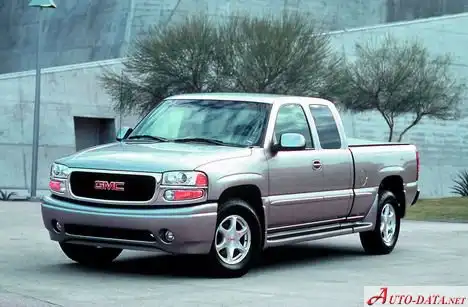
The GMC Sierra 1500 II, specifically the C1500 Regular Cab Short Bed 2WD model powered by the 4.3i V6 engine, represents a significant iteration in GMC’s full-size pickup truck lineage. Produced from 2002 through 2007 as part of the GMT800 platform generation, this variant occupied a crucial position in the lineup, offering a balance between affordability, capability, and fuel efficiency. It catered to buyers who needed the utility of a pickup but didn’t require the higher performance or cost of the larger V8 engines or four-wheel drive systems. This model served as a workhorse for many, finding favor with both individual owners and commercial fleets.
Technical Specifications
| Brand | GMC |
| Model | Sierra 1500 |
| Generation | Sierra 1500 II (GMT800) |
| Type | 4.3i V6 C1500 Regular Cab SWB 2WD (200 Hp) |
| Start of production | 2002 |
| End of production | 2007 |
| Powertrain Architecture | Internal Combustion engine |
| Body type | Pick-up |
| Seats | 3 |
| Doors | 2 |
| Fuel Type | Petrol (Gasoline) |
| Weight-to-power ratio | 9.2 kg/Hp, 108.3 Hp/tonne |
| Weight-to-torque ratio | 5.2 kg/Nm, 191.1 Nm/tonne |
| Power | 200 Hp @ 4600 rpm |
| Power per litre | 46.5 Hp/l |
| Torque | 353 Nm @ 2800 rpm (260.36 lb.-ft. @ 2800 rpm) |
| Engine layout | Front, Longitudinal |
| Engine displacement | 4300 cm3 (262.4 cu. in.) |
| Number of cylinders | 6 |
| Engine configuration | V-engine |
| Number of valves per cylinder | 2 |
| Fuel injection system | Multi-port manifold injection |
| Engine aspiration | Naturally aspirated engine |
| Engine oil capacity | 4.3 l (4.54 US qt | 3.78 UK qt) |
| Coolant capacity | 14 l (14.79 US qt | 12.32 UK qt) |
| Kerb Weight | 1847 kg (4071.94 lbs) |
| Max. weight | 2767 kg (6100.19 lbs) |
| Max load | 920 kg (2028.25 lbs) |
| Fuel tank capacity | 129 l (34.08 US gal | 28.38 UK gal) |
| Length | 5161 mm (203.19 in) |
| Width | 1994 mm (78.5 in) |
| Height | 1808 mm (71.18 in) |
| Wheelbase | 3023 mm (119.02 in) |
| Front track | 1651 mm (65 in) |
| Rear track | 1676 mm (65.98 in) |
| Drivetrain Architecture | Rear wheel drive. Internal Combustion engine (ICE) |
| Drive wheel | Rear wheel drive |
| Number of gears and type of gearbox | 5 gears, manual transmission |
| Front suspension | Coil spring |
| Rear suspension | Coil spring |
| Front brakes | Ventilated discs |
| Rear brakes | Drum |
| Assisting systems | ABS (Anti-lock braking system) |
| Power steering | Hydraulic Steering |
| Tires size | 255/75 R16 |
| Wheel rims size | 16 |
Powertrain & Engine Architecture
The heart of this Sierra 1500 variant is the 4.3L (262 cubic inch) V6 engine, designated as the L60 within General Motors’ engine family. This engine is a 90-degree V6, featuring a cast iron block and aluminum cylinder heads. It utilizes a multi-port fuel injection system, delivering fuel directly to each intake port for optimized combustion. The engine’s valvetrain consists of two valves per cylinder, operated by a single overhead camshaft. The 200 horsepower output at 4600 rpm and 353 Nm (260 lb-ft) of torque at 2800 rpm were achieved through careful tuning of the engine management system. The standard transmission for this model was a 5-speed manual transmission, providing a direct connection between the engine and the rear wheels. While an automatic transmission was available as an option, the manual was favored by those prioritizing fuel economy and driver control.
Driving Characteristics
The 4.3L V6-equipped Sierra 1500 offered a noticeably different driving experience compared to its V8-powered siblings. Acceleration was adequate for everyday driving, but it lacked the robust power of the 5.3L or 6.0L engines. The manual transmission allowed for precise gear selection, maximizing engine efficiency and providing a more engaging driving experience. The gear ratios were tuned for a balance of towing capability and fuel economy. While capable of hauling moderate loads, this variant wasn’t intended for heavy-duty work. The rear-wheel-drive configuration provided a traditional truck feel, with predictable handling characteristics. Compared to the 4×4 models, the 2WD version offered slightly better fuel economy and a lower overall weight.
Equipment & Trim Levels
The C1500 Regular Cab SWB 2WD typically came with a relatively basic set of standard features, reflecting its position as an entry-level or mid-range trim. Standard equipment generally included air conditioning, a basic AM/FM radio, vinyl upholstery, and manual windows and locks. Optional extras included power windows and locks, a CD player, upgraded audio systems, and a towing package. Interior trim levels varied, with some models offering cloth upholstery and more comfortable seating options. The dashboard layout was functional and straightforward, prioritizing usability over luxury.
Chassis & Braking
The GMT800 platform featured a body-on-frame construction, providing a robust and durable chassis. The front suspension utilized coil springs, while the rear suspension also employed coil springs, offering a comfortable ride quality. The braking system consisted of ventilated discs at the front and drum brakes at the rear. Anti-lock brakes (ABS) were standard, enhancing safety and control during emergency braking situations. The steering system was hydraulic power steering, providing responsive and effortless steering control. The rear axle ratio was typically geared for a balance of fuel economy and towing capability.
Market Reception & Comparison
The 4.3L V6 Sierra 1500 received mixed reviews from automotive critics. While praised for its fuel efficiency and affordability, it was often criticized for its lack of power compared to the V8 models. It was seen as a practical choice for buyers who didn’t require the extra performance of the larger engines. In terms of reliability, the 4.3L V6 proved to be a relatively durable engine, with many examples exceeding 200,000 miles with proper maintenance. Fuel economy was a key selling point, offering a noticeable improvement over the V8 options. Compared to competitors like the Ford F-150 and Dodge Ram 1500, the Sierra 1500 offered a competitive combination of features, price, and reliability.
Legacy
Today, the 2002-2007 GMC Sierra 1500 4.3L V6 models are readily available on the used car market, often at very affordable prices. The 4.3L V6 powertrain has proven to be relatively reliable, making these trucks a good value for buyers seeking a capable and dependable work vehicle. However, potential buyers should be aware of common issues such as oil leaks and potential corrosion in areas prone to rust. Despite its age, the GMT800 platform remains a popular choice for those who appreciate a traditional body-on-frame pickup truck with a proven track record. The simplicity of the 4.3L V6 engine also makes it relatively easy and inexpensive to maintain, further enhancing its appeal in the used car market.