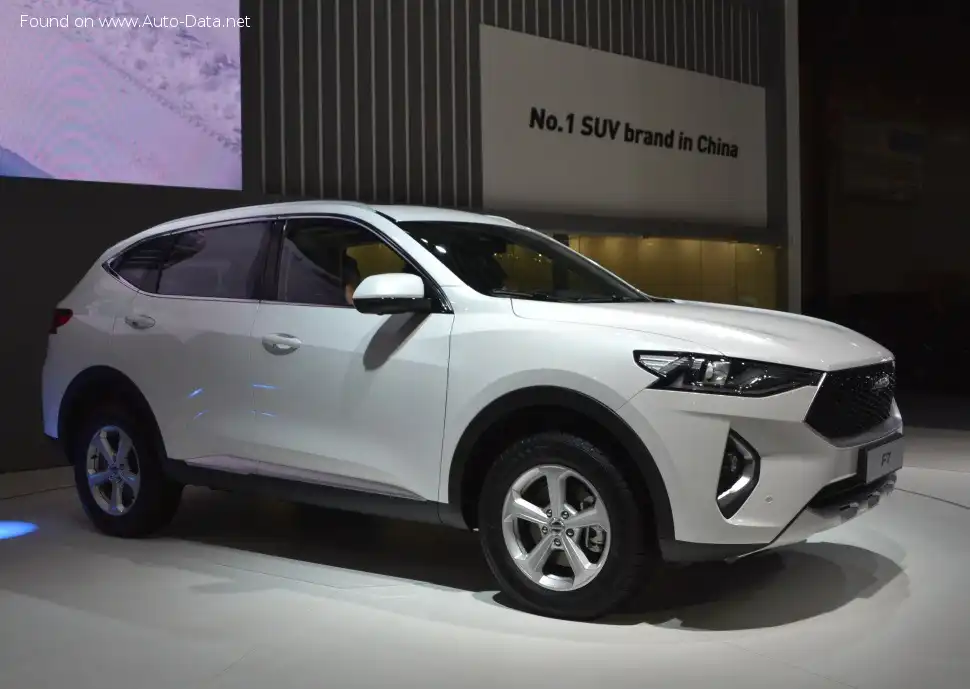
The Haval F7 I 2.0 GDIT (190 Hp) 4WD DCT is a compact SUV produced by the Chinese manufacturer Haval from May 2019 to 2022. Positioned as a mid-range offering within the broader F7 lineup, this variant aimed to provide a balance of performance, technology, and all-weather capability. The F7 series represented Haval’s ambition to establish itself as a significant player in the global SUV market, particularly targeting consumers seeking a feature-rich vehicle at a competitive price point. This specific configuration, combining a 2.0-liter turbocharged gasoline direct injection engine with a seven-speed dual-clutch transmission (DCT) and all-wheel drive, was a key component of that strategy.
Technical Specifications
| Brand | Haval |
| Model | F7 |
| Generation | F7 I |
| Type (Engine) | 2.0 GDIT (190 Hp) 4WD DCT |
| Start of production | May, 2019 |
| End of production | 2022 |
| Powertrain Architecture | Internal Combustion engine |
| Body type | SUV |
| Seats | 5 |
| Doors | 5 |
| Fuel Type | Petrol (Gasoline) |
| Weight-to-power ratio | 9.1 kg/Hp, 110.5 Hp/tonne |
| Weight-to-torque ratio | 5.1 kg/Nm, 197.7 Nm/tonne |
| Power | 190 Hp @ 5500 rpm |
| Power per litre | 96.6 Hp/l |
| Torque | 340 Nm @ 2000-3200 rpm (250.77 lb.-ft. @ 2000-3200 rpm) |
| Engine layout | Front, Transverse |
| Engine Model/Code | GW4C20 |
| Engine displacement | 1967 cm3 (120.03 cu. in.) |
| Number of cylinders | 4 |
| Engine configuration | Inline |
| Cylinder Bore | 82.5 mm (3.25 in.) |
| Piston Stroke | 92 mm (3.62 in.) |
| Compression ratio | 9.6:1 |
| Number of valves per cylinder | 4 |
| Fuel injection system | Direct injection |
| Engine aspiration | Turbocharger, Intercooler |
| Valvetrain | DOHC |
| Engine oil capacity | 4.9 l (5.18 US qt | 4.31 UK qt) |
| Coolant | 7.3 l (7.71 US qt | 6.42 UK qt) |
| Kerb Weight | 1720 kg (3791.95 lbs.) |
| Trunk (boot) space – minimum | 723 l (25.53 cu. ft.) |
| Trunk (boot) space – maximum | 1443 l (50.96 cu. ft.) |
| Fuel tank capacity | 56 l (14.79 US gal | 12.32 UK gal) |
| Length | 4620 mm (181.89 in.) |
| Width | 1846 mm (72.68 in.) |
| Height | 1690 mm (66.54 in.) |
| Wheelbase | 2725 mm (107.28 in.) |
| Ride height (ground clearance) | 190 mm (7.48 in.) |
| Drivetrain Architecture | All wheel drive (4×4). ICE drives front wheels, rear wheels engaged via clutch. |
| Number of gears and type of gearbox | 7 gears, automatic transmission DCT |
| Front suspension | Independent type McPherson |
| Rear suspension | Double wishbone |
| Front brakes | Ventilated discs |
| Rear brakes | Disc |
| Steering type | Steering rack and pinion |
| Power steering | Electric Steering |
| Tires size | 235/55 R19 |
| Wheel rims size | 7.5J x 19 ET50 |
Powertrain & Engine Architecture
The heart of the Haval F7 I 2.0 GDIT 4WD DCT is the GW4C20 engine, a 1.967-liter inline-four cylinder gasoline engine. This engine utilizes direct fuel injection and is coupled with a single turbocharger and intercooler to enhance power and efficiency. The direct injection system allows for precise fuel delivery, optimizing combustion and reducing emissions. The engine employs a double overhead camshaft (DOHC) valvetrain, contributing to improved breathing and overall performance. The 9.6:1 compression ratio strikes a balance between power output and fuel economy. The seven-speed dual-clutch transmission (DCT) provides quick and smooth gear changes, enhancing the driving experience. DCTs are known for their efficiency and responsiveness compared to traditional automatic transmissions.
Driving Characteristics
The 190 horsepower and 340 Nm (250.77 lb-ft) of torque delivered by the 2.0 GDIT engine, combined with the all-wheel-drive system, provide the F7 I with respectable acceleration and handling. While not a sports SUV, the DCT allows for brisk acceleration, particularly in the lower gears. The all-wheel-drive system enhances traction in various road conditions, providing added confidence in inclement weather. Compared to lower-powered F7 variants, such as those equipped with 1.5-liter engines, this 2.0 GDIT version offers a noticeably more engaging driving experience. However, it doesn’t match the performance of potential future high-performance trims. The DCT’s programming prioritizes fuel efficiency, resulting in slightly less aggressive shift points compared to a performance-tuned DCT.
Equipment & Trim Levels
The 2.0 GDIT 4WD DCT trim typically included a comprehensive suite of standard features. These generally included leather upholstery, a touchscreen infotainment system with smartphone integration (Apple CarPlay and Android Auto), automatic climate control, a panoramic sunroof, and a suite of advanced driver-assistance systems (ADAS) such as adaptive cruise control, lane departure warning, and automatic emergency braking. Optional extras often included upgraded sound systems, premium interior trim materials, and additional safety features. The interior design focused on providing a modern and comfortable cabin environment.
Chassis & Braking
The Haval F7 I utilizes an independent McPherson strut suspension setup at the front and a double wishbone suspension at the rear. This configuration aims to provide a comfortable ride while maintaining good handling characteristics. The vehicle is equipped with ventilated disc brakes at the front and solid disc brakes at the rear, providing adequate stopping power for its weight class. The electric power steering system offers a light and responsive feel. The all-wheel-drive system contributes to enhanced stability and control, particularly on slippery surfaces.
Market Reception & Comparison
The Haval F7 I 2.0 GDIT 4WD DCT was generally well-received in the Chinese market, where it competed with established domestic and international brands. Critics praised its spacious interior, comprehensive feature set, and competitive pricing. Fuel economy was considered average for its class. Reliability reports were still emerging during its production run, but initial feedback suggested a reasonable level of dependability. Compared to other F7 variants, the 2.0 GDIT 4WD DCT offered a significant performance upgrade, justifying its higher price point. However, some reviewers noted that the interior materials, while well-designed, didn’t quite match the quality of some European competitors.
Legacy
The Haval F7 I 2.0 GDIT 4WD DCT played a crucial role in establishing Haval as a credible SUV manufacturer. The combination of a turbocharged engine, DCT transmission, and all-wheel drive proved popular with consumers seeking a capable and well-equipped vehicle. On the used car market, these models generally hold their value reasonably well, particularly those with low mileage and a full service history. The GW4C20 engine has proven to be a relatively reliable unit, although regular maintenance is essential to ensure long-term durability. As Haval continues to expand its global presence, the F7 I serves as a foundational model that demonstrated the brand’s commitment to innovation and quality.