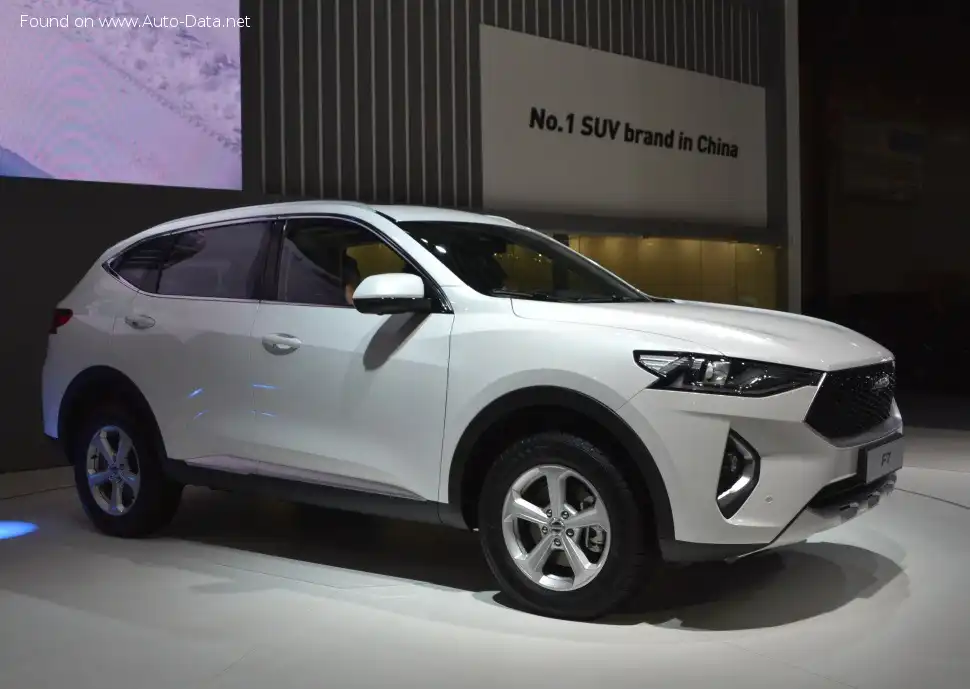
The Haval F7 I (facelift 2022) 1.5 GDIT (150 Hp) 4WD DCT represents Haval’s entry into the increasingly competitive compact SUV segment. Introduced in 2022 as a refreshed version of the original F7, this variant aimed to provide a balance of performance, fuel efficiency, and all-weather capability. Production continued through 2024. It’s positioned as a mid-range offering within the F7 lineup, slotting between the base models and the more powerful, larger-displacement engine options. The F7, in general, was designed to appeal to a growing Chinese market demand for SUVs with modern features and a perceived level of luxury, and this facelift aimed to further refine that appeal. Haval, a subsidiary of Great Wall Motors, is a significant player in the Chinese automotive industry, and the F7 was intended to establish a stronger presence for the brand internationally.
Technical Specifications
| Brand | Haval |
| Model | F7 |
| Generation | F7 I (facelift 2022) |
| Type (Engine) | 1.5 GDIT (150 Hp) 4WD DCT |
| Start of production | 2022 |
| End of production | 2024 |
| Powertrain Architecture | Internal Combustion engine |
| Body type | SUV |
| Seats | 5 |
| Doors | 5 |
| Fuel consumption (combined) | 8.4 l/100 km (28 US mpg, 33.6 UK mpg, 11.9 km/l) |
| Fuel Type | Petrol (Gasoline) |
| Emission standard | Euro 5 |
| Weight-to-power ratio | 11.5 kg/Hp, 87.2 Hp/tonne |
| Weight-to-torque ratio | 6.1 kg/Nm, 162.8 Nm/tonne |
| Power | 150 Hp @ 5000-5600 rpm |
| Power per litre | 100.1 Hp/l |
| Torque | 280 Nm @ 1400-3000 rpm (206.52 lb.-ft. @ 1400-3000 rpm) |
| Engine layout | Front, Transverse |
| Engine Model/Code | GW4B15 |
| Engine displacement | 1499 cm3 (91.47 cu. in.) |
| Number of cylinders | 4 |
| Engine configuration | Inline |
| Cylinder Bore | 76 mm (2.99 in.) |
| Piston Stroke | 82.6 mm (3.25 in.) |
| Compression ratio | 9.6:1 |
| Number of valves per cylinder | 4 |
| Fuel injection system | Direct injection |
| Engine aspiration | Turbocharger, Intercooler |
| Valvetrain | DOHC |
| Engine oil capacity | 3.7 l (3.91 US qt | 3.26 UK qt) |
| Coolant | 7.5 l (7.93 US qt | 6.6 UK qt) |
| Kerb Weight | 1720 kg (3791.95 lbs.) |
| Fuel tank capacity | 56 l (14.79 US gal | 12.32 UK gal) |
| Length | 4691 mm (184.69 in.) |
| Width | 1866 mm (73.46 in.) |
| Height | 1690 mm (66.54 in.) |
| Wheelbase | 2725 mm (107.28 in.) |
| Ride height (ground clearance) | 190 mm (7.48 in.) |
| Drivetrain Architecture | All wheel drive (4×4). ICE drives front wheels, rear wheels engaged via clutch. |
| Number of gears and type of gearbox | 7 gears, automatic transmission DCT |
| Front suspension | Independent type McPherson |
| Rear suspension | Double wishbone |
| Front brakes | Ventilated discs |
| Rear brakes | Disc |
| Assisting systems | ABS (Anti-lock braking system) |
| Steering type | Steering rack and pinion |
| Power steering | Electric Steering |
| Tires size | 235/55 R19 |
| Wheel rims size | 7.5J x 19 ET50 |
Powertrain & Engine Architecture
The heart of the Haval F7 I 1.5 GDIT 4WD DCT is the GW4B15, a 1.5-liter inline-four cylinder gasoline engine. This engine utilizes direct injection and is turbocharged, allowing it to produce 150 horsepower and 280 Nm (206.52 lb-ft) of torque. The direct injection system contributes to improved fuel efficiency and reduced emissions. The engine features a double overhead camshaft (DOHC) valvetrain, optimizing airflow for enhanced performance. The turbocharger and intercooler work in tandem to increase air density entering the engine, boosting power output. The engine is paired with a 7-speed dual-clutch transmission (DCT). DCTs are known for their quick and smooth gear changes, contributing to a more engaging driving experience compared to traditional automatic transmissions. The DCT in the F7 is designed to balance performance with fuel economy.
Driving Characteristics
The 1.5-liter engine and DCT combination in the F7 I delivers adequate performance for everyday driving. While not exceptionally quick, the turbocharger provides a noticeable boost in power during acceleration. The DCT contributes to responsive gear changes, making overtaking maneuvers relatively effortless. Compared to higher-output engine options in the F7 lineup, this variant offers a more fuel-efficient and comfortable driving experience. The all-wheel-drive system enhances traction, particularly in inclement weather conditions, providing added confidence and stability. The gear ratios are tuned for a balance between acceleration and fuel economy, with the DCT effectively managing power delivery across the rev range. It’s a setup geared towards practicality and ease of use rather than outright sporty performance.
Equipment & Trim Levels
The Haval F7 I 1.5 GDIT 4WD DCT typically came equipped with a range of standard features, including automatic climate control, a touchscreen infotainment system with smartphone connectivity (Apple CarPlay and Android Auto), and a suite of safety features such as ABS, electronic stability control, and multiple airbags. Interior upholstery was generally cloth or leatherette, depending on the specific trim package. Optional extras could include a panoramic sunroof, heated and ventilated front seats, a premium sound system, and advanced driver-assistance systems (ADAS) like adaptive cruise control and lane departure warning. The dashboard layout was modern and functional, with a focus on user-friendliness.
Chassis & Braking
The F7 I utilizes an independent McPherson strut suspension setup at the front and a double wishbone suspension at the rear. This configuration provides a comfortable ride quality and good handling characteristics. The front brakes are ventilated discs, offering strong stopping power, while the rear brakes are solid discs. The electric power steering system provides light and precise steering feel. The all-wheel-drive system contributes to enhanced stability and traction, particularly on slippery surfaces. The chassis is designed to balance ride comfort with handling agility, making it suitable for a variety of driving conditions.
Market Reception & Comparison
The Haval F7 I 1.5 GDIT 4WD DCT was generally well-received in the Chinese market, where it competed with other popular compact SUVs. Critics praised its modern design, spacious interior, and comprehensive feature list. Fuel economy was considered to be competitive for its class. Compared to the higher-output 2.0-liter engine options in the F7 lineup, this variant offered a more affordable price point and better fuel efficiency, but at the expense of some performance. Reliability reports have been mixed, with some owners reporting minor issues with the infotainment system and occasional turbocharger concerns. However, overall, the F7 I has proven to be a relatively reliable vehicle.
Legacy
The Haval F7 I 1.5 GDIT 4WD DCT represents a significant step forward for Haval in terms of design, technology, and overall quality. The GW4B15 engine, while not without its quirks, has proven to be a reasonably durable and efficient powertrain. On the used car market, these models offer a compelling value proposition, providing a good level of features and comfort at an affordable price. The DCT transmission, if properly maintained, is generally reliable. As with any used vehicle, potential buyers should have a thorough inspection performed to identify any potential issues. The F7 I helped establish Haval as a credible competitor in the compact SUV segment and paved the way for future models.