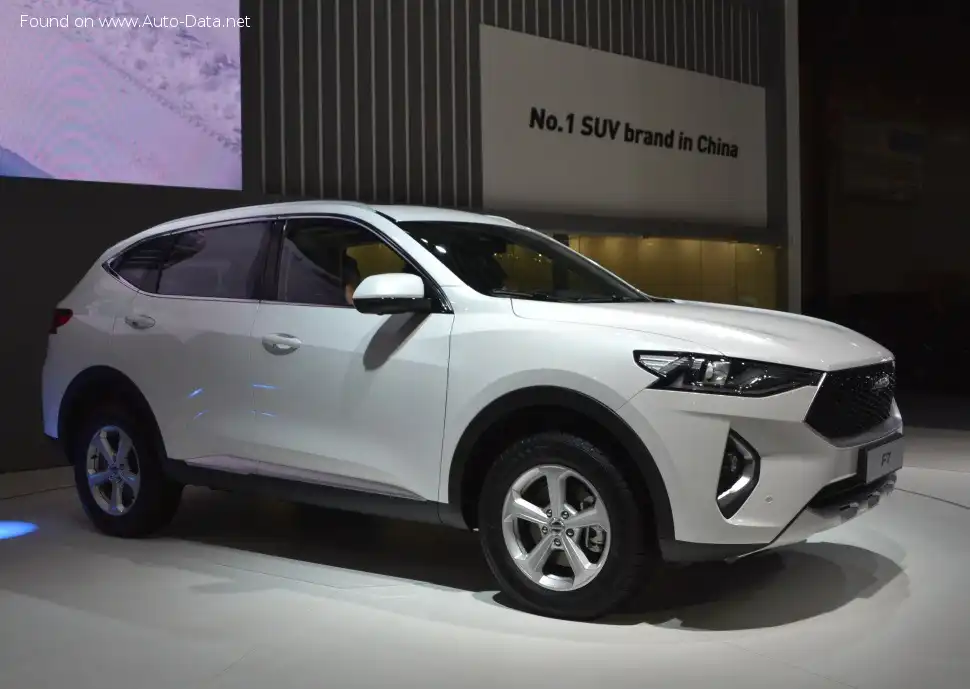
The Haval F7 I (facelift 2022) 2.0 GDIT (190 Hp) 4WD DCT represents Haval’s entry into the increasingly competitive compact SUV segment. Introduced in 2022 as a refreshed version of the original F7, this variant aimed to provide a balance of performance, technology, and all-weather capability. Positioned as a mid-range offering within the F7 lineup, it slotted above the base models and below the more luxurious trims. Production continued through 2024, solidifying its place as a key model for the Chinese automaker as they expanded their international presence. The F7 I facelift built upon the foundation of the initial F7, which was based on the shared platform with the Great Wall Motor WEY brand.
Technical Specifications
| Brand | Haval |
| Model | F7 |
| Generation | F7 I (facelift 2022) |
| Type (Engine) | 2.0 GDIT (190 Hp) 4WD DCT |
| Start of production | 2022 |
| End of production | 2024 |
| Powertrain Architecture | Internal Combustion engine |
| Body type | SUV |
| Seats | 5 |
| Doors | 5 |
| Fuel consumption (combined) | 9.4 l/100 km (25 US mpg, 30.1 UK mpg, 10.6 km/l) |
| Fuel Type | Petrol (Gasoline) |
| Emission standard | Euro 5 |
| Weight-to-power ratio | 8.7 kg/Hp, 115.2 Hp/tonne |
| Weight-to-torque ratio | 4.9 kg/Nm, 206.1 Nm/tonne |
| Power | 190 Hp @ 5500 rpm |
| Power per litre | 96.6 Hp/l |
| Torque | 340 Nm @ 2000-3200 rpm (250.77 lb.-ft. @ 2000-3200 rpm) |
| Engine layout | Front, Transverse |
| Engine Model/Code | GW4C20 |
| Engine displacement | 1967 cm3 (120.03 cu. in.) |
| Number of cylinders | 4 |
| Engine configuration | Inline |
| Cylinder Bore | 82.5 mm (3.25 in.) |
| Piston Stroke | 92 mm (3.62 in.) |
| Compression ratio | 9.6:1 |
| Number of valves per cylinder | 4 |
| Fuel injection system | Direct injection |
| Engine aspiration | Turbocharger, Intercooler |
| Valvetrain | DOHC |
| Engine oil capacity | 4.9 l (5.18 US qt | 4.31 UK qt) |
| Coolant capacity | 7.3 l (7.71 US qt | 6.42 UK qt) |
| Kerb Weight | 1650-1720 kg (3637.63 – 3791.95 lbs.) |
| Fuel tank capacity | 56 l (14.79 US gal | 12.32 UK gal) |
| Length | 4691 mm (184.69 in.) |
| Width | 1866 mm (73.46 in.) |
| Height | 1690 mm (66.54 in.) |
| Wheelbase | 2725 mm (107.28 in.) |
| Ride height (ground clearance) | 190 mm (7.48 in.) |
| Drivetrain Architecture | All wheel drive (4×4). ICE drives front wheels, rear wheels engaged via clutch. |
| Number of gears and type of gearbox | 7 gears, automatic transmission DCT |
| Front suspension | Independent type McPherson |
| Rear suspension | Double wishbone |
| Front brakes | Ventilated discs |
| Rear brakes | Disc |
| Assisting systems | ABS (Anti-lock braking system) |
| Steering type | Steering rack and pinion |
| Power steering | Electric Steering |
| Tires size | 235/55 R19 |
| Wheel rims size | 7.5J x 19 ET50 |
Powertrain & Engine Architecture
The heart of the Haval F7 I 2.0 GDIT 4WD DCT is the GW4C20, a 1.967-liter inline-four cylinder gasoline engine. This engine utilizes direct fuel injection and is coupled with a single turbocharger and intercooler to boost power output. The engine produces 190 horsepower at 5500 rpm and 340 Nm (250.77 lb-ft) of torque between 2000 and 3200 rpm. The engine features a double overhead camshaft (DOHC) valvetrain with four valves per cylinder, contributing to its relatively high specific output of 96.6 hp per liter. The engine is paired with a 7-speed dual-clutch transmission (DCT), offering quick and smooth gear changes. This DCT is crucial for balancing performance with fuel efficiency. The engine also incorporates a Start & Stop system to further reduce fuel consumption during city driving.
Driving Characteristics
The 190 hp and 340 Nm of torque provide adequate performance for everyday driving. While not a sports SUV, the F7 I 2.0 GDIT offers brisk acceleration and sufficient power for highway merging and overtaking. The DCT transmission contributes to a responsive driving experience, although some drivers may notice slight hesitation at low speeds. Compared to lower-powered F7 variants, this 2.0-liter engine delivers a noticeable improvement in acceleration and overall responsiveness. The all-wheel-drive system enhances traction, particularly in inclement weather conditions, making it a more confident vehicle in slippery situations than front-wheel-drive models. The gear ratios are tuned for a balance between fuel economy and performance, with taller gears for cruising and shorter gears for quicker acceleration.
Equipment & Trim Levels
The Haval F7 I (facelift 2022) 2.0 GDIT 4WD DCT typically came equipped with a range of standard features, including automatic climate control, a touchscreen infotainment system with smartphone connectivity (Apple CarPlay and Android Auto), and a suite of safety features such as ABS, electronic stability control, and multiple airbags. Higher trim levels offered additional features like leather upholstery, a panoramic sunroof, and advanced driver-assistance systems (ADAS) such as adaptive cruise control and lane departure warning. Interior materials were generally of good quality for the price point, with a focus on providing a comfortable and modern cabin environment. Optional extras often included upgraded sound systems and exterior styling enhancements.
Chassis & Braking
The F7 I utilizes an independent McPherson strut suspension setup at the front and a double wishbone suspension at the rear. This configuration provides a comfortable ride quality while maintaining reasonable handling characteristics. The chassis is designed to balance rigidity with weight reduction. Braking duties are handled by ventilated discs at the front and solid discs at the rear. The inclusion of ABS (Anti-lock Braking System) is standard, enhancing braking performance and safety. The steering system employs an electric power steering (EPS) setup, providing light and precise steering feel.
Market Reception & Comparison
The Haval F7 I 2.0 GDIT 4WD DCT was generally well-received in its primary markets, particularly in China and emerging markets where Haval has a strong presence. Critics praised its spacious interior, comprehensive feature list, and competitive pricing. Fuel economy was considered average for its class, with the combined consumption of 9.4 l/100 km (25 US mpg) being comparable to other similarly sized SUVs. Compared to lower-powered F7 variants, the 2.0 GDIT offered a significant performance upgrade, making it a more appealing option for drivers seeking a more engaging driving experience. However, some reviewers noted that the interior plastics could feel somewhat low-rent in certain areas.
Legacy
The Haval F7 I 2.0 GDIT 4WD DCT represents a significant step forward for Haval in terms of design, technology, and overall quality. The GW4C20 engine, while not without its quirks, has proven to be a relatively reliable powertrain when properly maintained. In the used car market, these models are becoming increasingly popular due to their affordability and feature-rich specifications. The F7’s success helped establish Haval as a credible competitor in the global SUV market, paving the way for future models and expansion into new regions. Long-term reliability reports suggest that regular maintenance, particularly oil changes and adherence to recommended service intervals, is crucial for ensuring the longevity of the engine and transmission.