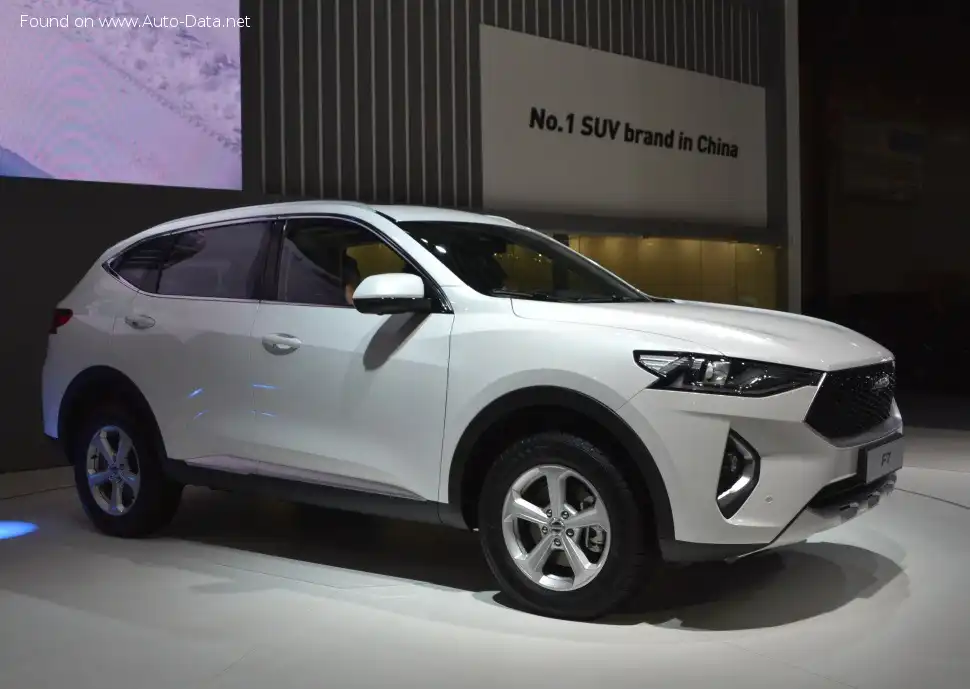
The Haval F7 II 1.5 GDIT (150 Hp) DCT is a compact SUV produced by the Chinese manufacturer Haval, beginning in August 2024. Positioned as a mainstream offering within the F7 II range, this variant represents an entry point into the model line, balancing affordability with modern features. It’s built upon Haval’s broader strategy of offering technologically advanced SUVs at competitive price points, primarily targeting the Chinese domestic market, but with increasing export ambitions. The F7 II represents a significant refresh of the original F7, with updated styling, improved interior appointments, and enhanced technology. This specific 1.5-liter turbocharged engine and 7-speed dual-clutch transmission (DCT) combination is designed to appeal to buyers seeking a blend of fuel efficiency and adequate performance in a practical family vehicle.
Technical Specifications
| Brand | Haval |
| Model | F7 |
| Generation | F7 II |
| Type (Engine) | 1.5 GDIT (150 Hp) DCT |
| Start of production | August, 2024 |
| Powertrain Architecture | Internal Combustion engine |
| Body type | SUV |
| Seats | 5 |
| Doors | 5 |
| Fuel consumption (combined) | 7.3 l/100 km (32.2 US mpg, 38.7 UK mpg, 13.7 km/l) |
| Fuel Type | Petrol (Gasoline) |
| Acceleration 0 – 100 km/h | 10.9 sec |
| Acceleration 0 – 62 mph | 10.9 sec |
| Acceleration 0 – 60 mph | 10.4 sec |
| Maximum speed | 188 km/h (116.82 mph) |
| Weight-to-power ratio | 11 kg/Hp, 90.6 Hp/tonne |
| Weight-to-torque ratio | 7.2 kg/Nm, 139 Nm/tonne |
| Power | 150 Hp @ 5500-6000 rpm |
| Power per litre | 100.1 Hp/l |
| Torque | 230 Nm @ 1500-4000 rpm (169.64 lb.-ft. @ 1500-4000 rpm) |
| Engine layout | Front, Transverse |
| Engine Model/Code | GW4B15C |
| Engine displacement | 1499 cm3 (91.47 cu. in.) |
| Number of cylinders | 4 |
| Engine configuration | Inline |
| Cylinder Bore | 76 mm (2.99 in.) |
| Piston Stroke | 82.6 mm (3.25 in.) |
| Compression ratio | 11:1 |
| Number of valves per cylinder | 4 |
| Fuel injection system | Direct injection |
| Engine aspiration | Turbocharger, Intercooler |
| Valvetrain | DOHC |
| Engine systems | Start & Stop System |
| Kerb Weight | 1655-1690 kg (3648.65 – 3725.81 lbs.) |
| Trunk (boot) space – minimum | 376 l (13.28 cu. ft.) |
| Trunk (boot) space – maximum | 1328 l (46.9 cu. ft.) |
| Fuel tank capacity | 61 l (16.11 US gal | 13.42 UK gal) |
| Permitted trailer load with brakes (12%) | 1000 kg (2204.62 lbs.) |
| Permitted trailer load without brakes | 750 kg (1653.47 lbs.) |
| Length | 4780 mm (188.19 in.) |
| Width | 1890 mm (74.41 in.) |
| Height | 1675 mm (65.94 in.) |
| Wheelbase | 2800 mm (110.24 in.) |
| Ride height (ground clearance) | 183-191 mm (7.2 – 7.52 in.) |
| Drivetrain Architecture | The Internal combustion engine (ICE) drives the front wheels of the vehicle. |
| Drive wheel | Front wheel drive |
| Number of gears and type of gearbox | 7 gears, automatic transmission DCT |
| Front suspension | Independent, type McPherson with coil spring and anti-roll bar |
| Rear suspension | Independent multi-link spring suspension with stabilizer |
| Front brakes | Ventilated discs |
| Rear brakes | Disc |
| Assisting systems | ABS (Anti-lock braking system) |
| Steering type | Steering rack and pinion |
| Power steering | Electric Steering |
| Tires size | 225/60 R18; 235/55 R19 |
| Wheel rims size | 18; 19 |
Powertrain & Engine Architecture
The Haval F7 II 1.5 GDIT utilizes the GW4B15C engine, a 1.5-liter inline-four cylinder gasoline engine equipped with direct injection and a turbocharger. This engine is a key component of Haval’s efforts to improve fuel efficiency without sacrificing too much performance. The direct injection system allows for precise fuel delivery, optimizing combustion and contributing to both power output and reduced emissions. The turbocharger provides a boost in power, compensating for the relatively small displacement of the engine. The engine features a dual overhead camshaft (DOHC) valvetrain, enhancing airflow and contributing to improved engine responsiveness. Paired with this engine is a 7-speed dual-clutch transmission (DCT). DCTs offer faster and smoother gear changes compared to traditional automatic transmissions, contributing to a more engaging driving experience and improved fuel economy. The DCT is designed to work seamlessly with the engine’s torque curve, providing optimal acceleration and responsiveness.
Driving Characteristics
The 150 hp output and 230 Nm (169.64 lb-ft) of torque delivered by the 1.5 GDIT engine, coupled with the 7-speed DCT, results in a driving experience that prioritizes fuel efficiency and comfortable cruising over outright performance. Acceleration from 0-100 km/h takes approximately 10.9 seconds. While not particularly quick, this is adequate for everyday driving situations. The DCT provides relatively quick shifts, and the engine delivers a usable amount of torque from low RPMs, making it easy to navigate city traffic. Compared to higher-output versions of the F7 II, such as those equipped with larger engines, this variant feels less powerful, especially when fully loaded or tackling steep inclines. The gear ratios are tuned for fuel economy, meaning the engine may need to work harder at higher speeds or when accelerating quickly. The front-wheel-drive configuration contributes to a slightly less dynamic handling experience compared to all-wheel-drive variants.
Equipment & Trim Levels
The Haval F7 II 1.5 GDIT DCT typically comes standard with a respectable array of features. These generally include air conditioning, power windows and locks, a touchscreen infotainment system with Bluetooth connectivity, and basic safety features like ABS and airbags. Interior upholstery is typically cloth, with options for leather upgrades on higher trim levels. Dashboard configuration is modern and functional, with a focus on ease of use. Available optional extras often include a panoramic sunroof, upgraded sound system, navigation system, and advanced driver-assistance systems (ADAS) such as adaptive cruise control and lane departure warning. The specific trim levels and available options can vary depending on the market.
Chassis & Braking
The F7 II utilizes a McPherson strut front suspension and an independent multi-link rear suspension. This setup is designed to provide a comfortable ride while maintaining reasonable handling characteristics. Stabilizer bars are included both front and rear to reduce body roll during cornering. Braking duties are handled by ventilated discs at the front and solid discs at the rear. ABS (Anti-lock Braking System) is standard, enhancing safety during emergency braking situations. The suspension tuning is geared towards comfort, prioritizing a smooth ride over sporty handling. The electric power steering provides light and easy steering feel, making it convenient for city driving.
Market Reception & Comparison
The Haval F7 II 1.5 GDIT DCT has been generally well-received in the Chinese market, where it competes with other domestically produced SUVs. Critics have praised its value for money, spacious interior, and modern features. However, some have noted that the engine performance is adequate but not exceptional. Compared to other trims in the F7 II lineup, this variant offers the most affordable entry point. It provides a good balance of fuel economy and practicality, making it a popular choice for budget-conscious buyers. Compared to the more powerful engine options, it sacrifices some performance but gains in fuel efficiency. Reliability reports are still emerging, as the model is relatively new, but early indications suggest that the powertrain is generally reliable.
Legacy
As a relatively recent addition to the Haval lineup, the long-term reliability of the 1.5 GDIT engine and DCT transmission is still being assessed. However, Haval has been steadily improving the quality and reliability of its vehicles in recent years. The 1.5 GDIT engine is expected to become a mainstay in Haval’s product range, and its performance and durability will be crucial to the brand’s continued success. In the used car market, this variant is likely to appeal to buyers seeking an affordable and fuel-efficient SUV with a modern feature set. Its relatively low price point and practical features should ensure continued demand in the years to come.