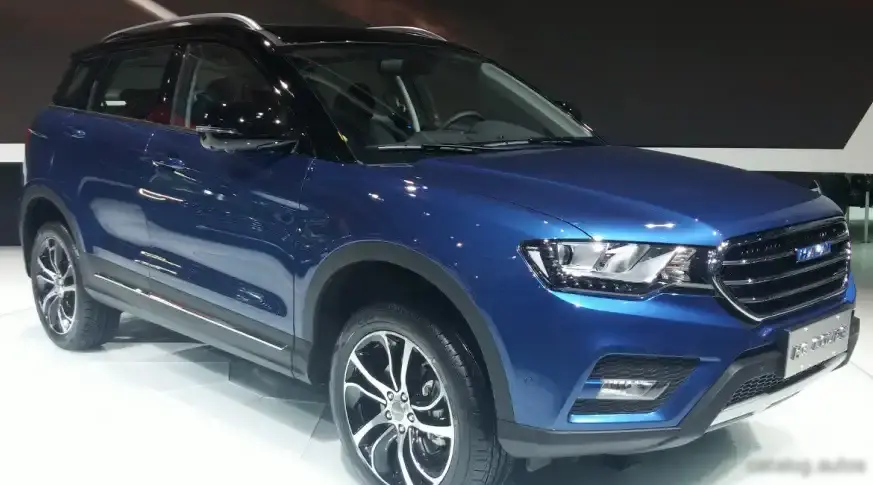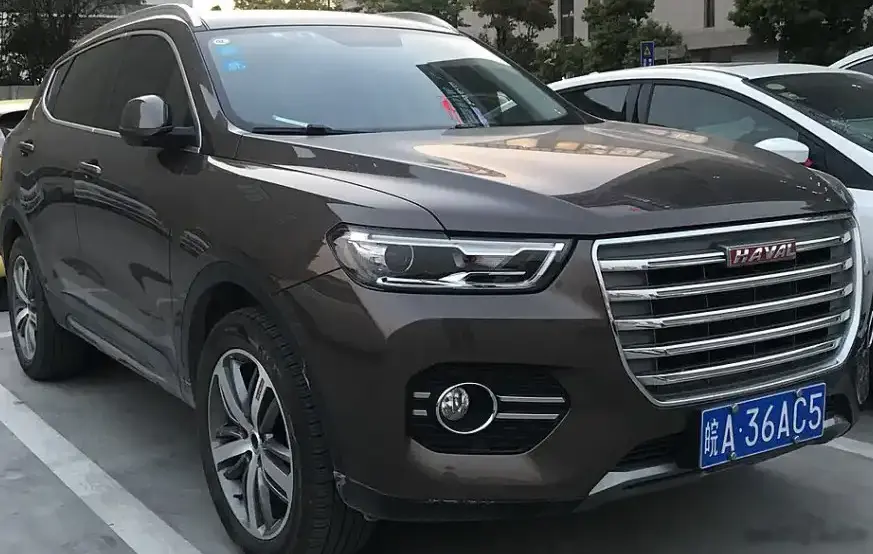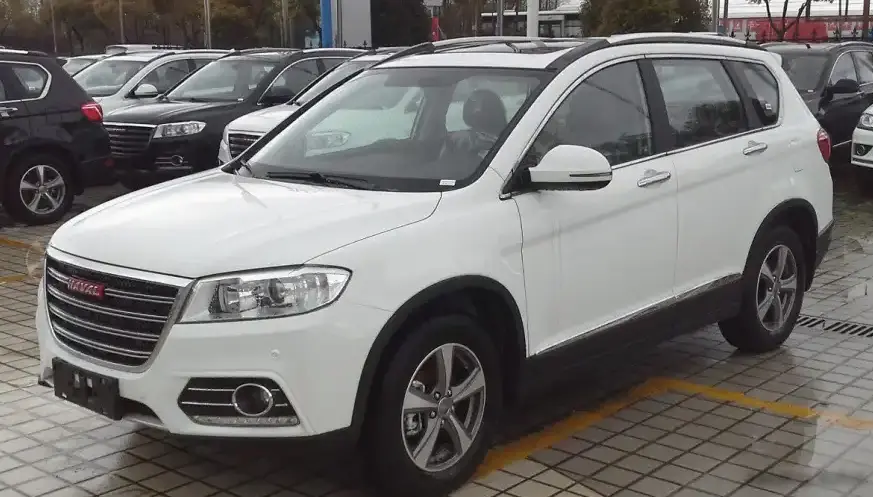
The Haval H6 I Sport 1.5 (150 Hp) Automatic, produced between 2015 and 2017, represents Haval’s initial foray into the compact SUV market. As a key model for the Chinese automaker, the H6 aimed to provide a domestically produced alternative to established international brands. This particular variant, equipped with a 1.5-liter turbocharged engine and a six-speed automatic transmission, was positioned as a mid-range offering within the broader H6 lineup, balancing affordability with a reasonable level of equipment and performance. It played a significant role in establishing Haval as a major player in the rapidly growing Chinese automotive industry, and later, as an export model to select markets.
Technical Specifications
| Brand | Haval |
| Model | H6 |
| Generation | H6 I Sport |
| Type (Engine) | 1.5 (150 Hp) Automatic |
| Start of production | 2015 |
| End of production | 2017 |
| Powertrain Architecture | Internal Combustion engine |
| Body type | SUV |
| Seats | 5 |
| Doors | 5 |
| Fuel Type | Petrol (Gasoline) |
| Emission standard | Euro 5 |
| Weight-to-power ratio | 10.3 kg/Hp, 97.3 Hp/tonne |
| Weight-to-torque ratio | 7.3 kg/Nm, 136.3 Nm/tonne |
| Power | 150 Hp @ 5600 rpm |
| Power per litre | 100.2 Hp/l |
| Torque | 210 Nm @ 2200-4500 rpm (154.89 lb.-ft. @ 2200-4500 rpm) |
| Engine layout | Front, Transverse |
| Engine Model/Code | GW4G15B |
| Engine displacement | 1497 cm3 (91.35 cu. in.) |
| Number of cylinders | 4 |
| Engine configuration | Inline |
| Number of valves per cylinder | 4 |
| Fuel injection system | Multi-port manifold injection |
| Engine aspiration | Turbocharger, Intercooler |
| Valvetrain | VVT |
| Kerb Weight | 1541 kg (3397.32 lbs) |
| Max. weight | 2060 kg (4541.52 lbs) |
| Max load | 519 kg (1144.2 lbs) |
| Trunk (boot) space – minimum | 808 l (28.53 cu. ft.) |
| Trunk (boot) space – maximum | 1216 l (42.94 cu. ft.) |
| Fuel tank capacity | 58 l (15.32 US gal | 12.76 UK gal) |
| Length | 4649 mm (183.03 in.) |
| Width | 1852 mm (72.91 in.) |
| Height | 1710 mm (67.32 in.) |
| Wheelbase | 2680 mm (105.51 in.) |
| Front track | 1565 mm (61.61 in.) |
| Rear (Back) track | 1565 mm (61.61 in.) |
| Ride height (ground clearance) | 180 mm (7.09 in.) |
| Drivetrain Architecture | The Internal combustion engine (ICE) drives the front wheels of the vehicle. |
| Drive wheel | Front wheel drive |
| Number of gears and type of gearbox | 6 gears, automatic transmission |
| Front suspension | Independent type McPherson |
| Rear suspension | Double wishbone |
| Front brakes | Ventilated discs |
| Rear brakes | Disc |
| Assisting systems | ABS (Anti-lock braking system) |
| Tires size | 225/65 R17 |
| Wheel rims size | 17 |
Powertrain & Engine Architecture
The heart of the H6 I Sport 1.5 Automatic is the GW4G15B, a 1.5-liter inline-four cylinder gasoline engine. This engine utilizes a single-scroll turbocharger with an intercooler to boost power output. The engine employs multi-point fuel injection and variable valve timing (VVT) on both the intake and exhaust camshafts, optimizing efficiency and responsiveness. The six-speed automatic transmission, sourced from a Chinese supplier, was chosen for its balance of cost and functionality. While not known for particularly rapid shifts, it provided smooth operation suitable for everyday driving. The engine’s design prioritized fuel economy and acceptable performance rather than outright speed.
Driving Characteristics
The 150 horsepower and 210 Nm (154.89 lb-ft) of torque delivered by the 1.5-liter engine provided adequate, but not exhilarating, performance. Acceleration from 0 to 60 mph was estimated to be around 10-11 seconds. The automatic transmission, while smooth, could feel somewhat hesitant during quick overtaking maneuvers. Compared to higher-trim H6 models equipped with larger engines, the 1.5L automatic felt noticeably less powerful. However, it offered a more relaxed driving experience, particularly in urban environments. The gear ratios were tuned for fuel efficiency, resulting in lower engine speeds at highway cruising.
Equipment & Trim Levels
The H6 I Sport 1.5 Automatic typically included standard features such as air conditioning, power windows and locks, a basic audio system with USB connectivity, and ABS. Interior upholstery was generally cloth, with plastic trim accents. Optional extras included a sunroof, upgraded audio system, rear parking sensors, and leather upholstery. The “Sport” designation indicated a slightly more aggressive exterior styling package, including unique alloy wheel designs and body-colored trim. The trim level aimed to appeal to budget-conscious buyers seeking a practical and reasonably well-equipped SUV.
Chassis & Braking
The H6 I Sport utilized a front-wheel-drive layout with an independent McPherson strut suspension in the front and a double wishbone suspension in the rear. This suspension setup provided a comfortable ride quality, absorbing bumps and imperfections in the road surface effectively. Front brakes were ventilated discs, while rear brakes were solid discs. ABS (Anti-lock Braking System) was standard, enhancing safety during emergency braking situations. The chassis was designed to provide a balance between handling and ride comfort, prioritizing stability over sporty dynamics.
Market Reception & Comparison
The Haval H6 I Sport 1.5 Automatic received mixed reviews. Critics generally praised its spacious interior, comfortable ride, and competitive pricing. However, the engine’s performance was often criticized as being underpowered, particularly when fully loaded. Fuel economy was considered average for its class. Compared to other trims in the H6 lineup, such as those equipped with the 2.0-liter engine, the 1.5L automatic offered a more affordable entry point but sacrificed performance. It competed with other compact SUVs in the Chinese market, such as the Geely Emgrand X7 and the Changan CS75.
Legacy
The Haval H6 I Sport 1.5 Automatic played a crucial role in establishing Haval as a significant force in the Chinese automotive market. While early models experienced some quality control issues, the H6 proved to be a relatively reliable vehicle overall, particularly the powertrain. On the used car market, these models are generally affordable and represent a good value for buyers seeking a spacious and practical SUV. However, potential buyers should be aware of the potential for age-related wear and tear on components such as the turbocharger and automatic transmission. The H6’s success paved the way for subsequent generations of the model, which have continued to improve in terms of quality, performance, and technology.