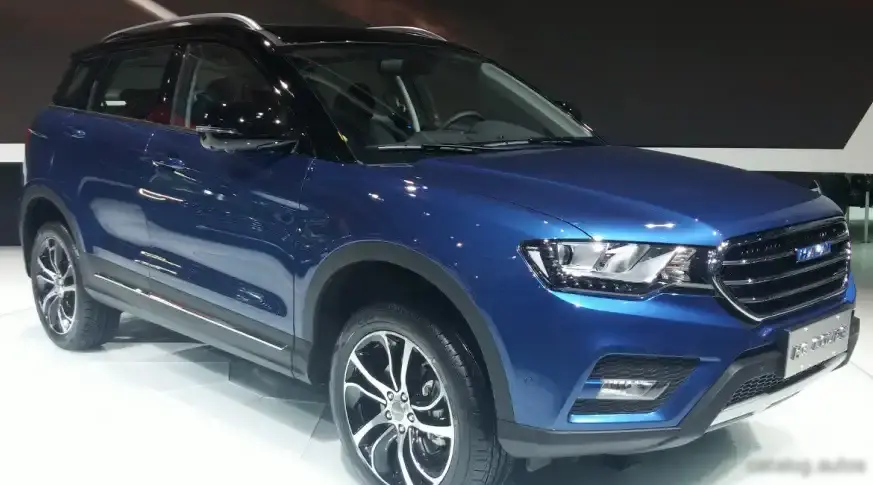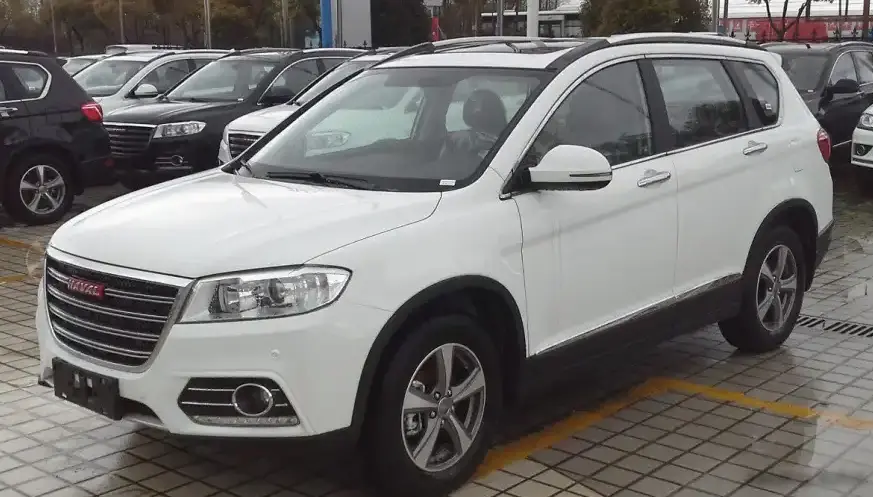
The Haval H6 II 1.5 GDIT (169 Hp) DCT represents a significant step in Haval’s ambition to establish itself as a major player in the global SUV market. Introduced in May 2017 and continuing through 2020, this variant of the H6 II was primarily targeted towards the Chinese domestic market, where Haval enjoys substantial popularity. It aimed to offer a balance of modern technology, reasonable performance, and competitive pricing within the compact SUV segment. This particular configuration, featuring a 1.5-liter turbocharged gasoline direct injection engine paired with a 7-speed dual-clutch transmission (DCT), occupied a mid-range position within the H6 II lineup, slotting between the base models and the more powerful 2.0-liter options.
Technical Specifications
| Brand | Haval |
| Model | H6 |
| Generation | H6 II |
| Type (Engine) | 1.5 GDIT (169 Hp) DCT |
| Start of production | May, 2017 |
| End of production | 2020 |
| Powertrain Architecture | Internal Combustion engine |
| Body type | SUV |
| Seats | 5 |
| Doors | 5 |
| Fuel Type | Petrol (Gasoline) |
| Power | 169 Hp @ 5000-5600 rpm |
| Torque | 285 Nm @ 1400-3000 rpm / 210.21 lb.-ft. @ 1400-3000 rpm |
| Engine layout | Front, Transverse |
| Engine Model/Code | GW4B15A |
| Engine configuration | Inline |
| Fuel injection system | Direct injection |
| Engine aspiration | Turbocharger, Intercooler |
| Valvetrain | CVVL |
| Engine oil capacity | 3.7 l / 3.91 US qt | 3.26 UK qt |
| Coolant capacity | 7.6 l / 8.03 US qt | 6.69 UK qt |
| Length | 4600 mm / 181.1 in |
| Width | 1860 mm / 73.23 in |
| Height | 1720 mm / 67.72 in |
| Wheelbase | 2680 mm / 105.51 in |
| Drivetrain Architecture | The Internal combustion engine (ICE) drives the front wheels of the vehicle. |
| Drive wheel | Front wheel drive |
| Number of gears and type of gearbox | 7 gears, automatic transmission DCT |
| Front suspension | Independent type McPherson |
| Rear suspension | Double wishbone |
| Front brakes | Ventilated discs |
| Rear brakes | Ventilated discs |
| Assisting systems | ABS (Anti-lock braking system) |
| Tires size | 235/60 R18; 235/55 R19 |
| Wheel rims size | 18; 19 |
Powertrain & Engine Architecture
The heart of the H6 II 1.5 GDIT is the GW4B15A engine, a 1.5-liter inline-four cylinder gasoline engine. This engine utilizes direct fuel injection and is equipped with a turbocharger and intercooler to boost power output. The “GDIT” designation stands for Gasoline Direct Injection Turbocharger. The engine also features Continuously Variable Valve Lift (CVVL) technology, which optimizes valve timing for improved efficiency and performance across a wider range of engine speeds. The 7-speed dual-clutch transmission (DCT) was sourced from a Chinese supplier and is designed for quick and smooth gear changes. DCTs, unlike traditional automatic transmissions, offer both fully automatic operation and the ability for the driver to manually select gears via paddle shifters or the gear selector. The DCT’s programming prioritizes fuel efficiency during normal driving conditions, shifting to higher gears quickly to reduce engine RPM.
Driving Characteristics
The 169 horsepower and 285 Nm (210 lb-ft) of torque provided by the 1.5 GDIT engine and DCT combination deliver adequate performance for everyday driving. Acceleration is reasonably brisk, particularly in the lower gears, thanks to the DCT’s quick shifts and the turbocharger’s boost. However, it doesn’t offer the same level of outright acceleration as the higher-output 2.0-liter versions of the H6 II. The DCT is generally responsive, but some drivers have reported occasional hesitation at low speeds or during initial acceleration. The gear ratios are tuned for a balance between fuel economy and drivability, with taller gearing in the upper gears for highway cruising. Compared to manual transmission versions (which were less common in this configuration), the DCT offers greater convenience and ease of use, especially in congested urban environments. The front-wheel-drive layout contributes to a slightly more economical fuel consumption profile, but it also limits traction in slippery conditions.
Equipment & Trim Levels
The H6 II 1.5 GDIT DCT typically came equipped with a respectable level of standard features. These generally included air conditioning, power windows and locks, a touchscreen infotainment system with Bluetooth connectivity, and basic safety features like ABS and airbags. Higher trim levels added features such as leather upholstery, a sunroof, automatic climate control, a reversing camera, and parking sensors. Interior materials were generally of acceptable quality for the price point, with a focus on durability rather than luxury. The dashboard layout was functional and straightforward, with a clear instrument cluster and easy-to-use controls. Optional extras often included upgraded sound systems, navigation systems, and various cosmetic enhancements.
Chassis & Braking
The H6 II utilizes a front-wheel-drive chassis with an independent McPherson strut suspension at the front and a double wishbone suspension at the rear. This suspension setup provides a comfortable ride quality, absorbing bumps and imperfections in the road surface effectively. The steering is generally light and easy to use, making it well-suited for urban driving. Braking duties are handled by ventilated disc brakes on all four wheels, providing adequate stopping power. The inclusion of ABS (Anti-lock Braking System) enhances safety by preventing wheel lockup during hard braking. Stabilizer bars are fitted to both the front and rear suspension to reduce body roll during cornering, improving handling stability.
Market Reception & Comparison
The Haval H6 II 1.5 GDIT DCT was generally well-received in the Chinese market, where it competed against established players like the Honda CR-V, Toyota RAV4, and Nissan X-Trail. Critics praised its spacious interior, comfortable ride, and competitive pricing. However, some reviewers noted that the engine lacked the refinement and power of its Japanese and Korean rivals. Fuel economy was considered to be average for the segment. Compared to the 2.0-liter versions of the H6 II, the 1.5 GDIT offered a more affordable entry point but sacrificed some performance. The 1.5 GDIT was often seen as a good choice for buyers who prioritized fuel efficiency and value over outright performance.
Legacy
The Haval H6 II 1.5 GDIT DCT played a crucial role in establishing Haval as a credible SUV manufacturer. While not without its flaws, the powertrain proved to be reasonably reliable in real-world use. On the used car market, these models represent a relatively affordable option for buyers seeking a spacious and practical SUV. Common issues reported by owners include occasional DCT glitches and minor electrical problems. However, these issues are generally not major and can often be resolved with routine maintenance. The H6 II, and specifically this 1.5 GDIT variant, laid the groundwork for Haval’s continued success and expansion into international markets.