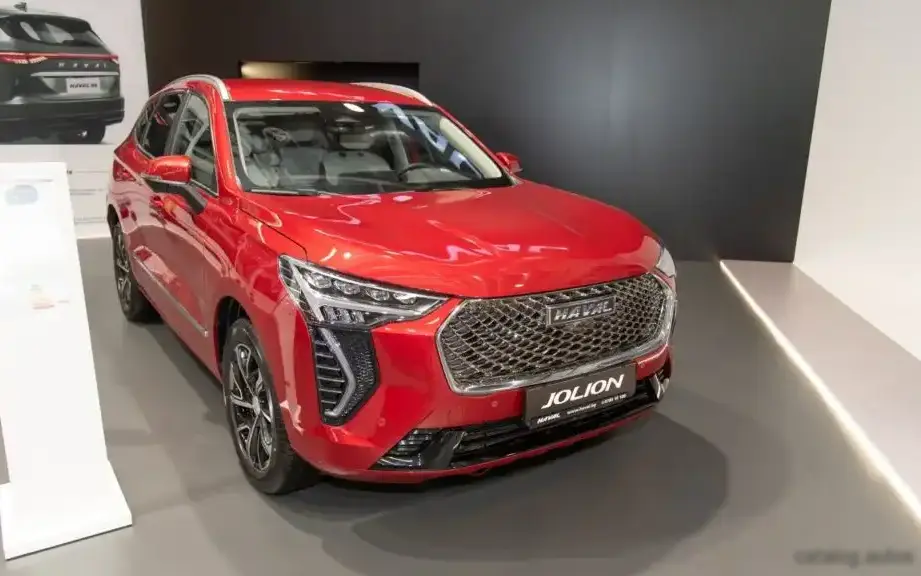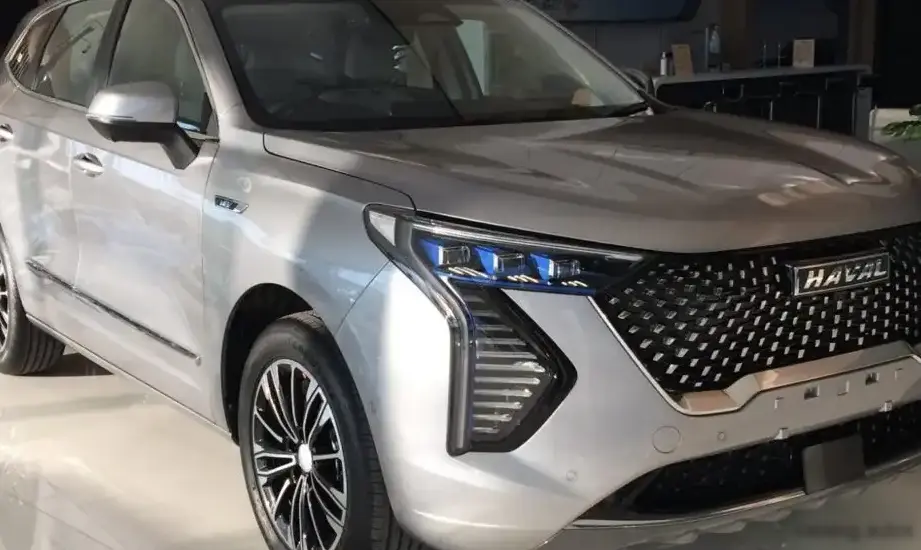
The Haval Jolion 1.5 (189 Hp) HEV DHT is a compact SUV produced by the Chinese manufacturer Haval since November 2021. Representing Haval’s entry into the increasingly competitive hybrid SUV market, the Jolion is positioned as a technologically advanced and fuel-efficient option. It’s a key model for Haval’s expansion outside of China, particularly in markets where demand for hybrid vehicles is growing. The “DHT” designation refers to Haval’s Dedicated Hybrid Transmission, a key component of the vehicle’s powertrain. This variant, with its 1.5-liter engine and combined system output of 189 horsepower, occupies a mid-range position within the Jolion lineup, offering a balance between performance and economy.
Technical Specifications
| Brand | Haval |
| Model | Jolion |
| Type (Engine) | 1.5 (189 Hp) HEV DHT |
| Start of production | November, 2021 |
| Powertrain Architecture | FHEV (Full Hybrid Electric Vehicle) |
| Body type | SUV |
| Seats | 5 |
| Doors | 5 |
| Fuel consumption (combined) | 5.0 l/100 km (47 US mpg, 56.5 UK mpg, 20 km/l) |
| Fuel Type | Petrol (Gasoline) |
| Weight-to-power ratio | 8.1 kg/Hp, 123.5 Hp/tonne |
| Weight-to-torque ratio | 4.1 kg/Nm, 245.1 Nm/tonne |
| Gross battery capacity | 1.67 kWh |
| Battery voltage | 336 V |
| Battery technology | Lithium-ion (Li-Ion) |
| Battery location | Below the floor |
| Electric motor power | 150 Hp |
| Electric motor Torque | 250 Nm (184.39 lb.-ft.) |
| Electric motor model/code | TZ220XS001 |
| Electric motor location | Integrated into the transmission |
| Electric motor type | Synchronous |
| System power | 189 Hp |
| System torque | 375 Nm (276.59 lb.-ft.) |
| Power | 95 Hp |
| Torque | 125 Nm (92.2 lb.-ft.) |
| Engine layout | Front, Transverse |
| Engine Model/Code | GW4G15H |
| Engine displacement | 1497 cm3 (91.35 cu. in.) |
| Number of cylinders | 4 |
| Engine configuration | Inline |
| Cylinder Bore | 75 mm (2.95 in.) |
| Piston Stroke | 84.7 mm (3.33 in.) |
| Compression ratio | 13:1 |
| Number of valves per cylinder | 4 |
| Fuel injection system | Multi-port manifold injection |
| Engine aspiration | Naturally aspirated engine |
| Kerb Weight | 1530 kg (3373.07 lbs.) |
| Max. weight | 1940 kg (4276.97 lbs.) |
| Max load | 410 kg (903.9 lbs.) |
| Trunk (boot) space – minimum | 390 l (13.77 cu. ft.) |
| Trunk (boot) space – maximum | 1069 l (37.75 cu. ft.) |
| Fuel tank capacity | 55 l (14.53 US gal | 12.1 UK gal) |
| Permitted trailer load with brakes (12%) | 1300 kg (2866.01 lbs.) |
| Permitted trailer load without brakes | 750 kg (1653.47 lbs.) |
| Length | 4472 mm (176.06 in.) |
| Width | 1841 mm (72.48 in.) |
| Height | 1574 mm (61.97 in.) |
| Wheelbase | 2700 mm (106.3 in.) |
| Minimum turning circle | 11.5 m (37.73 ft.) |
| Drive wheel | Front wheel drive |
| Number of gears and type of gearbox | 2 gears, automatic transmission DHT |
| Front suspension | Independent type McPherson |
| Rear suspension | Torsion |
| Front brakes | Ventilated discs |
| Rear brakes | Disc |
| Tires size | 215/60 R17 96H; 225/55 R18 98V |
| Wheel rims size | 6.5J x 17 ET37; 7J x 18 ET37 |
INTRODUCTION
The Haval Jolion 1.5 HEV DHT, launched in November 2021, is a significant model for the Haval brand, representing its push into the hybrid SUV segment. Built on Haval’s C-segment platform, it shares architectural similarities with other models in the Haval lineup. The Jolion aims to provide a compelling alternative to established competitors, focusing on fuel efficiency, technology, and value. This particular variant, combining a 1.5-liter gasoline engine with a hybrid electric system and a dedicated hybrid transmission (DHT), is designed to appeal to buyers seeking a practical and economical SUV for urban and highway driving.
Powertrain & Engine Architecture
The heart of the Jolion 1.5 HEV DHT is the GW4G15H 1.5-liter inline-four cylinder naturally aspirated gasoline engine. This engine produces 95 horsepower and 125 Nm (92.2 lb-ft) of torque. It utilizes multi-port fuel injection and a compression ratio of 13:1. The engine is paired with a 150 hp electric motor, and a 1.67 kWh lithium-ion battery pack located under the floor. The key to the system’s efficiency is Haval’s DHT (Dedicated Hybrid Transmission), a two-speed automatic transmission that intelligently manages power delivery between the engine and the electric motor. This transmission allows for a variety of driving modes, including pure electric, hybrid, and engine-only operation. The DHT system is designed to optimize fuel economy and provide smooth, seamless acceleration. The electric motor is a synchronous type, model TZ220XS001.
Driving Characteristics
The Jolion 1.5 HEV DHT offers a comfortable and refined driving experience. The combined system output of 189 horsepower and 375 Nm (276.59 lb-ft) of torque provides adequate acceleration for everyday driving situations. The DHT transmission contributes to smooth gear changes and minimizes the sensation of shifting. While not a performance-oriented vehicle, the hybrid system provides a noticeable boost in responsiveness compared to a purely gasoline-powered equivalent. The two-speed transmission is geared for efficiency rather than outright speed. The hybrid system allows for short distances of all-electric driving, particularly at lower speeds, further enhancing fuel economy. Compared to other Jolion trims with solely gasoline engines, the HEV variant offers improved fuel efficiency and a quieter cabin experience.
Equipment & Trim Levels
The Jolion 1.5 HEV DHT typically comes well-equipped, reflecting Haval’s focus on providing value for money. Standard features often include automatic climate control, a touchscreen infotainment system with smartphone connectivity (Apple CarPlay and Android Auto), a rearview camera, and a suite of safety features such as ABS, electronic stability control, and multiple airbags. Higher trim levels may add features like leather upholstery, a panoramic sunroof, adaptive cruise control, and lane keeping assist. Interior materials are generally of good quality for the price point, with a focus on practicality and durability. The dashboard layout is modern and user-friendly, with intuitive controls.
Chassis & Braking
The Jolion 1.5 HEV DHT utilizes a front-wheel-drive layout. The front suspension consists of independent McPherson struts, while the rear suspension employs a torsion beam setup. This configuration provides a good balance between ride comfort and handling. The braking system features ventilated discs at the front and solid discs at the rear, providing adequate stopping power. Electric power steering is standard, offering light and precise steering feel. The vehicle’s weight, at 1530 kg (3373.07 lbs), is relatively moderate for its class, contributing to its manageable handling characteristics.
Market Reception & Comparison
The Haval Jolion 1.5 HEV DHT has been generally well-received in markets where it has been launched. Critics have praised its fuel efficiency, comfortable ride, and generous equipment levels. However, some reviews have noted that the engine can feel somewhat underpowered when fully loaded or climbing steep hills. Compared to other hybrid SUVs in its class, the Jolion offers a competitive price point and a comprehensive feature set. Its fuel economy of 5.0 l/100 km (47 US mpg) is comparable to other hybrid offerings. Reliability data is still emerging, but early reports suggest that the powertrain is proving to be reasonably durable.
Legacy
The Haval Jolion 1.5 HEV DHT represents a significant step forward for Haval in terms of hybrid technology and market competitiveness. Its DHT transmission and efficient powertrain demonstrate Haval’s commitment to developing advanced automotive technologies. As the hybrid SUV market continues to grow, the Jolion is poised to become a popular choice for buyers seeking a practical, economical, and well-equipped vehicle. The long-term reliability of the powertrain remains to be seen, but the use of proven components and Haval’s increasing focus on quality control suggest that it will be a durable and dependable vehicle for years to come. On the used car market, the Jolion 1.5 HEV DHT is expected to hold its value reasonably well, particularly as demand for hybrid vehicles continues to increase.