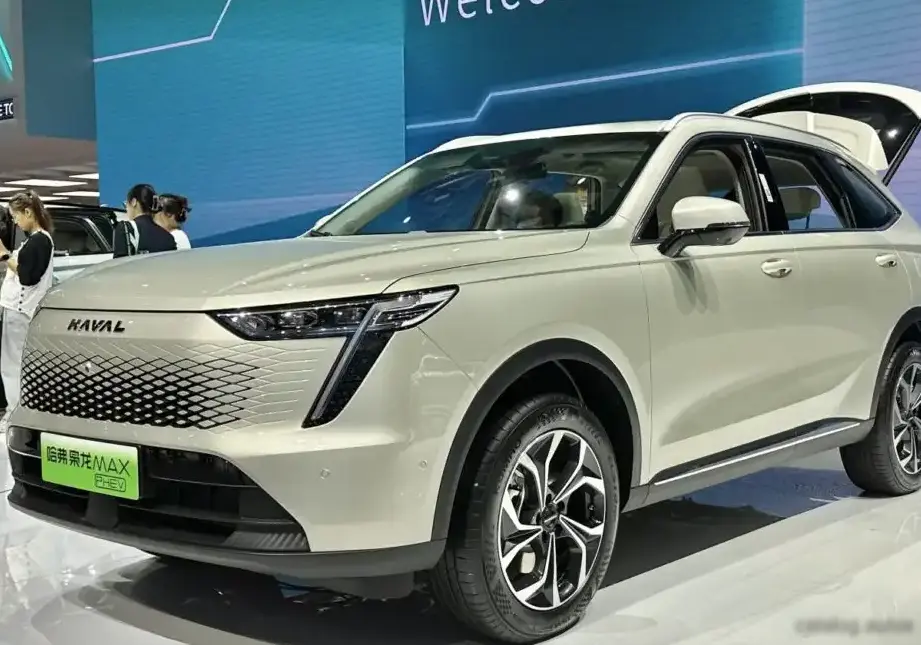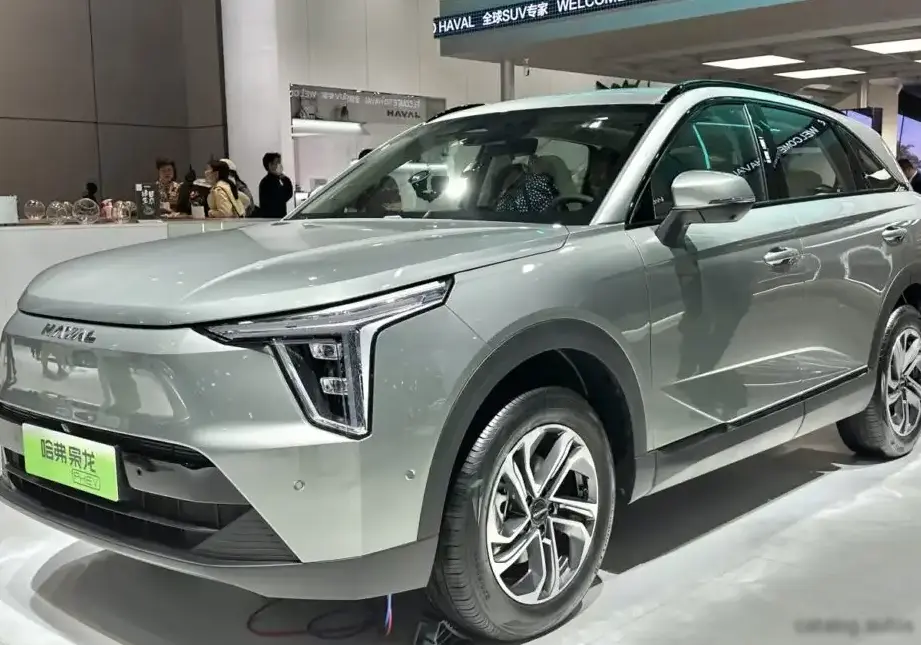
The Haval Xiaolong 1.5L 19.27 kWh (252 Hp) Plug-in Hybrid DHT, launched in March 2023, represents Haval’s entry into the competitive compact SUV market with a focus on fuel efficiency and electric driving capability. Positioned as a technologically advanced offering within the Xiaolong lineup, this variant combines a 1.5-liter gasoline engine with a substantial 19.27 kWh battery pack and an electric motor, delivering a combined system output of 252 horsepower. It’s designed to appeal to consumers seeking a balance between traditional internal combustion engine performance and the benefits of electric mobility, particularly in regions where charging infrastructure is developing. The Xiaolong is a five-seater, five-door SUV, built on Haval’s modern platform, and aimed at providing a comfortable and feature-rich experience.
Technical Specifications
| Brand | Haval |
| Model | Xiaolong |
| Type | 1.5L 19.27 kWh (252 Hp) Plug-in Hybrid DHT |
| Start of production | March, 2023 |
| Powertrain Architecture | PHEV (Plug-in Hybrid Electric Vehicle) |
| Body type | SUV |
| Seats | 5 |
| Doors | 5 |
| Fuel consumption (combined WLTC) | 1.39 l/100 km (169.2 US mpg, 203.2 UK mpg, 71.9 km/l) |
| Fuel Type | Petrol / electricity |
| Emission standard | China VI |
| Gross battery capacity | 19.27 kWh |
| Battery technology | Lithium nickel manganese cobalt oxides (Li-NMC) |
| Battery location | Below the floor |
| All-electric range (WLTC) | 96 km (59.65 mi) |
| Electric motor power | 156 Hp |
| Electric motor Torque | 250 Nm (184.39 lb.-ft.) |
| Electric motor location | Between the combustion engine and the transmission |
| Electric motor type | Synchronous |
| System power | 252 Hp |
| System torque | 375 Nm (276.59 lb.-ft.) |
| Engine Power | 101 Hp |
| Power per litre | 67.5 Hp/l |
| Engine Torque | 132 Nm (97.36 lb.-ft.) |
| Engine layout | Front, Transverse |
| Engine Model/Code | 4G15H |
| Engine displacement | 1497 cm3 (91.35 cu. in.) |
| Number of cylinders | 4 |
| Engine configuration | Inline |
| Number of valves per cylinder | 4 |
| Fuel injection system | Multi-port manifold injection |
| Engine aspiration | Naturally aspirated engine |
| Engine systems | Start & Stop System |
| Length | 4600 mm (181.1 in.) |
| Width | 1877 mm (73.9 in.) |
| Height | 1675 mm (65.94 in.) |
| Wheelbase | 2710 mm (106.69 in.) |
| Drivetrain | Front wheel drive, PHEV |
| Number of gears and type of gearbox | 2 gears, automatic transmission DHT |
| Front suspension | Independent type McPherson |
| Rear suspension | Independent multi-link suspension |
| Front brakes | Ventilated discs |
| Rear brakes | Disc |
| Assisting systems | ABS (Anti-lock braking system) |
| Steering type | Steering rack and pinion |
| Power steering | Electric Steering |
| Tires size | 225/60 R18 |
| Wheel rims size | 18 |
Powertrain & Engine Architecture
The Haval Xiaolong 1.5L PHEV utilizes a sophisticated powertrain centered around the 4G15H 1.5-liter inline-four cylinder gasoline engine. This engine, naturally aspirated, produces 101 horsepower and 132 Nm of torque. It’s paired with a 19.27 kWh lithium-ion battery pack utilizing Lithium Nickel Manganese Cobalt Oxide (Li-NMC) chemistry, positioned under the vehicle floor to maintain a low center of gravity. The electric motor, a synchronous type, delivers 156 horsepower and 250 Nm of torque. The combined system output reaches 252 horsepower and 375 Nm of torque. The key to the system’s efficiency is Haval’s Dedicated Hybrid Transmission (DHT), a two-speed automatic transmission that intelligently manages power flow between the engine, electric motor, and wheels. This DHT system allows for seamless transitions between all-electric, hybrid, and engine-only modes. The engine employs a multi-port fuel injection system, a common setup for maximizing efficiency in naturally aspirated engines.
Driving Characteristics
The Xiaolong 1.5L PHEV offers a distinctly different driving experience compared to its solely gasoline-powered siblings. In all-electric mode, the vehicle provides near-silent operation and instant torque, resulting in brisk acceleration for urban driving. The 96 km (59.65 miles) all-electric range is sufficient for many daily commutes. When the battery is depleted or requires assistance during more demanding driving situations, the gasoline engine seamlessly engages. The DHT transmission, with its two gear ratios, prioritizes efficiency and smooth power delivery. While not as overtly sporty as some competitors, the combined output of 252 horsepower provides adequate performance for highway merging and overtaking. The front-wheel-drive configuration offers predictable handling, and the relatively low center of gravity contributes to stability. Compared to a standard gasoline Xiaolong, the PHEV variant offers significantly improved fuel economy and reduced emissions.
Equipment & Trim Levels
The Haval Xiaolong 1.5L PHEV typically comes well-equipped, reflecting its position as a technologically advanced model. Standard features generally include automatic climate control, a touchscreen infotainment system with smartphone connectivity (Apple CarPlay and Android Auto), a suite of advanced driver-assistance systems (ADAS) such as adaptive cruise control, lane departure warning, and automatic emergency braking, and a comprehensive safety package with multiple airbags. Interior upholstery is typically a combination of fabric and leatherette, with higher trims offering full leather seating. Optional extras may include a panoramic sunroof, premium audio system, and upgraded interior trim materials. The dashboard layout is modern and driver-focused, with a digital instrument cluster providing key vehicle information.
Chassis & Braking
The Xiaolong 1.5L PHEV utilizes an independent McPherson strut suspension at the front and an independent multi-link suspension at the rear. This setup is tuned to provide a comfortable ride while maintaining reasonable handling characteristics. The additional weight of the battery pack is accounted for with slightly stiffer spring rates and dampers compared to the standard gasoline model. Braking duties are handled by ventilated discs at the front and solid discs at the rear, coupled with an Anti-lock Braking System (ABS) and Electronic Brakeforce Distribution (EBD). The electric motor also contributes to regenerative braking, helping to recapture energy and extend the vehicle’s range. The steering system is an electric power-assisted rack and pinion setup, providing light and precise steering feel.
Market Reception & Comparison
The Haval Xiaolong 1.5L PHEV has been generally well-received in the Chinese market, where it competes with other compact plug-in hybrid SUVs. Critics have praised its fuel efficiency, comfortable ride, and comprehensive feature set. However, some reviews have noted that the interior materials, while acceptable, aren’t quite as premium as those found in some European or Japanese competitors. Compared to the standard gasoline Xiaolong, the PHEV variant commands a higher price but offers significantly lower running costs due to its reduced fuel consumption and potential for electric-only driving. Against rivals like the BYD Song Plus DM-i, the Xiaolong offers a competitive combination of performance, range, and features.
Legacy
As a relatively new model, the long-term reliability of the Haval Xiaolong 1.5L PHEV powertrain remains to be fully established. However, Haval has been steadily improving its quality control and reliability in recent years. The 4G15H engine is a proven unit, and the Li-NMC battery technology is widely used in electric vehicles. Early reports suggest that the powertrain is generally reliable, but regular maintenance, including battery health checks, is crucial for maximizing its lifespan. On the used car market, the Xiaolong 1.5L PHEV is expected to hold its value reasonably well, particularly as demand for plug-in hybrid vehicles continues to grow. Its combination of fuel efficiency, practicality, and technology should make it a desirable option for buyers seeking a versatile and environmentally conscious SUV.