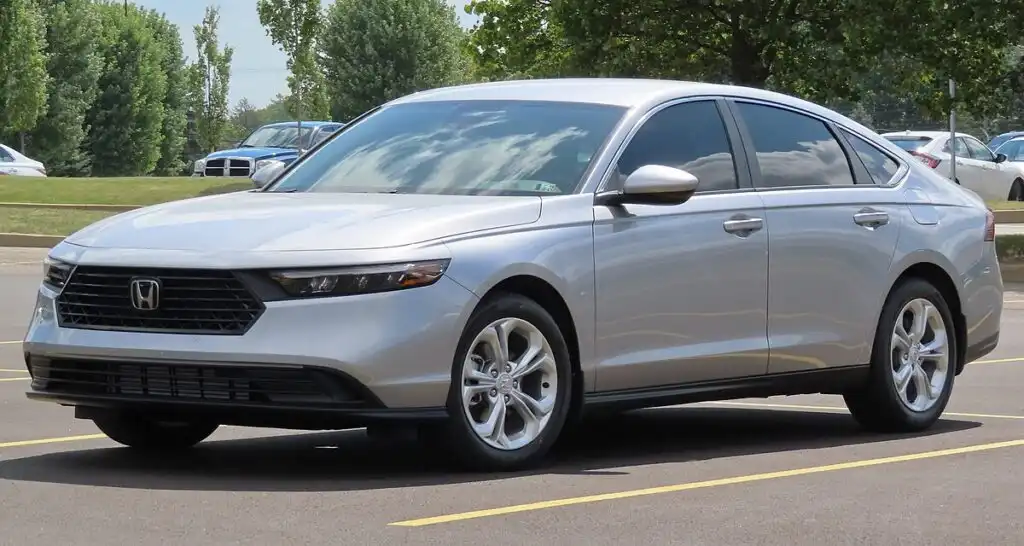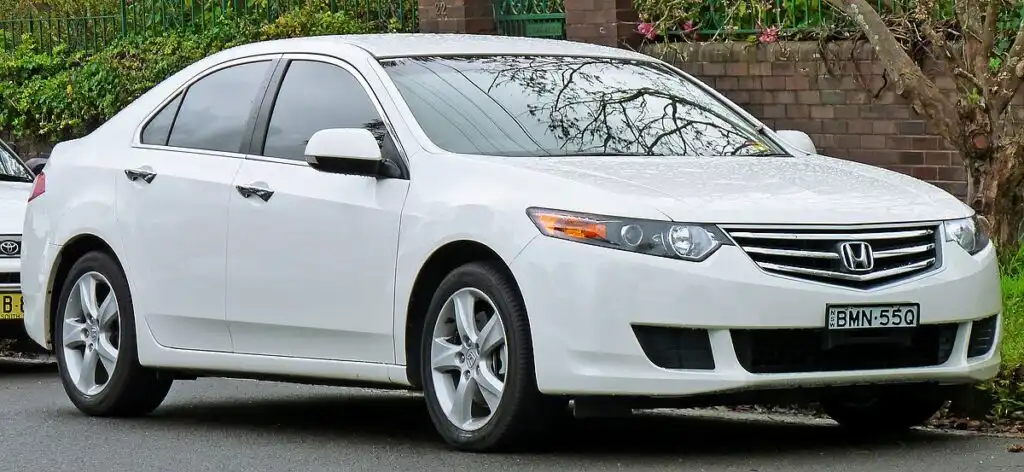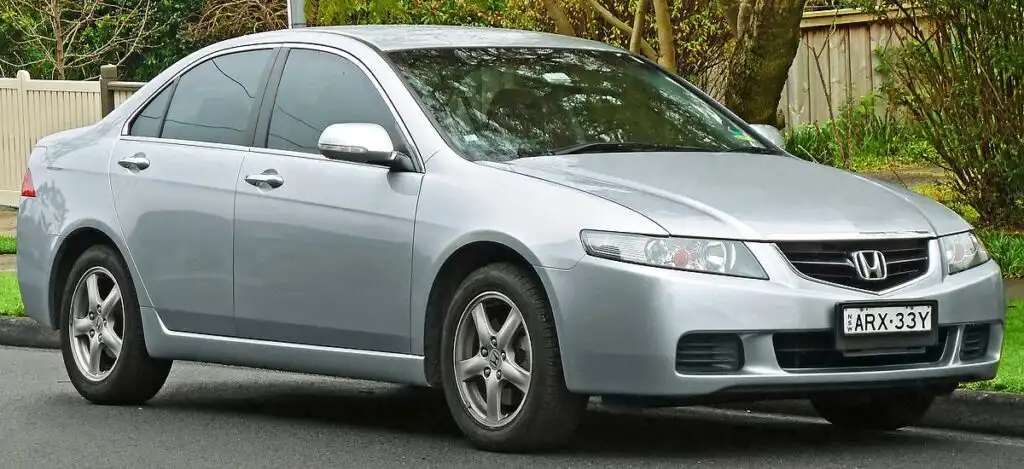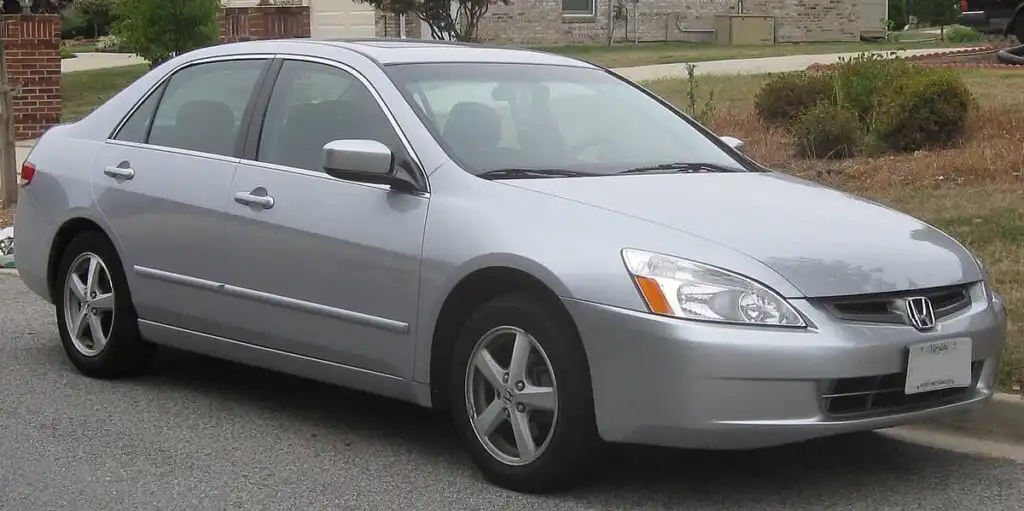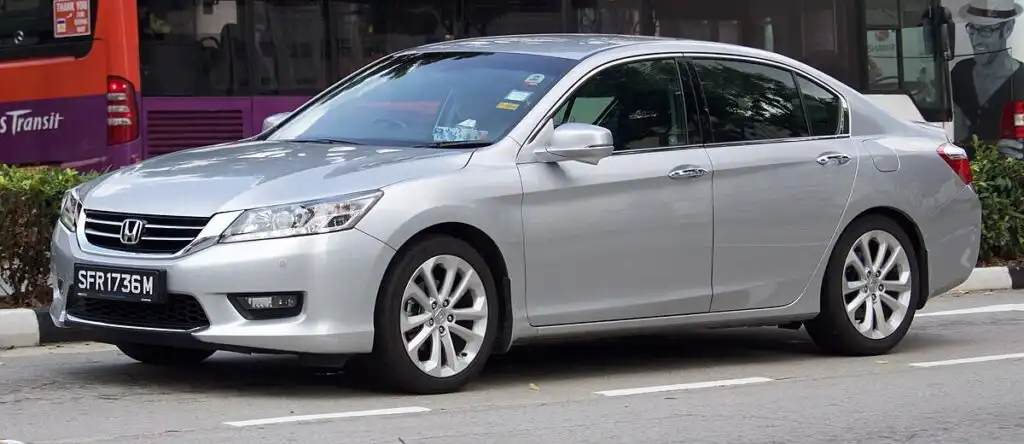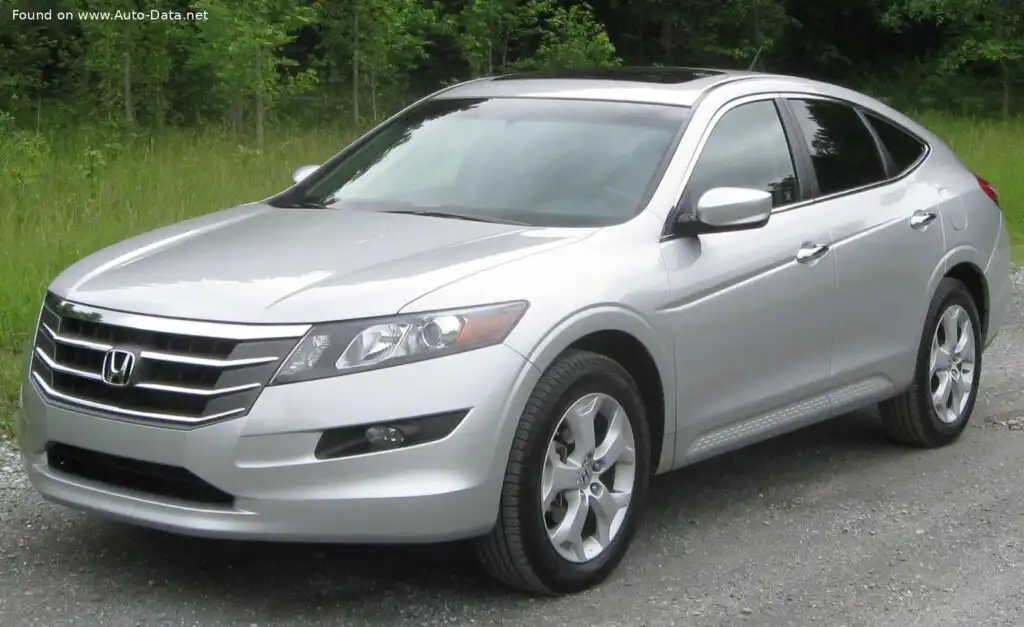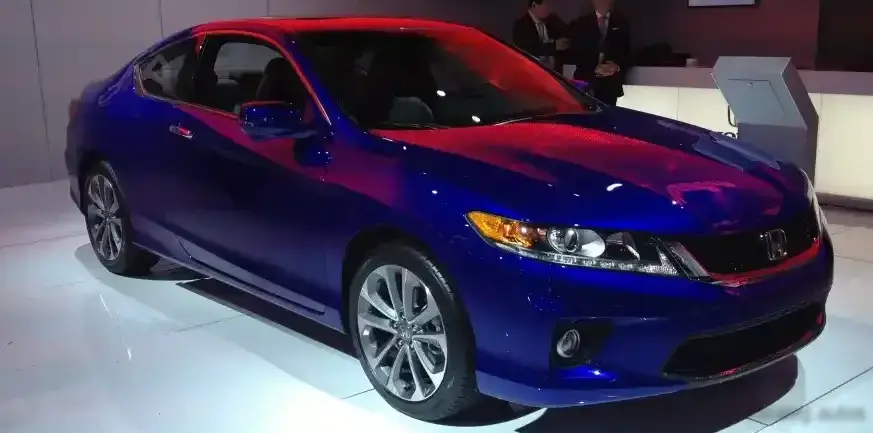
The Honda Accord IX Coupe 2.4, produced from 2012 to 2015, represented a significant iteration of Honda’s popular mid-size offering in the North American market. Positioned as a sportier alternative to the sedan, the Coupe variant aimed to attract buyers seeking a more dynamic driving experience and a sleeker profile. This specific 2.4-liter, 188 horsepower configuration paired with a Continuously Variable Transmission (CVT) served as a mid-range option within the Coupe lineup, offering a balance between performance and fuel efficiency. It was built on the eighth generation (2008-2012) Accord platform, internally designated as the Accord Coupe (CU).
Technical Specifications
| Brand | Honda |
| Model | Accord |
| Generation | Accord IX Coupe |
| Type (Engine) | 2.4 (188 Hp) CVT |
| Start of production | 2012 |
| End of production | 2015 |
| Powertrain Architecture | Internal Combustion engine |
| Body type | Coupe |
| Seats | 5 |
| Doors | 2 |
| Fuel consumption (urban) | 8.7 l/100 km (27 US mpg) |
| Fuel consumption (extra urban) | 6.7 l/100 km (35.1 US mpg) |
| Fuel consumption (combined) | 8.1 l/100 km (29 US mpg) |
| Fuel Type | Petrol (Gasoline) |
| Weight-to-power ratio | 8 kg/Hp |
| Weight-to-torque ratio | 6.1 kg/Nm |
| Power | 188 Hp @ 6400 rpm |
| Power per litre | 79.8 Hp/l |
| Torque | 245 Nm @ 3900 rpm (180.7 lb.-ft. @ 3900 rpm) |
| Maximum engine speed | 6800 rpm |
| Engine layout | Front, Transverse |
| Engine Model/Code | K24W |
| Engine displacement | 2356 cm3 (143.77 cu. in.) |
| Number of cylinders | 4 |
| Engine configuration | Inline |
| Cylinder Bore | 87 mm (3.43 in.) |
| Piston Stroke | 99.1 mm (3.9 in.) |
| Compression ratio | 11.1:1 |
| Number of valves per cylinder | 4 |
| Fuel injection system | Direct injection |
| Engine aspiration | Naturally aspirated engine |
| Valvetrain | DOHC, i-VTEC |
| Engine oil capacity | 4.2 l (4.44 US qt | 3.7 UK qt) |
| Coolant | 6.3 l (6.66 US qt | 5.54 UK qt) |
| Kerb Weight | 1496 kg (3298.12 lbs.) |
| Trunk (boot) space – minimum | 379 l (13.38 cu. ft.) |
| Fuel tank capacity | 65 l (17.17 US gal | 14.3 UK gal) |
| Length | 4806 mm (189.21 in.) |
| Width | 1849 mm (72.8 in.) |
| Height | 1435 mm (56.5 in.) |
| Wheelbase | 2725 mm (107.28 in.) |
| Front track | 1585 mm (62.4 in.) |
| Rear (Back) track | 1582 mm (62.28 in.) |
| Drag coefficient (Cd) | 0.30 |
| Minimum turning circle | 11.8 m (38.71 ft.) |
| Drivetrain Architecture | Front wheel drive |
| Number of gears and type of gearbox | automatic transmission CVT |
| Front suspension | Independent type McPherson |
| Rear suspension | Independent multi-link suspension |
| Front brakes | Ventilated discs |
| Rear brakes | Disc |
| Assisting systems | ABS (Anti-lock braking system) |
| Steering type | Steering rack and pinion |
| Power steering | Electric Steering |
| Tires size | 215/55 R 17 94V |
| Wheel rims size | 7.5J x 17 ET55 |
Powertrain & Engine Architecture
The heart of the Accord IX Coupe 2.4 was the K24W engine, a 2.4-liter inline-four cylinder powerplant. This engine utilized Honda’s i-VTEC (intelligent Variable valve Timing and lift Electronic Control) system, which allowed for variable control of both valve timing and lift, optimizing performance and fuel efficiency across the engine’s operating range. Direct fuel injection further enhanced combustion efficiency and power output. The K24W was known for its reliability and relatively smooth operation. Paired with this engine was a Continuously Variable Transmission (CVT). Unlike traditional automatic transmissions with fixed gear ratios, a CVT provides a virtually infinite number of ratios within its range, allowing the engine to operate at its most efficient point. This contributed to the Coupe’s respectable fuel economy figures.
Driving Characteristics
The 2.4-liter engine and CVT combination delivered adequate, though not exhilarating, performance. Acceleration was smooth and linear, thanks to the CVT’s seamless ratio changes. While the CVT eliminated the shift shock associated with traditional automatics, it could sometimes feel less engaging to drivers accustomed to more conventional transmissions. Compared to the available 3.5-liter V6 engine option, the 2.4L felt noticeably less powerful, particularly during highway passing maneuvers. However, the 2.4L offered a significant improvement in fuel economy over the V6. The CVT was programmed to simulate gear changes under hard acceleration, providing a more familiar driving experience, but it didn’t fully replicate the responsiveness of a traditional automatic or manual transmission.
Equipment & Trim Levels
The 2.4-liter CVT Accord Coupe typically came standard with features such as air conditioning, power windows and locks, a rearview camera, Bluetooth connectivity, and a sound system with USB and auxiliary inputs. Higher trim levels, such as the EX-L, added features like leather upholstery, a sunroof, heated front seats, and a premium audio system. Optional extras included navigation, upgraded wheels, and various accessory packages. The interior design was generally considered modern and well-appointed for its class, with a focus on ergonomics and ease of use.
Chassis & Braking
The Accord Coupe featured an independent McPherson strut front suspension and an independent multi-link rear suspension. This setup provided a comfortable ride quality while maintaining reasonably good handling characteristics. The Coupe’s chassis was tuned to be slightly firmer than the sedan’s, contributing to a more sporty feel. Braking duties were handled by ventilated discs at the front and solid discs at the rear. Anti-lock brakes (ABS) were standard equipment. The steering was electrically assisted, providing light and precise control.
Market Reception & Comparison
Critics generally praised the Accord Coupe for its stylish design, comfortable interior, and fuel efficiency. However, some reviewers found the CVT to be less engaging than traditional transmissions. Compared to competitors like the Toyota Camry Coupe and the Ford Fusion Coupe, the Accord Coupe offered a compelling combination of features, performance, and reliability. The 2.4-liter CVT model was often seen as a sensible choice for buyers prioritizing fuel economy and everyday usability over outright performance. The V6 models were favored by those seeking a more spirited driving experience, but at the cost of increased fuel consumption.
Legacy
The Honda Accord IX Coupe 2.4 with the CVT has proven to be a reliable and durable vehicle in the used car market. The K24W engine is known for its longevity, and the CVT, while sometimes criticized for its driving feel, has generally held up well over time with proper maintenance. These Coupes remain relatively common on the road today, a testament to Honda’s reputation for building quality vehicles. Common maintenance items include routine oil changes, coolant flushes, and occasional CVT fluid changes. Overall, the 2.4L CVT Accord Coupe represents a well-rounded and practical choice for buyers seeking a stylish and dependable mid-size coupe.