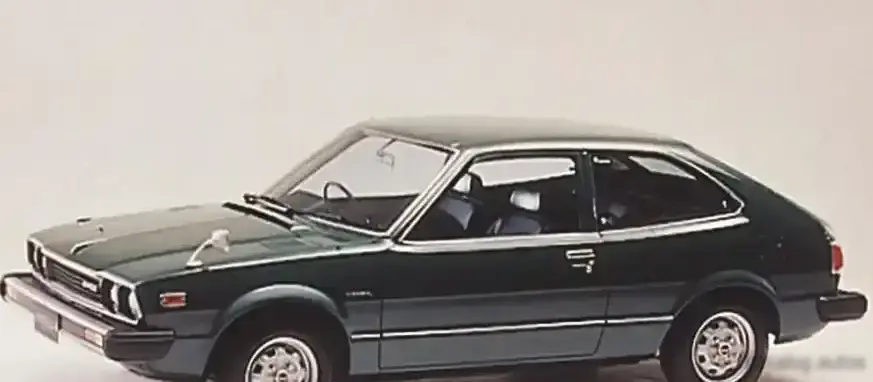
The Honda Accord VI Hatchback 2.0 TD (105 hp) was a diesel-powered variant of the sixth-generation Honda Accord, produced between 1998 and 2002. Specifically aimed at the European market, this model offered a more fuel-efficient alternative to the gasoline-powered Accords, catering to drivers prioritizing economy and practicality. It occupied a mid-range position within the Accord VI lineup, slotting below the more powerful gasoline engines and offering a more affordable entry point compared to higher-trim levels. The 2.0 TD utilized a turbocharged diesel engine paired with a five-speed manual transmission, a configuration designed for relaxed cruising and reasonable performance.
Technical Specifications
| Brand | Honda |
| Model | Accord |
| Generation | Accord VI Hatchback |
| Type (Engine) | 2.0 TD (105 Hp) |
| Start of production | 1998 |
| End of production | 2002 |
| Powertrain Architecture | Internal Combustion engine |
| Body type | Hatchback |
| Seats | 5 |
| Doors | 5 |
| Fuel consumption (urban) | 8.6 l/100 km (27.4 US mpg) |
| Fuel consumption (extra urban) | 5.1 l/100 km (46.1 US mpg) |
| Fuel consumption (combined) | 6.4 l/100 km (36.8 US mpg) |
| Fuel Type | Diesel |
| Acceleration 0 – 100 km/h | 13.5 sec |
| Acceleration 0 – 62 mph | 13.5 sec |
| Acceleration 0 – 60 mph | 12.8 sec |
| Maximum speed | 185 km/h (114.95 mph) |
| Weight-to-power ratio | 14 kg/Hp |
| Weight-to-torque ratio | 7 kg/Nm |
| Power | 105 Hp @ 4200 rpm |
| Torque | 210 Nm @ 2000 rpm (154.89 lb.-ft. @ 2000 rpm) |
| Engine layout | Front, Transverse |
| Engine Model/Code | L / 20T2N |
| Engine displacement | 1994 cm3 (121.68 cu. in.) |
| Number of cylinders | 4 |
| Engine configuration | Inline |
| Cylinder Bore | 84.5 mm (3.33 in.) |
| Piston Stroke | 88.9 mm (3.5 in.) |
| Compression ratio | 19.5:1 |
| Number of valves per cylinder | 2 |
| Fuel injection system | Diesel Commonrail |
| Engine aspiration | Turbocharger |
| Valvetrain | OHC |
| Engine oil capacity | 5 l (5.28 US qt | 4.4 UK qt) |
| Coolant capacity | 6 l (6.34 US qt | 5.28 UK qt) |
| Kerb Weight | 1465 kg (3229.77 lbs.) |
| Max. weight | 1960 kg (4321.06 lbs.) |
| Max load | 495 kg (1091.29 lbs.) |
| Trunk (boot) space – minimum | 450 l (15.89 cu. ft.) |
| Fuel tank capacity | 65 l (17.17 US gal | 14.3 UK gal) |
| Length | 4595 mm (180.91 in.) |
| Width | 1750 mm (68.9 in.) |
| Height | 1430 mm (56.3 in.) |
| Wheelbase | 2670 mm (105.12 in.) |
| Front track | 1495 mm (58.86 in.) |
| Rear track | 1504 mm (59.21 in.) |
| Drivetrain Architecture | Front wheel drive |
| Number of gears | 5 |
| Gearbox type | Manual transmission |
| Front suspension | Double wishbone |
| Rear suspension | Several levers and rods |
| Front brakes | Ventilated discs |
| Rear brakes | Disc |
| Assisting systems | ABS (Anti-lock braking system) |
| Steering type | Steering rack and pinion |
| Power steering | Hydraulic |
| Tires size | 195/60 R15 |
| Wheel rims size | 15 |
Introduction
The Honda Accord VI Hatchback 2.0 TD, introduced in 1998 and continuing through 2002, represented Honda’s attempt to broaden the appeal of the Accord in European markets increasingly focused on diesel efficiency. Built on the 1HX0 platform, shared with other Honda models of the era, the 2.0 TD offered a practical and economical alternative to the gasoline-powered versions. The hatchback body style provided increased cargo versatility compared to the sedan, making it a popular choice for families and those needing a flexible vehicle. This variant was specifically designed to meet the demands of European drivers who favored diesel engines for their fuel economy and lower running costs.
Powertrain & Engine Architecture
The heart of the Accord VI 2.0 TD is the L / 20T2N engine, a 1994cc inline-four cylinder diesel. This engine featured a turbocharger and a diesel common rail fuel injection system, contributing to improved power delivery and reduced emissions compared to older diesel designs. The engine produced 105 horsepower at 4200 rpm and 210 Nm (154.89 lb.-ft.) of torque at 2000 rpm. The common rail system allowed for precise control of fuel injection timing and quantity, optimizing combustion efficiency. The engine utilized a single overhead camshaft (OHC) valvetrain with two valves per cylinder. The five-speed manual transmission was the only gearbox option available with this engine, providing a balance between fuel economy and drivability. The transmission’s gear ratios were tuned for relaxed cruising and maximizing torque utilization.
Driving Characteristics
The 2.0 TD Accord VI Hatchback offered a comfortable and refined driving experience, prioritizing fuel efficiency over outright performance. Acceleration from 0-100 km/h (0-62 mph) took approximately 13.5 seconds, and top speed was limited to 185 km/h (114.95 mph). While not particularly sporty, the engine delivered adequate torque for everyday driving and overtaking maneuvers. The manual transmission allowed for precise control, and the turbocharger provided a noticeable boost in power when needed. Compared to the gasoline-powered Accords, the 2.0 TD offered significantly better fuel economy, making it a more economical choice for long-distance travel. The gear ratios were spaced to keep the engine within its optimal torque band, resulting in a relaxed and efficient driving experience.
Equipment & Trim Levels
The 2.0 TD trim level typically included standard features such as power steering, central locking, electric windows, and an AM/FM radio. Interior upholstery was generally cloth, with a functional and durable design. Optional extras included air conditioning, alloy wheels, and a sunroof. The dashboard layout was typical of Honda designs from the period, with clear and easy-to-read instrumentation. Safety features included ABS (Anti-lock Braking System) as standard equipment. The overall interior ambiance was practical and well-built, reflecting Honda’s reputation for quality and reliability.
Chassis & Braking
The Accord VI Hatchback 2.0 TD utilized a front-engine, front-wheel-drive layout. The front suspension featured a double wishbone design, providing a comfortable ride and good handling characteristics. The rear suspension employed a multi-link setup, further enhancing ride quality and stability. Braking duties were handled by ventilated discs at the front and solid discs at the rear, providing adequate stopping power for the vehicle’s weight and performance. The hydraulic power steering system offered light and precise steering feel.
Market Reception & Comparison
The Honda Accord VI 2.0 TD was generally well-received by automotive critics in Europe, who praised its fuel efficiency, comfortable ride, and build quality. However, some reviewers noted that its performance was not as exciting as that of the gasoline-powered models. Compared to other diesel-powered vehicles in its class, the Accord 2.0 TD offered a good balance of performance, economy, and refinement. It was often compared to rivals such as the Volkswagen Passat TDI and the Ford Mondeo TD, offering a competitive alternative in terms of both price and features. The 2.0 TD’s fuel economy was particularly competitive, making it an attractive option for drivers covering long distances.
Legacy
The Honda Accord VI 2.0 TD has proven to be a reliable and durable vehicle, with many examples still on the road today. The 20T2N engine, while not known for being exceptionally powerful, is generally considered to be robust and long-lasting, provided it receives regular maintenance. In the used car market, these Accords are often sought after by buyers looking for an affordable and economical vehicle with a reputation for reliability. Parts availability remains relatively good, making maintenance and repairs relatively straightforward. The 2.0 TD variant represents a significant chapter in Honda’s history, demonstrating the company’s commitment to offering fuel-efficient and practical vehicles to European consumers.