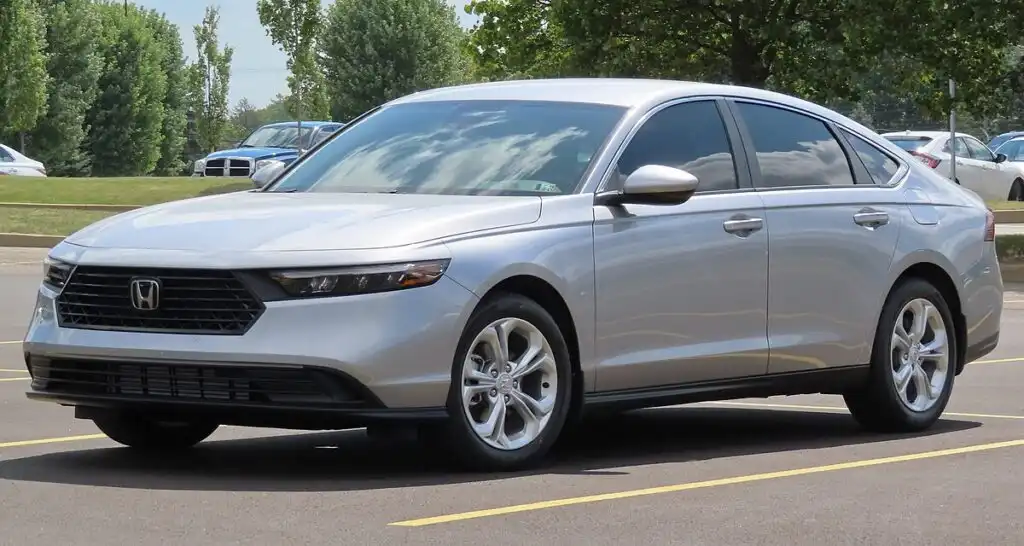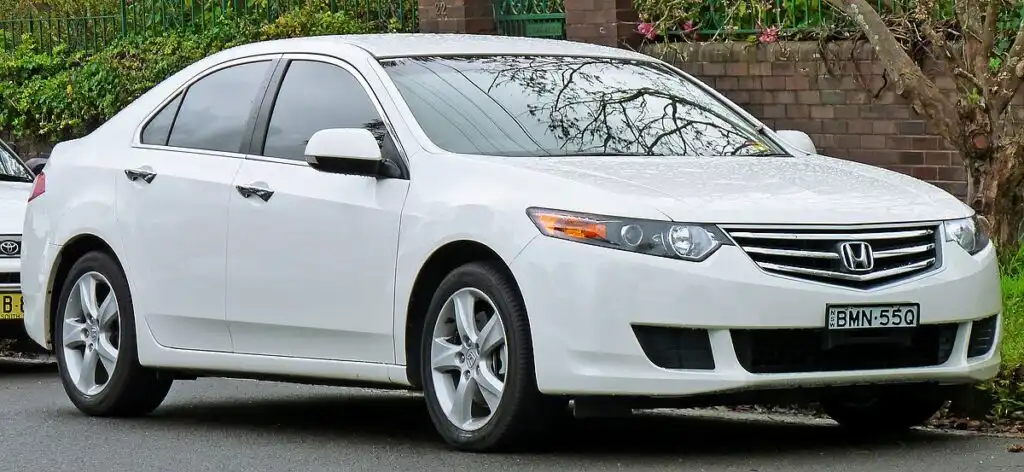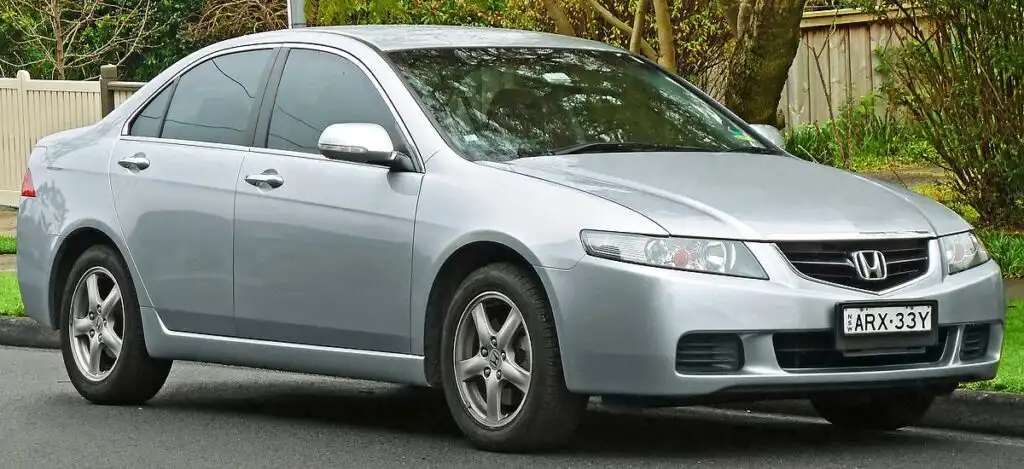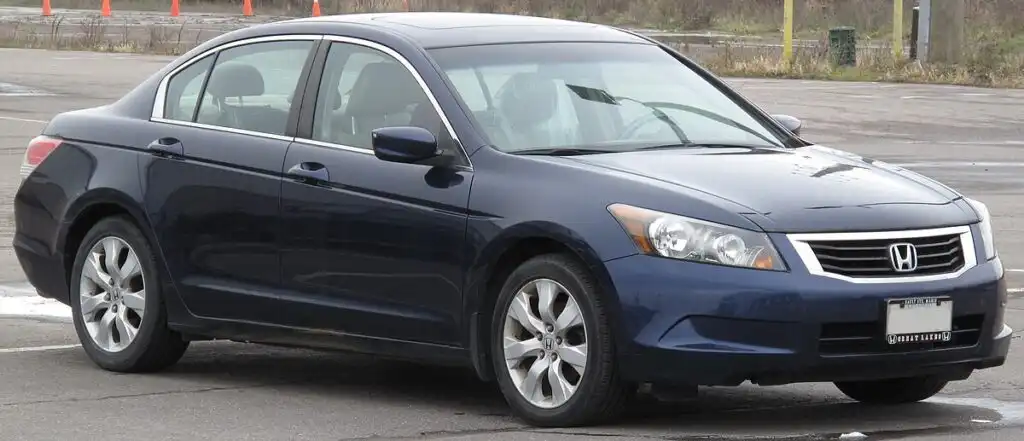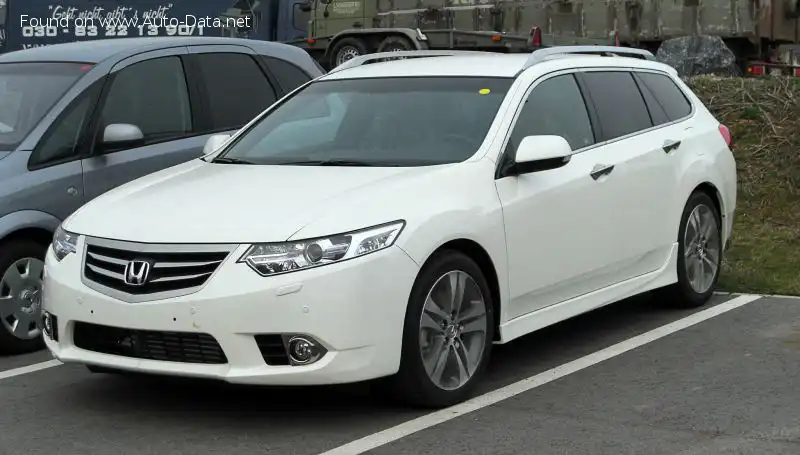
The Honda Accord VIII facelift wagon, specifically the 2.0 i-VTEC variant producing 156 horsepower, was a model offered primarily in the European market between 2011 and 2012. Positioned as a practical and efficient option within the Accord range, it catered to buyers seeking a spacious family vehicle with reasonable running costs. This generation Accord (internally designated as the CW platform) represented a significant step forward in terms of refinement and technology for Honda in the mid-size segment. The wagon body style, while less popular in the North American market, was a key offering in Europe, providing a compelling alternative to traditional sedans.
Technical Specifications
| Brand | Honda |
| Model | Accord |
| Generation | Accord VIII (facelift 2011) Wagon |
| Type (Engine) | 2.0 i-VTEC (156 Hp) |
| Start of production | 2011 |
| End of production | 2012 |
| Powertrain Architecture | Internal Combustion engine |
| Body type | Station wagon (estate) |
| Seats | 5 |
| Doors | 5 |
| Fuel consumption (urban) | 9.2 l/100 km (25.6 US mpg) |
| Fuel consumption (extra urban) | 5.8-6.0 l/100 km (40.6 – 39.2 US mpg) |
| Fuel consumption (combined) | 7.0-7.2 l/100 km (33.6 – 32.7 US mpg) |
| CO2 emissions | 163-166 g/km |
| Fuel Type | Petrol (Gasoline) |
| Acceleration 0 – 100 km/h | 9.7-10.1 sec |
| Acceleration 0 – 62 mph | 9.7-10.1 sec |
| Acceleration 0 – 60 mph | 9.2 sec |
| Maximum speed | 212 km/h (131.73 mph) |
| Emission standard | Euro 5 |
| Weight-to-power ratio | 10 kg/Hp |
| Weight-to-torque ratio | 8.2 kg/Nm |
| Power | 156 Hp @ 6300 rpm |
| Torque | 192 Nm @ 4100-5000 rpm (141.61 lb.-ft.) |
| Engine layout | Front, Transverse |
| Engine Model/Code | R20A3 |
| Engine displacement | 1997 cm3 (121.86 cu. in.) |
| Number of cylinders | 4 |
| Engine configuration | Inline |
| Compression ratio | 10.6:1 |
| Number of valves per cylinder | 4 |
| Fuel injection system | Multi-port manifold injection |
| Engine aspiration | Naturally aspirated |
| Engine oil capacity | 3.7 l (3.91 US qt | 3.26 UK qt) |
| Coolant capacity | 5.4 l (5.71 US qt | 4.75 UK qt) |
| Kerb Weight | 1565 kg (3450.23 lbs.) |
| Trunk (boot) space – minimum | 406 l (14.34 cu. ft.) |
| Trunk (boot) space – maximum | 1183 l (41.78 cu. ft.) |
| Fuel tank capacity | 65 l (17.17 US gal | 14.3 UK gal) |
| Length | 4750 mm (187.01 in.) |
| Width | 1840 mm (72.44 in.) |
| Height | 1470 mm (57.87 in.) |
| Wheelbase | 2705 mm (106.5 in.) |
| Minimum turning circle | 11.7 m (38.39 ft.) |
| Drivetrain Architecture | Front wheel drive |
| Number of gears | 6 |
| Gearbox type | Manual transmission |
| Front suspension | Double wishbone |
| Rear suspension | Independent multi-link |
| Front brakes | Ventilated discs |
| Rear brakes | Disc |
| Tires size | 205/60 R16; 225/50 R17 |
| Wheel rims size | 16; 17 |
Powertrain & Engine Architecture
The heart of this Accord variant is the R20A3 2.0-liter inline-four cylinder engine. This engine is a member of Honda’s K-series family, known for its reliability and efficiency. The R20A3 utilizes a single overhead camshaft (SOHC) design with four valves per cylinder, and Honda’s i-VTEC (Variable Valve Timing and Lift Electronic Control) system. This system allows for variable control of both valve timing and lift, optimizing performance and fuel economy across the engine’s operating range. Fuel delivery is managed by a multi-point fuel injection system. The engine produces 156 horsepower at 6300 rpm and 192 Nm (141.61 lb-ft) of torque between 4100 and 5000 rpm. The engine is transversely mounted, driving the front wheels through a six-speed manual transmission. This transmission was chosen for its balance of efficiency and driver engagement.
Driving Characteristics
The 2.0 i-VTEC with the six-speed manual transmission offered a reasonably engaging driving experience. While not a performance-oriented variant, the engine provided adequate power for everyday driving and highway cruising. Acceleration from 0-60 mph took approximately 9.2 seconds, and top speed was rated at 131.73 mph. The six-speed gearbox allowed for efficient cruising at highway speeds, while still providing enough gear ratios to keep the engine in its optimal power band. Compared to higher-output versions of the Accord, such as those equipped with the 2.4-liter engine, this variant felt less responsive, particularly during overtaking maneuvers. However, it offered a noticeable improvement in fuel economy. The manual transmission also provided a more connected feel compared to the available automatic option.
Equipment & Trim Levels
The 2.0 i-VTEC wagon typically came with a respectable level of standard equipment. This included air conditioning, power windows and mirrors, a CD player with auxiliary input, and basic safety features like ABS brakes and airbags. Higher trim levels, often denoted by designations like ‘SE’ or ‘ES’, added features such as alloy wheels, a multi-function steering wheel, and upgraded interior trim. Optional extras could include a sunroof, navigation system, and leather upholstery. Interior upholstery was typically cloth, with a functional and durable design. The dashboard layout was straightforward and user-friendly, prioritizing ease of use over flashy aesthetics.
Chassis & Braking
The Accord wagon featured a MacPherson strut front suspension and an independent multi-link rear suspension, providing a comfortable and controlled ride. The front brakes were ventilated discs, while the rear brakes were solid discs. ABS (Anti-lock Braking System) was standard. The suspension was tuned to prioritize comfort and stability, rather than outright sportiness. Stabilizer bars were fitted to both the front and rear axles to reduce body roll during cornering. The steering utilized a rack and pinion system, offering precise and responsive control.
Market Reception & Comparison
The 2.0 i-VTEC Accord wagon was generally well-received by automotive critics in Europe. It was praised for its practicality, fuel efficiency, and comfortable ride. However, some reviewers noted that the engine lacked the punch of its larger counterparts. Compared to other wagons in its class, such as the Volkswagen Passat Estate and Ford Mondeo Wagon, the Accord offered a competitive blend of features and value. The manual transmission was favored by enthusiasts for its improved driving experience, while the automatic option prioritized convenience. Fuel economy figures of 33.6 – 32.7 US mpg combined were considered respectable for its class.
Legacy
The Honda Accord VIII wagon, particularly the 2.0 i-VTEC variant, has proven to be a reliable and durable vehicle. The K-series engine is known for its longevity, and with proper maintenance, these engines can easily exceed 200,000 miles. In the used car market, these Accords are often sought after for their practicality, fuel efficiency, and Honda’s reputation for reliability. While not a particularly rare or collectible model, well-maintained examples continue to hold their value. Common maintenance items include regular oil changes, timing belt replacement (typically around 100,000 miles), and inspection of the suspension components.