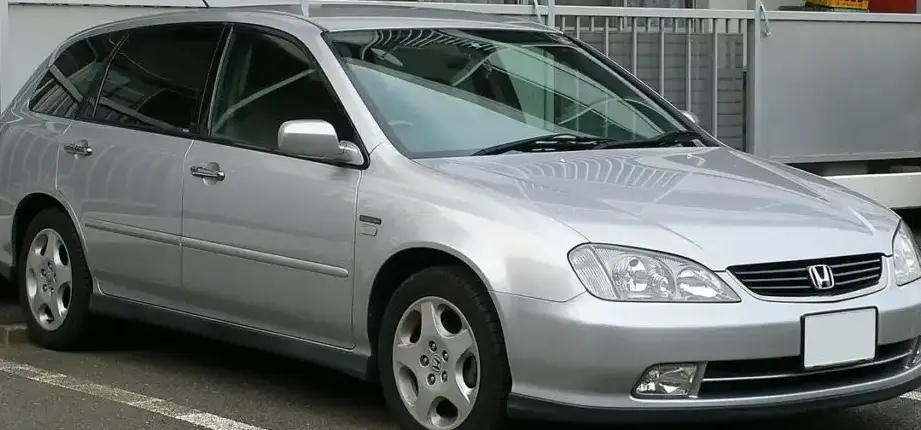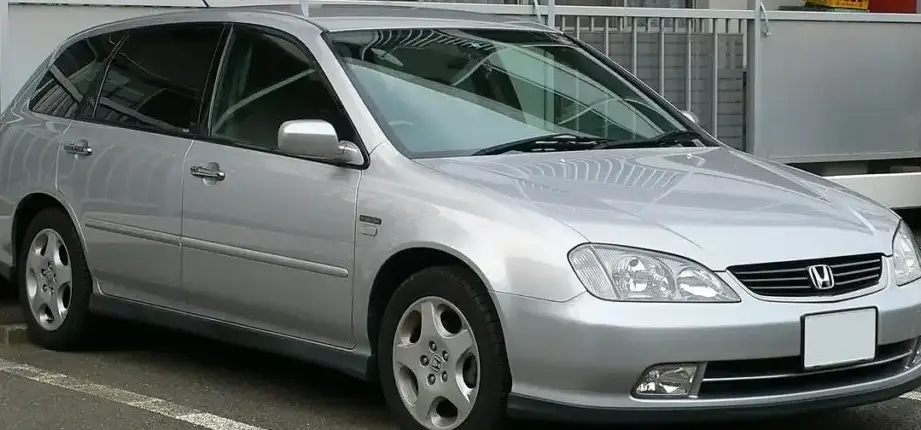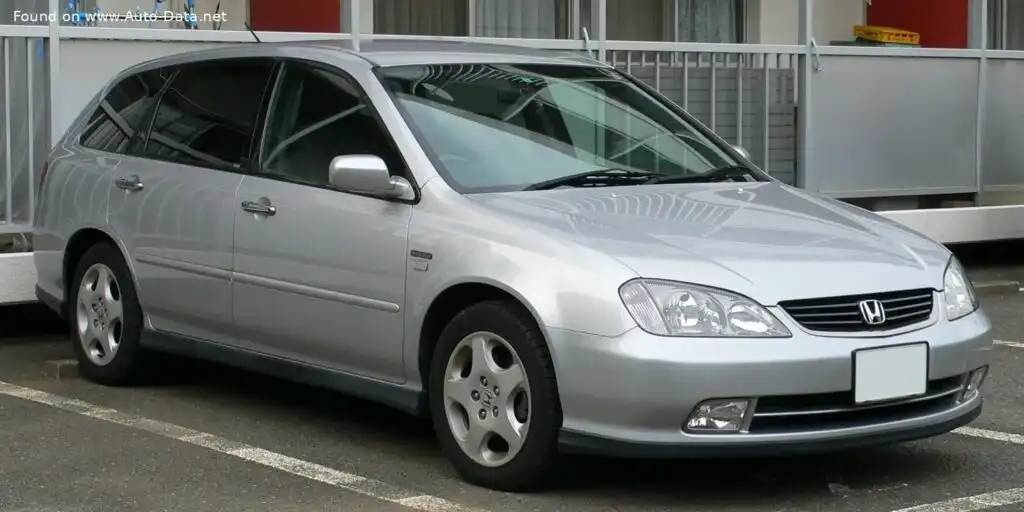
The Honda Avancier, launched in 1999 and produced through 2001, represented Honda’s foray into the burgeoning luxury crossover segment, primarily targeted at the Japanese domestic market (JDM). Positioned above the Honda Inspire and Vigor sedans, the Avancier aimed to offer a more spacious and versatile alternative with a focus on comfort and refinement. This first generation, designated the Avancier I, utilized Honda’s then-current V6 engine technology and a sophisticated full-time four-wheel-drive system. The variant detailed here, the 3.0 V6 24V with a four-speed automatic transmission, was a mid-range offering within the Avancier lineup, balancing performance with accessibility. It served as a stepping stone between the base 2.3L models and the more powerful, later introduced 3.5L variants.
Technical Specifications
| Brand | Honda |
| Model | Avancier |
| Generation | Avancier I |
| Type (Engine) | V4 3.0 V6 24V (215 Hp) 4×4 Automatic |
| Start of production | 1999 |
| End of production | 2001 |
| Powertrain Architecture | Internal Combustion engine |
| Body type | Station wagon (estate) |
| Seats | 5 |
| Doors | 5 |
| Fuel consumption (urban) | 16.6 l/100 km (14.2 US mpg, 17 UK mpg, 6 km/l) |
| Fuel consumption (extra urban) | 9 l/100 km (26.1 US mpg, 31.4 UK mpg, 11.1 km/l) |
| Fuel consumption (combined) | 10.2 l/100 km (23.1 US mpg, 27.7 UK mpg, 9.8 km/l) |
| Fuel Type | Petrol (Gasoline) |
| Maximum speed | 180 km/h (111.85 mph) |
| Weight-to-power ratio | 8 kg/Hp, 125.7 Hp/tonne |
| Weight-to-torque ratio | 6.3 kg/Nm, 159.1 Nm/tonne |
| Power | 215 Hp @ 5800 rpm |
| Power per litre | 71.7 Hp/l |
| Torque | 272 Nm @ 5000 rpm (200.62 lb.-ft. @ 5000 rpm) |
| Engine layout | Front, Transverse |
| Engine Model/Code | J30A |
| Engine displacement | 2997 cm3 (182.89 cu. in.) |
| Number of cylinders | 6 |
| Engine configuration | V-engine |
| Cylinder Bore | 86 mm (3.39 in.) |
| Piston Stroke | 86 mm (3.39 in.) |
| Compression ratio | 9.4:1 |
| Number of valves per cylinder | 4 |
| Fuel injection system | Multi-port manifold injection |
| Engine aspiration | Naturally aspirated engine |
| Valvetrain | SOHC |
| Engine oil capacity | 4.4 l (4.65 US qt, 3.87 UK qt) |
| Kerb Weight | 1710 kg (3769.9 lbs.) |
| Fuel tank capacity | 61 l (16.11 US gal, 13.42 UK gal) |
| Length | 4795 mm (188.78 in.) |
| Width | 1810 mm (71.26 in.) |
| Height | 1545 mm (60.83 in.) |
| Wheelbase | 2765 mm (108.86 in.) |
| Front track | 1555 mm (61.22 in.) |
| Rear track | 1540 mm (60.63 in.) |
| Ride height (ground clearance) | 185 mm (7.28 in.) |
| Drag coefficient (Cd) | 0.37 |
| Minimum turning circle | 11.40 m (37.4 ft.) |
| Drivetrain Architecture | All wheel drive (4×4). Internal Combustion engine. |
| Drive wheel | All wheel drive (4×4) |
| Number of gears | 5 |
| Gearbox type | automatic transmission |
| Front suspension | Double wishbone |
| Rear suspension | Several levers and rods |
| Front brakes | Ventilated discs |
| Rear brakes | Disc |
| Assisting systems | ABS (Anti-lock braking system) |
| Steering type | Steering rack and pinion |
| Power steering | Hydraulic Steering |
| Tires size | 215/65 R16 98S |
| Wheel rims size | 16 |
Powertrain & Engine Architecture
The heart of this Avancier variant is the J30A engine, a 3.0-liter, 24-valve V6. This engine, part of Honda’s J-series family, featured a single overhead camshaft (SOHC) valvetrain and multi-point fuel injection. The J30A was known for its smooth power delivery and relative reliability. The 24-valve configuration, with four valves per cylinder, contributed to improved breathing and higher output compared to earlier Honda V6 designs. Paired with this engine was a four-speed automatic transmission, a common choice for the Avancier’s target demographic who prioritized ease of use over outright performance. This transmission was electronically controlled, offering adaptive shift patterns based on driving conditions. The full-time four-wheel-drive system, utilizing a viscous coupling, distributed power to all four wheels, enhancing traction and stability, particularly in inclement weather.
Driving Characteristics
The 3.0L V6 automatic Avancier offered a comfortable and refined driving experience. While not a sports car, the 215 horsepower and 272 Nm (200.62 lb-ft) of torque provided adequate acceleration for everyday driving and highway cruising. The four-speed automatic transmission, while not as sophisticated as modern multi-gear units, offered smooth shifts and a predictable driving experience. Compared to the base 2.3L models, the 3.0L provided a noticeable boost in performance, making overtaking and merging onto highways significantly easier. However, it lacked the sharper responsiveness of a manual transmission. The full-time four-wheel-drive system instilled confidence in various road conditions, providing enhanced grip and stability. The gear ratios were tuned for comfortable cruising rather than aggressive acceleration, prioritizing fuel efficiency and a relaxed driving experience.
Equipment & Trim Levels
The Avancier I, in its 3.0L automatic guise, was generally well-equipped for its time. Standard features typically included power windows, power locks, air conditioning, a quality audio system, and alloy wheels. Interior upholstery was typically cloth, though leather options were available. The dashboard layout was functional and ergonomically designed, with a focus on ease of use. Optional extras included a sunroof, upgraded audio systems, and woodgrain interior trim. The Avancier aimed for a premium feel, and the fit and finish were generally considered to be above average for a Japanese vehicle of that era.
Chassis & Braking
The Avancier I utilized a double wishbone suspension setup at the front and a multi-link suspension at the rear, providing a comfortable ride and good handling characteristics. Ventilated disc brakes were fitted to the front wheels, while the rear wheels utilized solid discs. Anti-lock braking system (ABS) was standard, enhancing braking performance and safety. The chassis was designed to provide a balance between rigidity and weight, contributing to the vehicle’s overall stability. Stabilizer bars were fitted to both the front and rear axles to reduce body roll during cornering.
Market Reception & Comparison
The Honda Avancier was generally well-received in the Japanese market, praised for its spacious interior, comfortable ride, and refined driving experience. Critics noted the 3.0L V6 engine provided ample power for most driving situations, and the full-time four-wheel-drive system was a valuable asset in Japan’s often-challenging weather conditions. Compared to the 2.3L models, the 3.0L offered a significant performance upgrade, but at a higher price point. Fuel economy, at 10.2 l/100 km (23.1 US mpg), was typical for a vehicle of its size and engine displacement. Reliability was generally considered to be good, consistent with Honda’s reputation for building durable vehicles.
Legacy
The Honda Avancier I, while not a global success, laid the groundwork for Honda’s future crossover offerings. The J30A engine proved to be a reliable powerplant, and many examples remain on the road today. In the used car market, the Avancier I is appreciated by enthusiasts for its unique styling, comfortable ride, and relatively affordable price. The 3.0L V6 automatic variant is often considered the sweet spot in the lineup, offering a good balance of performance, comfort, and reliability. While maintenance costs can be higher than for smaller, more common vehicles, the Avancier I remains a distinctive and enjoyable classic for those seeking a comfortable and capable Japanese crossover.