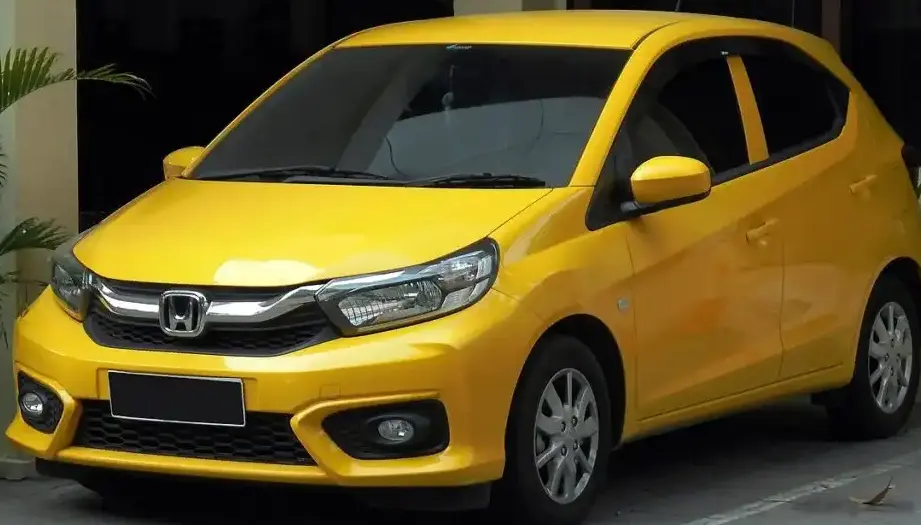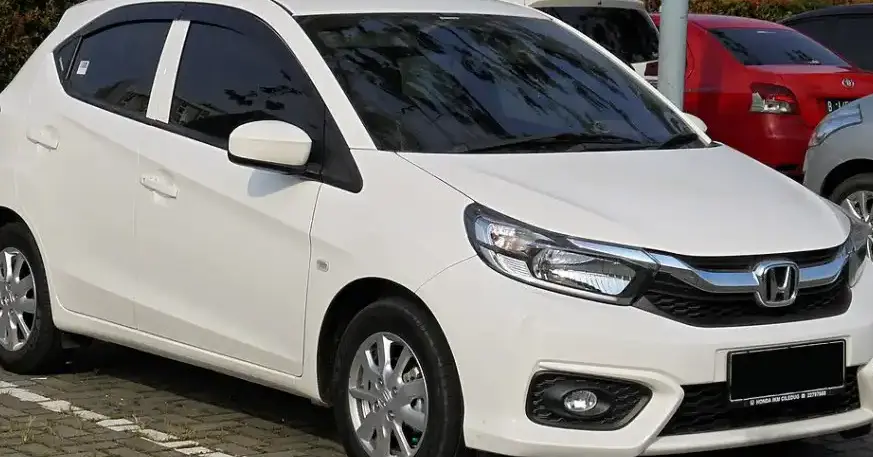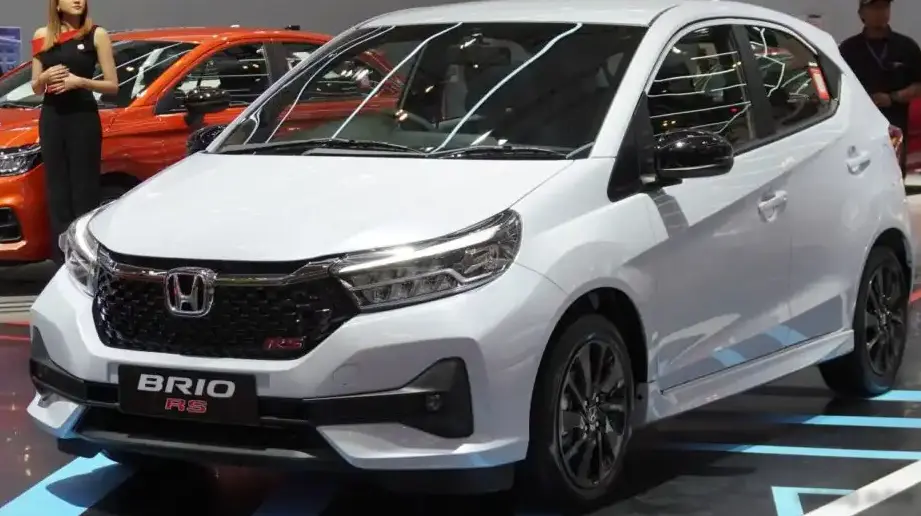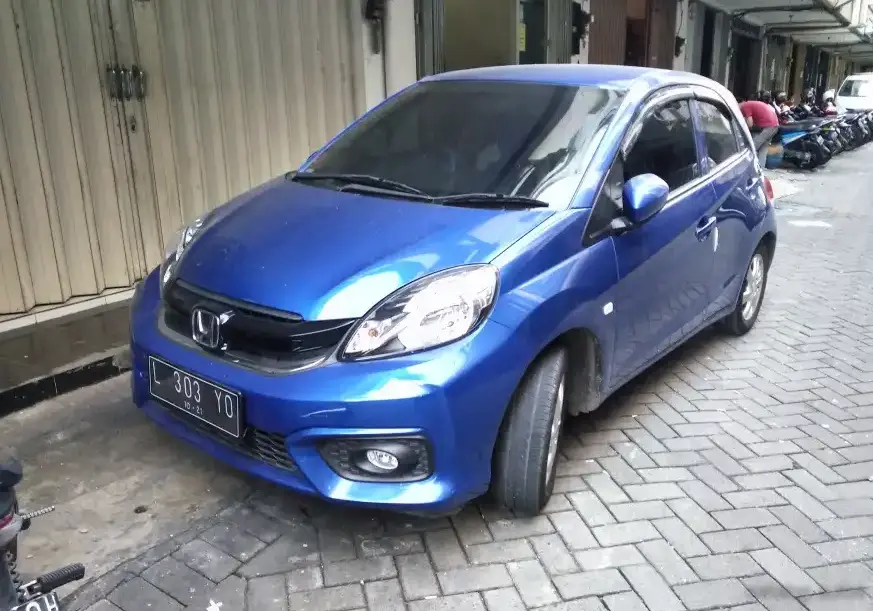
The Honda Brio I (facelift 2016) 1.2 i-VTEC, producing 88 horsepower, represents a key iteration of Honda’s entry-level hatchback designed primarily for the burgeoning Southeast Asian automotive market, and later introduced to India and other developing nations. Produced from 2016 to 2018, this facelifted version of the first-generation Brio (launched in 2011) aimed to refine the original’s design and address some initial criticisms while maintaining its core value proposition: affordable, fuel-efficient, and surprisingly spacious transportation. It was positioned as a direct competitor to vehicles like the Suzuki Swift, Hyundai i10, and Toyota Aygo, offering a compelling alternative in the sub-compact hatchback segment.
Technical Specifications
| Brand | Honda |
| Model | Brio |
| Generation | Brio I (facelift 2016) |
| Type (Engine) | 1.2 i-VTEC (88 Hp) |
| Start of production | 2016 |
| End of production | 2018 |
| Powertrain Architecture | Internal Combustion engine |
| Body type | Hatchback |
| Seats | 5 |
| Doors | 5 |
| Fuel Type | Petrol (Gasoline) |
| Weight-to-power ratio | 10.5 kg/Hp, 95.7 Hp/tonne |
| Weight-to-torque ratio | 8.4 kg/Nm, 118.5 Nm/tonne |
| Power | 88 Hp @ 6000 rpm |
| Power per litre | 73.5 Hp/l |
| Torque | 109 Nm @ 4500 rpm (80.39 lb.-ft. @ 4500 rpm) |
| Engine layout | Front, Transverse |
| Engine displacement | 1198 cm3 (73.11 cu. in.) |
| Number of cylinders | 4 |
| Engine configuration | Inline |
| Number of valves per cylinder | 4 |
| Fuel injection system | Multi-port manifold injection |
| Engine aspiration | Naturally aspirated engine |
| Valvetrain | SOHC |
| Kerb Weight | 920 kg (2028.25 lbs) |
| Fuel tank capacity | 35 l (9.25 US gal | 7.7 UK gal) |
| Length | 3610 mm (142.13 in) |
| Width | 1680 mm (66.14 in) |
| Height | 1500 mm (59.06 in) |
| Wheelbase | 2345 mm (92.32 in) |
| Minimum turning circle | 9.0 m (29.53 ft) |
| Drivetrain Architecture | The Internal combustion engine (ICE) drives the front wheels of the vehicle. |
| Drive wheel | Front wheel drive |
| Number of gears and type of gearbox | 5 gears, manual transmission |
| Front suspension | Independent type McPherson |
| Rear suspension | Semi-independent, coil spring |
| Front brakes | Disc |
| Rear brakes | Drum |
| Assisting systems | ABS (Anti-lock braking system) |
| Steering type | Steering rack and pinion |
| Power steering | Electric Steering |
| Tires size | 175/65 R14 |
| Wheel rims size | 14 |
Powertrain & Engine Architecture
The heart of the 2016 Brio 1.2 i-VTEC is the S0i engine, a 1.2-liter (1198cc) inline-four cylinder gasoline engine. This engine utilizes Honda’s Intelligent Variable Valve Timing and Lift Electronic Control (i-VTEC) system, which optimizes valve timing and lift based on engine speed and load. This technology enhances both fuel efficiency and power output across the rev range. The engine employs a single overhead camshaft (SOHC) design and multi-point fuel injection. The 88 horsepower peak is achieved at 6000 rpm, while the 109 Nm (80.39 lb-ft) of torque is delivered at 4500 rpm. The engine is transversely mounted at the front of the vehicle, driving the front wheels. The five-speed manual transmission was the standard offering for this variant, providing a direct and engaging driving experience. The engine’s relatively simple design contributes to its reliability and ease of maintenance.
Driving Characteristics
The Brio 1.2 i-VTEC with a manual transmission offers a surprisingly lively driving experience for its class. While not a performance car, the engine provides adequate power for city driving and highway cruising. The 5-speed gearbox is well-matched to the engine’s characteristics, allowing for precise gear changes and efficient power delivery. The relatively light weight of the Brio (920 kg / 2028.25 lbs) contributes to its nimble handling. Compared to potential higher-spec variants (had they been offered with larger engines), this 1.2L version prioritizes fuel economy and affordability over outright speed. Acceleration is adequate, but requires downshifting for overtaking maneuvers. The steering is light and responsive, making it easy to maneuver in tight spaces. The suspension, while tuned for comfort, provides reasonable control in corners.
Equipment & Trim Levels
The 2016 Brio 1.2 i-VTEC typically came with a fairly basic, yet functional, equipment list. Standard features generally included air conditioning, power steering, central locking, and front power windows. Safety features included dual airbags and an Anti-lock Braking System (ABS). Higher trim levels, if available in specific markets, might have added features like alloy wheels, a more sophisticated audio system, rear power windows, and body-colored door handles and mirrors. Interior upholstery was typically cloth, with a simple and durable design. The dashboard layout was straightforward and focused on functionality. Optional extras often included a rear parking sensor and a security alarm.
Chassis & Braking
The Brio utilizes a McPherson strut independent suspension system at the front, providing a comfortable ride and good handling characteristics. The rear suspension is a semi-independent torsion beam setup, which is a cost-effective solution that offers a reasonable balance between ride comfort and stability. The braking system consists of disc brakes at the front and drum brakes at the rear. ABS was standard, enhancing braking performance and safety. The steering system is a rack and pinion type with electric power assistance, providing light and precise steering feel. The vehicle rides on 14-inch wheels with 175/65 R14 tires.
Market Reception & Comparison
The Honda Brio 1.2 i-VTEC was generally well-received in its target markets. Critics praised its spacious interior, fuel efficiency, and nimble handling. However, some criticized its basic interior trim and lack of advanced features compared to some competitors. Compared to other trims within the Brio lineup (if offered), the 1.2L manual version represented the most affordable entry point, appealing to budget-conscious buyers. Its fuel economy was competitive with other sub-compact hatchbacks, making it an attractive option for daily commuting. Reliability was generally considered to be good, consistent with Honda’s reputation for building durable vehicles.
Legacy
The Honda Brio, and specifically the 1.2 i-VTEC variant, has established a reputation for reliability and affordability in the used car market. The S0i engine is known for its durability and relatively low maintenance costs. While not a particularly exciting vehicle, it provides dependable transportation and good fuel economy. Parts availability is generally good, and the simple mechanical design makes it relatively easy to repair. Today, the Brio remains a popular choice for first-time car buyers and those seeking an economical and practical city car. Its enduring appeal lies in its blend of affordability, reliability, and surprisingly spacious interior for its size.