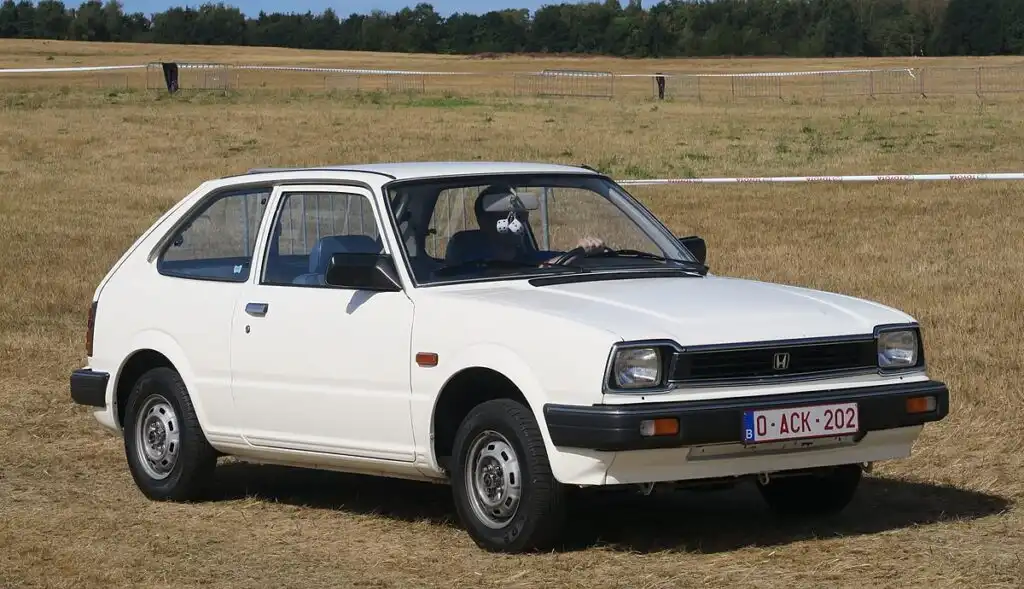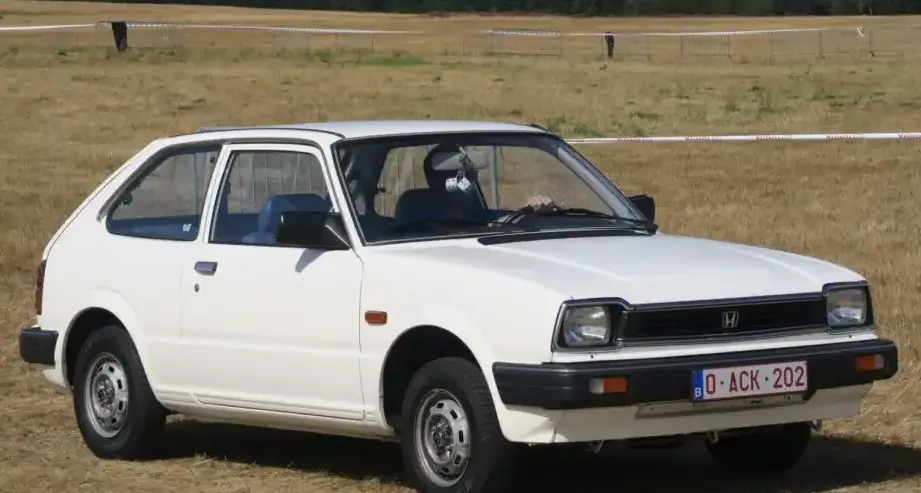
The Honda Civic II Hatchback 1.2, produced between 1980 and 1983, represents a pivotal moment in Honda’s expansion into the North American market and solidified the Civic’s reputation for fuel efficiency and reliability. This second-generation Civic (internally designated AA) built upon the success of the first generation, offering a larger body, improved refinement, and a wider range of available configurations. The 1.2-liter, 54 horsepower variant was primarily positioned as the entry-level model, aimed at budget-conscious buyers seeking economical transportation. It played a crucial role in establishing the Civic as a popular choice among first-time car buyers and those prioritizing practicality.
Technical Specifications
| Brand | Honda |
| Model | Civic |
| Generation | Civic II Hatchback |
| Type (Engine) | 1.2 (54 Hp) |
| Start of production | 1980 |
| End of production | 1983 |
| Powertrain Architecture | Internal Combustion Engine |
| Body Type | Hatchback |
| Fuel Type | Petrol (Gasoline) |
| Power | 54 Hp |
| Engine Aspiration | Naturally Aspirated |
Powertrain & Engine Architecture
The heart of the Civic II 1.2 is the A12A engine, a 1198cc inline-four cylinder engine. This engine utilizes a single overhead camshaft (SOHC) design, operating with two valves per cylinder. Fuel delivery is managed by a carburetor – typically a Keihin – rather than fuel injection, a common feature for vehicles of this era and price point. The carburetor system, while simpler than fuel injection, contributed to the engine’s ease of maintenance and relatively low cost. The engine’s bore and stroke measure 76.2mm x 66.0mm, resulting in a compression ratio of 9.0:1. The 54 horsepower peak is achieved at 6000 rpm, while torque output is around 62 lb-ft at 3000 rpm. The transmission paired with this engine was typically a four-speed manual, but a two-speed Hondamatic automatic transmission was also offered, though less common. The Hondamatic, a continuously variable transmission (CVT) precursor, utilized a belt-and-pulley system to provide seamless gear changes, prioritizing fuel efficiency over outright performance.
Driving Characteristics
The 1.2-liter Civic II Hatchback, particularly in automatic transmission guise, was not designed for spirited driving. Acceleration was modest, with 0-60 mph times estimated around 15-17 seconds. The focus was squarely on fuel economy and ease of use. The Hondamatic transmission, while smooth, further reduced acceleration due to its inherent efficiency-focused design. Gear ratios were optimized for low-end torque and maximizing mileage, rather than providing a sporty driving experience. The manual transmission version offered slightly better performance, allowing the driver to keep the engine in its optimal power band. Handling was generally considered competent for a vehicle in its class, with a relatively lightweight chassis and MacPherson strut front suspension. However, the rear suspension, consisting of a torsion beam, offered a less sophisticated ride compared to independent rear setups found in some competitors.
Equipment & Trim Levels
The 1.2-liter Civic II Hatchback was typically offered in a base trim level, focusing on essential features. Standard equipment generally included cloth upholstery, vinyl floor covering, basic instrumentation (speedometer, fuel gauge, and temperature gauge), and a two-spoke steering wheel. Air conditioning and a radio were often optional extras. Interior appointments were spartan but functional, reflecting the car’s budget-oriented positioning. Higher trim levels, available with larger engines, offered features like upgraded upholstery, additional instrumentation, and more comprehensive sound systems. The exterior typically featured steel wheels with hubcaps, black plastic bumpers, and minimal chrome trim. Paint options were limited to a selection of solid colors.
Chassis & Braking
The Civic II Hatchback utilized a unibody construction, contributing to its relatively lightweight design. The front suspension employed MacPherson struts with a stabilizer bar, providing reasonable handling characteristics. The rear suspension featured a torsion beam axle, a cost-effective solution that offered adequate ride comfort for everyday driving. Braking duties were handled by drum brakes on all four wheels, which were standard for this class of vehicle in the early 1980s. While adequate for normal driving conditions, the drum brakes lacked the stopping power and fade resistance of disc brakes. Steering was manual rack-and-pinion, providing a direct and responsive feel.
Market Reception & Comparison
The Civic II 1.2 received generally positive reviews for its fuel efficiency, reliability, and affordability. Critics praised its build quality and overall practicality. However, the engine’s limited power output was a common criticism, particularly when compared to larger-engined competitors. Compared to the 1.5-liter and 1.6-liter versions of the Civic II, the 1.2 offered significantly less performance. The 1.5-liter, for example, produced around 60-75 horsepower, providing a noticeable improvement in acceleration and overall drivability. The 1.2 was also less desirable than the Civic Si models, which featured more powerful engines, sport-tuned suspensions, and a more aggressive styling. Despite its limitations, the 1.2-liter Civic II Hatchback represented excellent value for money, making it a popular choice among budget-conscious buyers.
Legacy
The Honda Civic II 1.2, while not the most powerful or feature-rich version of the second-generation Civic, played a vital role in establishing Honda’s reputation for building reliable and fuel-efficient vehicles. The A12A engine proved to be remarkably durable, and many examples are still on the road today. In the used car market, these Civics are often sought after by enthusiasts looking for a simple, affordable, and easy-to-maintain classic car. Parts availability remains relatively good, and the car’s straightforward mechanical design makes it a popular choice for restoration projects. The 1.2-liter Civic II Hatchback serves as a reminder of a time when fuel efficiency and practicality were prioritized over outright performance, and it remains a testament to Honda’s engineering prowess.