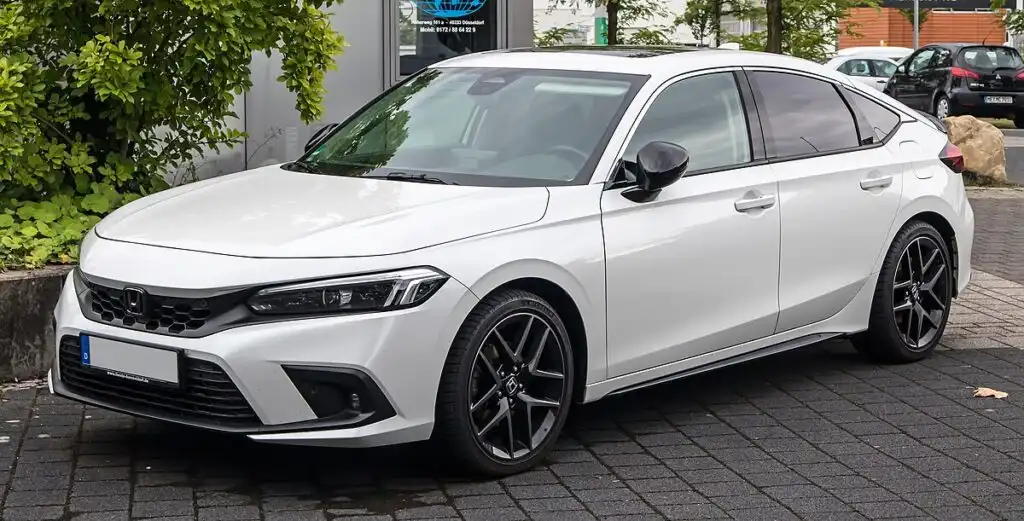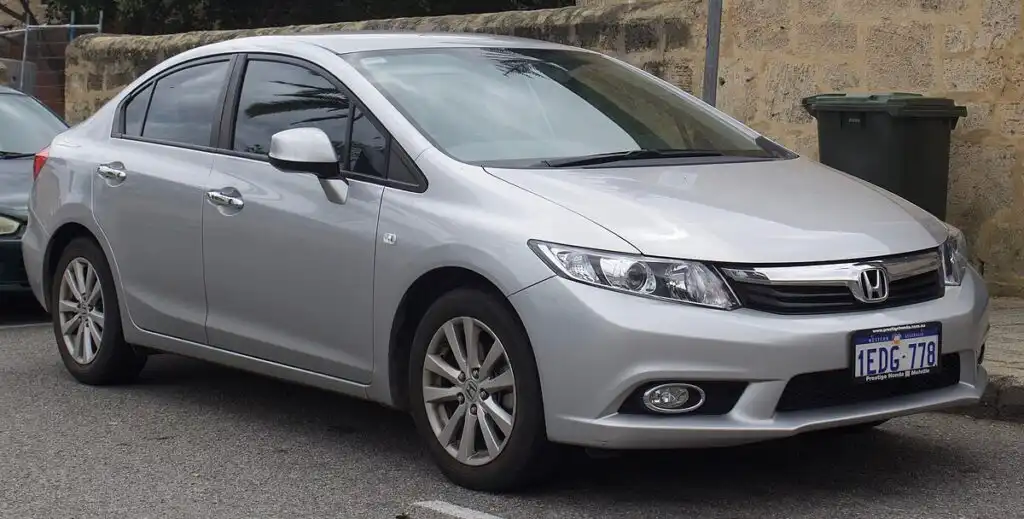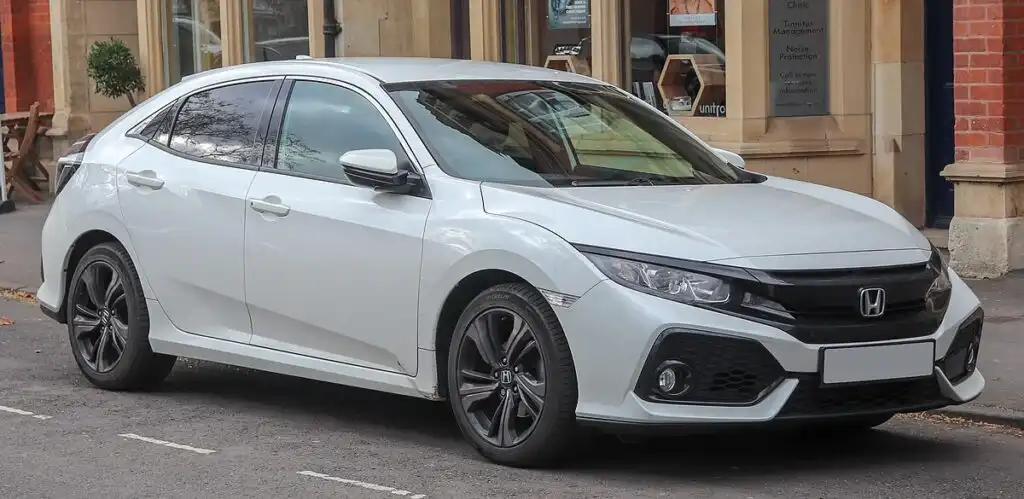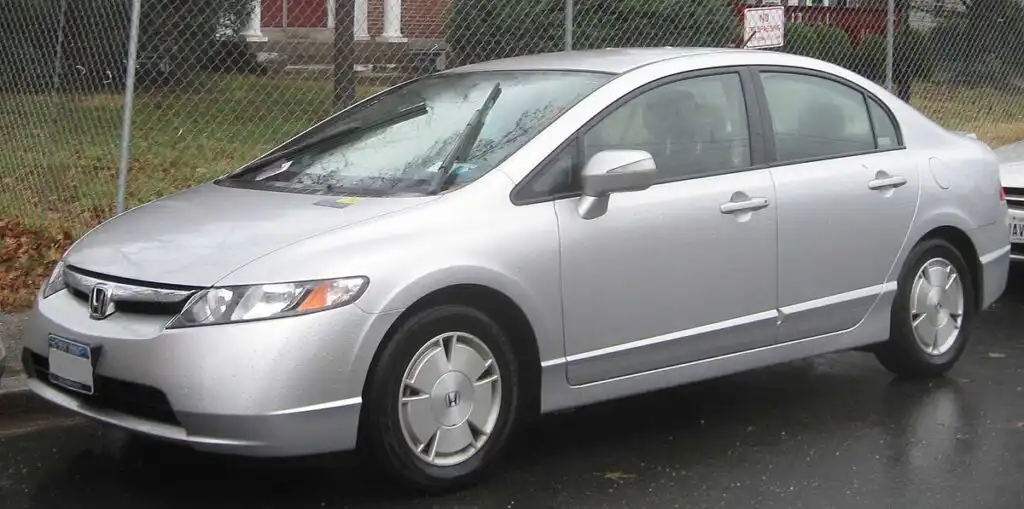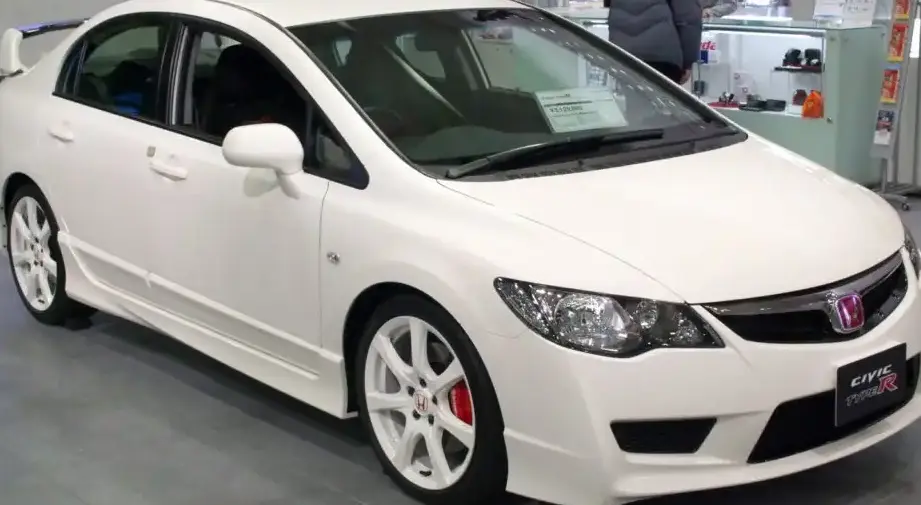
The Honda Civic Type R (FD2), produced between 2007 and 2010, represents a significant iteration in the lineage of Honda’s high-performance compact car. Unlike its predecessors which were hatchbacks, the FD2 Type R was exclusively offered as a four-door sedan, primarily targeted at the Japanese domestic market (JDM). While not officially sold in the United States during its production run, the FD2 has gained a dedicated following among enthusiasts due to its naturally aspirated engine, precise handling, and overall driver-focused design. It sits within the eighth generation (FG/FA) Civic chassis, but distinguishes itself with substantial performance upgrades over standard Civic sedans.
Technical Specifications
| Brand | Honda |
| Model | Civic Type R |
| Generation | Civic Type R (FD2) |
| Type (Engine) | 2.0 (225 Hp) |
| Start of production | 2007 |
| End of production | 2010 |
| Powertrain Architecture | Internal Combustion engine |
| Body type | Sedan |
| Seats | 4 |
| Doors | 4 |
| Fuel consumption (combined) | 8.8 l/100 km (26.7 US mpg, 32.1 UK mpg, 11.4 km/l) |
| CO2 emissions | 211 g/km |
| Fuel Type | Petrol (Gasoline) |
| Weight-to-power ratio | 5.6 kg/Hp, 177.2 Hp/tonne |
| Weight-to-torque ratio | 5.9 kg/Nm, 169.3 Nm/tonne |
| Power | 225 Hp @ 8000 rpm |
| Power per litre | 112.6 Hp/l |
| Torque | 215 Nm @ 6100 rpm (158.58 lb.-ft. @ 6100 rpm) |
| Engine layout | Front, Transverse |
| Engine Model/Code | K20A |
| Engine displacement | 1998 cm3 (121.93 cu. in.) |
| Number of cylinders | 4 |
| Engine configuration | Inline |
| Cylinder Bore | 86 mm (3.39 in.) |
| Piston Stroke | 86 mm (3.39 in.) |
| Compression ratio | 11.7:1 |
| Number of valves per cylinder | 4 |
| Fuel injection system | Multi-port manifold injection |
| Engine aspiration | Naturally aspirated engine |
| Valvetrain | DOHC, i-VTEC |
| Engine oil capacity | 4.5 l (4.76 US qt | 3.96 UK qt) |
| Coolant | 4.5 l (4.76 US qt | 3.96 UK qt) |
| Kerb Weight | 1270 kg (2799.87 lbs.) |
| Fuel tank capacity | 50 l (13.21 US gal | 11 UK gal) |
| Length | 4540 mm (178.74 in.) |
| Width | 1770 mm (69.69 in.) |
| Height | 1430 mm (56.3 in.) |
| Wheelbase | 2700 mm (106.3 in.) |
| Front track | 1505 mm (59.25 in.) |
| Rear track | 1515 mm (59.65 in.) |
| Ride height (ground clearance) | 135 mm (5.31 in.) |
| Minimum turning circle | 11.8 m (38.71 ft.) |
| Drivetrain Architecture | Front wheel drive |
| Number of gears and type of gearbox | 6 gears, manual transmission |
| Front suspension | Independent, type McPherson with coil spring and anti-roll bar |
| Rear suspension | Double wishbone, Transverse stabilizer |
| Front brakes | Ventilated discs, 320 mm |
| Rear brakes | Disc, 282 mm |
| Assisting systems | ABS (Anti-lock braking system) |
| Steering type | Steering rack and pinion |
| Power steering | Electric Steering |
| Tires size | 225/40 R18 |
| Wheel rims size | 7.5J x 18 |
Powertrain & Engine Architecture
The heart of the FD2 Type R is the K20A engine, a 2.0-liter naturally aspirated inline-four cylinder. This engine is a direct descendant of the K20Z found in the US-market Civic Si, but with significant enhancements. These include high-flow fuel injectors, a revised intake manifold, a higher compression ratio (11.7:1), and a more aggressive camshaft profile. The engine utilizes Honda’s i-VTEC (intelligent Variable Timing and Lift Electronic Control) system, which optimizes valve timing and lift for both low-end torque and high-RPM power. The K20A produces 225 horsepower at 8000 rpm and 158 lb-ft of torque at 6100 rpm. The only transmission option was a close-ratio six-speed manual gearbox, designed for precise and engaging shifts. This transmission features shorter gear ratios compared to standard Civic models, contributing to the Type R’s quicker acceleration.
Driving Characteristics
The FD2 Type R delivers a distinctly raw and engaging driving experience. The high-revving K20A engine requires the driver to maintain momentum, as peak torque is relatively low compared to turbocharged rivals. However, the engine’s responsiveness and willingness to rev to its 8000 rpm redline are rewarding. The six-speed manual transmission is a key component of the driving experience, offering precise shifts and a direct connection to the engine. Compared to the US-market Civic Si with its five-speed manual, the FD2’s gearbox provides more control and allows for quicker acceleration. While the FD2 lacks the low-end grunt of turbocharged competitors, its lightweight chassis and well-tuned suspension contribute to exceptional handling and cornering ability.
Equipment & Trim Levels
The FD2 Type R was relatively sparsely equipped compared to some contemporary performance cars, prioritizing weight reduction and driving dynamics. Standard features included sport seats with enhanced bolstering, a unique steering wheel, and a metal shift knob. Air conditioning and a basic audio system were typically included, but options were limited. The interior trim was focused on functionality, with a minimalist design and aluminum accents. The FD2 was offered in a range of exterior colors, including Championship White (a signature Type R color), Milano Red, and Galaxy Blue Metallic.
Chassis & Braking
The FD2 Type R’s chassis was extensively modified compared to the standard Civic sedan. It featured a stiffer suspension with revised spring rates and dampers, as well as a thicker front stabilizer bar. The front suspension utilized a McPherson strut design, while the rear employed a multi-link setup. Braking duties were handled by ventilated discs at all four corners, providing ample stopping power. The FD2 also featured an ABS (Anti-lock Braking System) as standard equipment. The car’s relatively lightweight construction (approximately 2799 lbs) further enhanced its handling and agility.
Market Reception & Comparison
The FD2 Type R was widely praised by automotive journalists for its engaging driving dynamics and high-revving engine. However, some critics noted its relatively low torque output and lack of modern amenities. Compared to other performance sedans of the time, such as the Subaru Impreza WRX or Mitsubishi Lancer Evolution, the FD2 offered a more focused and purist driving experience. Within the Civic lineup, the FD2 Type R represented the ultimate performance variant, offering a significant upgrade over the Si model in terms of power, handling, and overall driving engagement. Its fuel economy, at 26.7 US mpg combined, was respectable for a performance car of its era.
Legacy
The Honda Civic Type R (FD2) has become a highly sought-after vehicle among enthusiasts, particularly in the used car market. Its naturally aspirated engine, precise handling, and limited production numbers have contributed to its increasing value. The K20A engine is known for its reliability and durability, provided it is properly maintained. While finding parts can sometimes be challenging due to the FD2’s JDM origins, a thriving aftermarket exists for performance upgrades and replacement components. The FD2 Type R is often regarded as one of the last “analog” performance cars, offering a driving experience that is increasingly rare in the age of turbocharged engines and electronic driver aids. It remains a benchmark for front-wheel-drive performance and a testament to Honda’s engineering prowess.