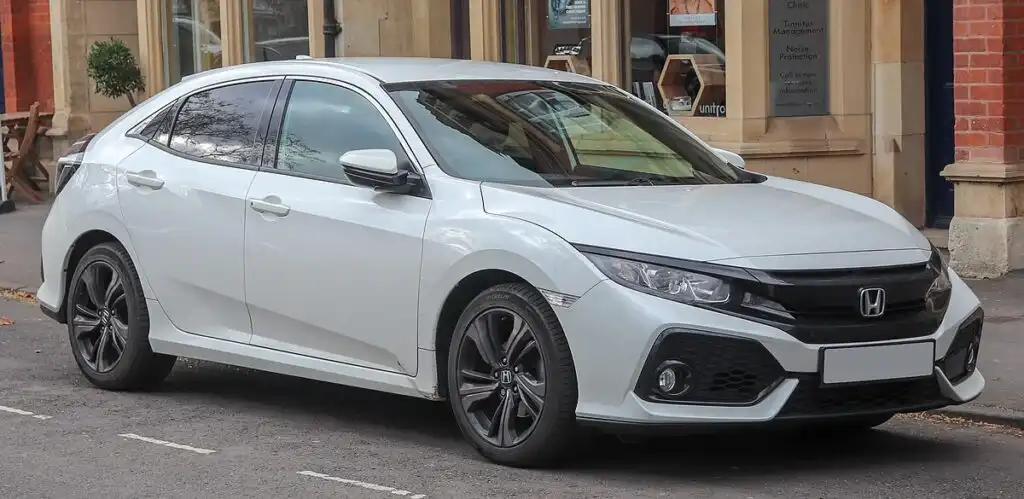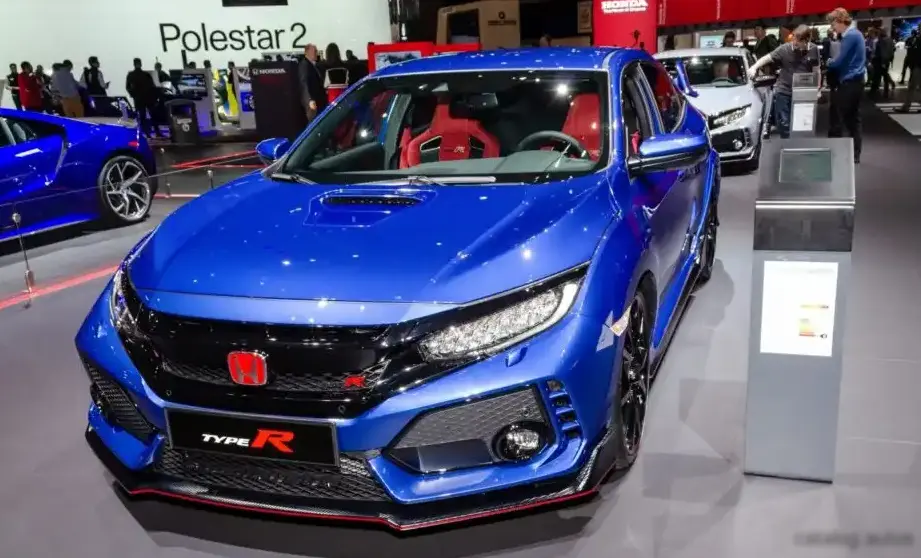
The Honda Civic Type R (FK8), produced from 2017 to 2020, represents a significant leap forward in the Civic’s performance lineage. This fifth-generation Type R, exclusive as a hatchback, was Honda’s concerted effort to establish a true contender in the global hot hatch market, particularly targeting rivals like the Volkswagen Golf R and the Ford Focus RS. The FK8 marked the first time a Type R was specifically engineered for global markets, including North America, a region previously excluded from earlier generations. It’s built on the Honda Global Compact Platform, a modified version of the platform underpinning the tenth-generation Civic.
Technical Specifications
| Brand | Honda |
| Model | Civic Type R |
| Generation | Civic Type R (FK8) |
| Type (Engine) | 2.0 (320 Hp) |
| Start of production | 2017 |
| End of production | 2020 |
| Powertrain Architecture | Internal Combustion engine |
| Body type | Hatchback |
| Seats | 4 |
| Doors | 5 |
| Fuel consumption at Low speed (WLTP) | 11.2 l/100 km (21 US mpg, 25.2 UK mpg, 8.9 km/l) |
| Fuel consumption at Medium speed (WLTP) | 8.2 l/100 km (28.7 US mpg, 34.4 UK mpg, 12.2 km/l) |
| Fuel consumption at high speed (WLTP) | 7.4 l/100 km (31.8 US mpg, 38.2 UK mpg, 13.5 km/l) |
| Fuel consumption at very high speed (WLTP) | 8.6 l/100 km (27.4 US mpg, 32.8 UK mpg, 11.6 km/l) |
| Combined fuel consumption (WLTP) | 8.5 l/100 km (27.7 US mpg, 33.2 UK mpg, 11.8 km/l) |
| CO2 emissions (WLTP) | 178 g/km |
| Fuel consumption (economy) – urban | 9.8 l/100 km (24 US mpg, 28.8 UK mpg, 10.2 km/l) |
| Fuel consumption (economy) – extra urban | 6.5 l/100 km (36.2 US mpg, 43.5 UK mpg, 15.4 km/l) |
| Fuel consumption (economy) – combined | 7.7 l/100 km (30.5 US mpg, 36.7 UK mpg, 13 km/l) |
| CO2 emissions | 176 g/km |
| Fuel Type | Petrol (Gasoline) |
| Acceleration 0 – 100 km/h | 5.8 sec |
| Acceleration 0 – 62 mph | 5.8 sec |
| Acceleration 0 – 60 mph | 5.5 sec |
| Maximum speed | 272 km/h (169.01 mph) |
| Emission standard | Euro 6 |
| Weight-to-power ratio | 4.1 kg/Hp, 245.2 Hp/tonne |
| Weight-to-torque ratio | 3.3 kg/Nm, 306.5 Nm/tonne |
| Power | 320 Hp @ 6500 rpm |
| Power per litre | 160.3 Hp/l |
| Torque | 400 Nm @ 2500-4500 rpm (295.02 lb.-ft. @ 2500-4500 rpm) |
| Engine layout | Front, Transverse |
| Engine Model/Code | K20C1 |
| Engine displacement | 1996 cm3 (121.8 cu. in.) |
| Number of cylinders | 4 |
| Engine configuration | Inline |
| Cylinder Bore | 86 mm (3.39 in.) |
| Piston Stroke | 85.9 mm (3.38 in.) |
| Compression ratio | 9.8:1 |
| Number of valves per cylinder | 4 |
| Fuel injection system | Direct injection |
| Engine aspiration | Turbocharger, Intercooler |
| Valvetrain | DOHC |
| Engine oil capacity | 5.4 l (5.71 US qt | 4.75 UK qt) |
| Coolant | 4.7 l (4.97 US qt | 4.14 UK qt) |
| Kerb Weight | 1305-1345 kg (2877.03 – 2965.22 lbs.) |
| Max. weight | 1760 kg (3880.14 lbs.) |
| Max load | 415-455 kg (914.92 – 1003.1 lbs.) |
| Trunk (boot) space – minimum | 420 l (14.83 cu. ft.) |
| Fuel tank capacity | 46 l (12.15 US gal | 10.12 UK gal) |
| Length | 4557 mm (179.41 in.) |
| Width | 1877 mm (73.9 in.) |
| Height | 1434 mm (56.46 in.) |
| Wheelbase | 2699 mm (106.26 in.) |
| Front track | 1584 mm (62.36 in.) |
| Rear (Back) track | 1602 mm (63.07 in.) |
| Ride height (ground clearance) | 126 mm (4.96 in.) |
| Minimum turning circle (turning diameter) | 12.56 m (41.21 ft.) |
| Drivetrain Architecture | The Internal combustion engine (ICE) drives the front wheels of the vehicle. |
| Drive wheel | Front wheel drive |
| Number of gears and type of gearbox | 6 gears, manual transmission |
| Front suspension | Independent type McPherson |
| Rear suspension | Independent multi-link suspension |
| Front brakes | Ventilated discs |
| Rear brakes | Disc |
| Assisting systems | ABS (Anti-lock braking system) |
| Steering type | Steering rack and pinion |
| Power steering | Electric Steering |
| Tires size | 245/30 ZR20 |
| Wheel rims size | 8.5J x 20 |
Powertrain & Engine Architecture
At the heart of the FK8 Type R lies the K20C1, a 2.0-liter, turbocharged, four-cylinder engine. This engine is a significant departure from the naturally aspirated K20Z engines found in previous Type R models. The K20C1 utilizes a single-scroll turbocharger, direct injection, and a high compression ratio of 9.8:1 to produce 320 horsepower at 6,500 rpm and 295 lb-ft of torque between 2,500 and 4,500 rpm. The engine features a sophisticated cooling system, including an additional radiator compared to the standard Civic, to manage the increased heat generated by the turbocharger. The only transmission offered was a close-ratio six-speed manual, a deliberate choice by Honda to maintain driver engagement.
Driving Characteristics
The FK8 Type R delivers a visceral driving experience. The turbocharged engine provides strong acceleration, with a noticeable surge of power in the mid-range. The six-speed manual transmission is precise and engaging, although the shift linkage can feel slightly notchy. The chassis is exceptionally well-balanced, thanks to a sophisticated suspension system featuring adaptive dampers. Compared to the standard Civic, the Type R boasts a significantly stiffer chassis and revised suspension geometry. While the power delivery is strong, the turbocharger does introduce a degree of turbo lag, particularly at lower engine speeds. The steering is quick and responsive, providing excellent feedback to the driver. The FK8 is a capable track car, offering impressive levels of grip and stability.
Equipment & Trim Levels
The FK8 Type R was relatively sparsely equipped in terms of luxury features, with a clear focus on performance. Standard equipment included high-bolstered sport seats upholstered in fabric, a leather-wrapped steering wheel, a 7-inch touchscreen infotainment system with Apple CarPlay and Android Auto compatibility, and a comprehensive suite of safety features, including Honda Sensing suite of driver-assistance technologies. Optional extras were limited, primarily consisting of paint colors and accessories like floor mats. The interior design is functional and driver-focused, with a minimalist aesthetic.
Chassis & Braking
The FK8 Type R features a MacPherson strut front suspension and a multi-link rear suspension, both significantly upgraded compared to the standard Civic. Adaptive dampers are standard, allowing the driver to adjust the suspension stiffness to suit their driving preferences. Braking duties are handled by Brembo four-piston calipers and larger rotors at the front, providing exceptional stopping power. The rear brakes are discs, a step up from the drums found on some lower Civic trims. A limited-slip differential is standard, enhancing traction and cornering performance. The chassis is reinforced with additional bracing to improve rigidity.
Market Reception & Comparison
The FK8 Type R was widely praised by automotive critics for its exceptional performance, handling, and driver engagement. It was often compared favorably to rivals like the Volkswagen Golf R, Ford Focus RS, and Hyundai i30 N. Critics noted the FK8’s impressive track capabilities and its ability to deliver a thrilling driving experience. Some criticisms were leveled at the ride quality, which can be firm on rough roads, and the somewhat aggressive styling. Fuel economy, while respectable for a high-performance hatchback, was not a standout feature. The FK8 quickly gained a loyal following among enthusiasts.
Legacy
The FK8 Type R cemented Honda’s reputation as a leader in the hot hatch segment. Its combination of performance, handling, and practicality made it a highly desirable vehicle. The K20C1 engine, while complex, has proven to be relatively reliable, although regular maintenance is essential. On the used car market, the FK8 Type R commands a premium price, reflecting its desirability and limited production numbers. It remains a benchmark for front-wheel-drive performance cars, and its influence can be seen in subsequent hot hatch designs.