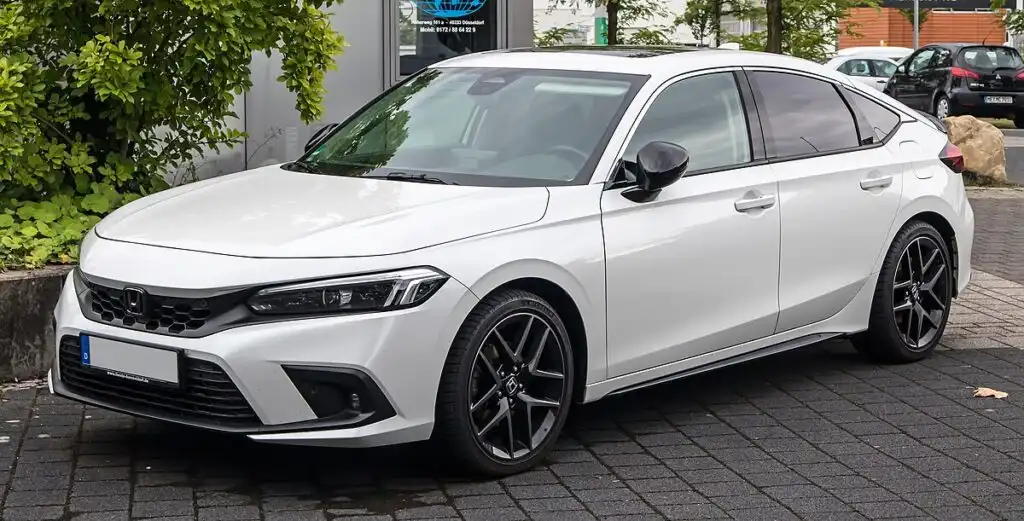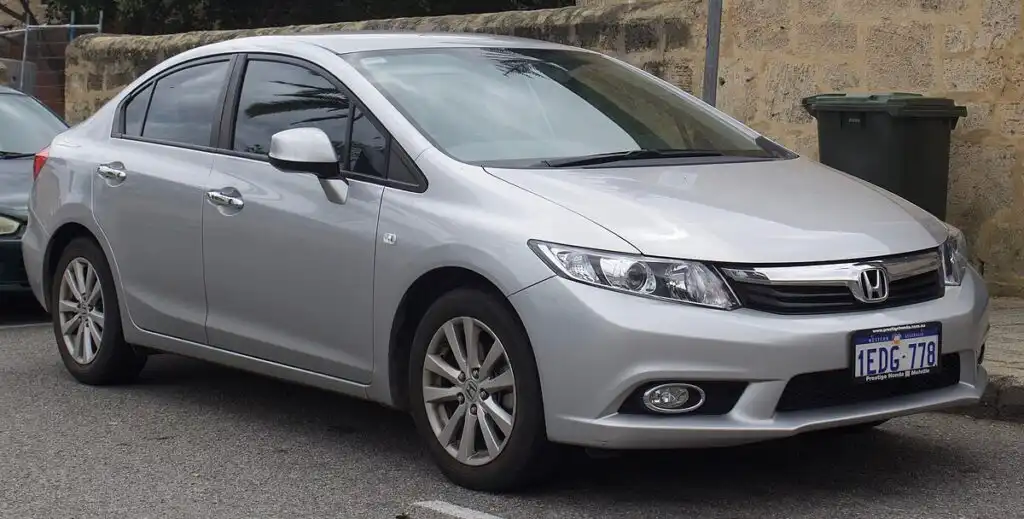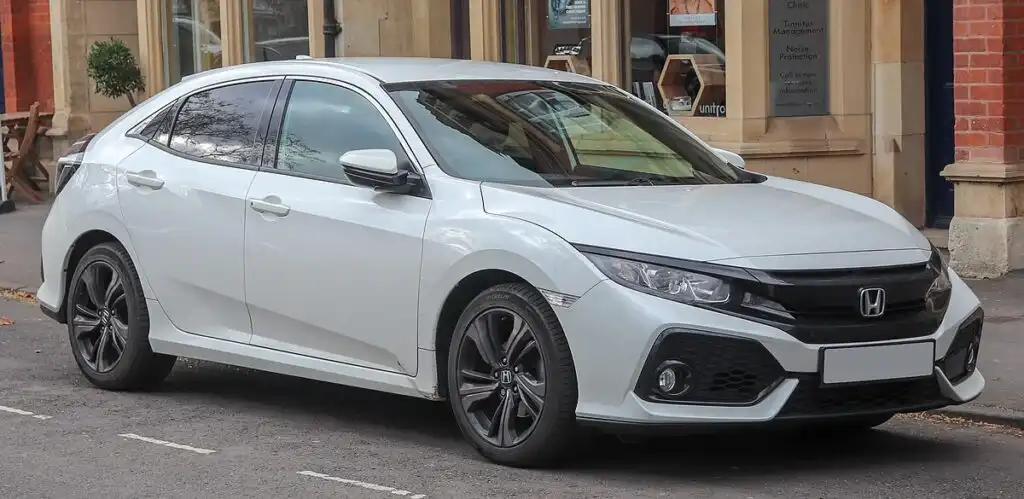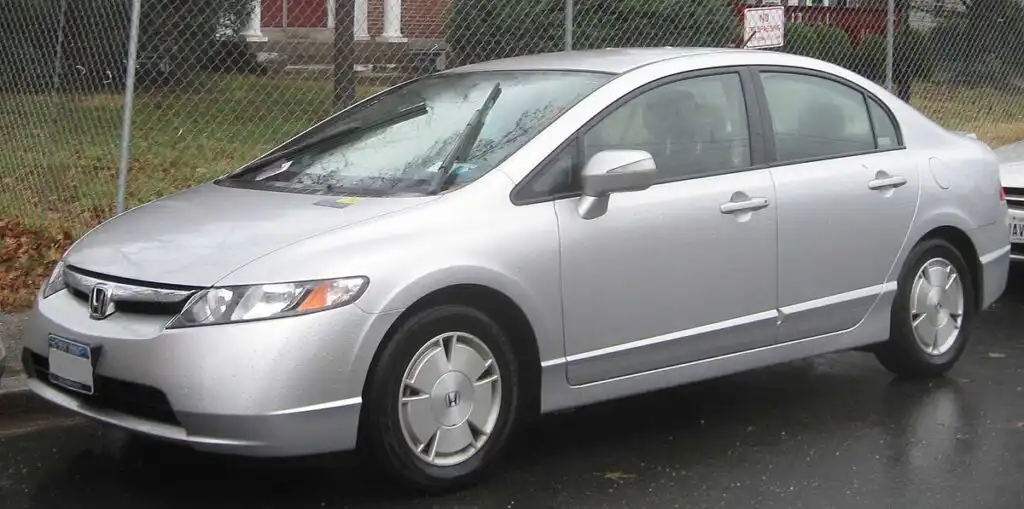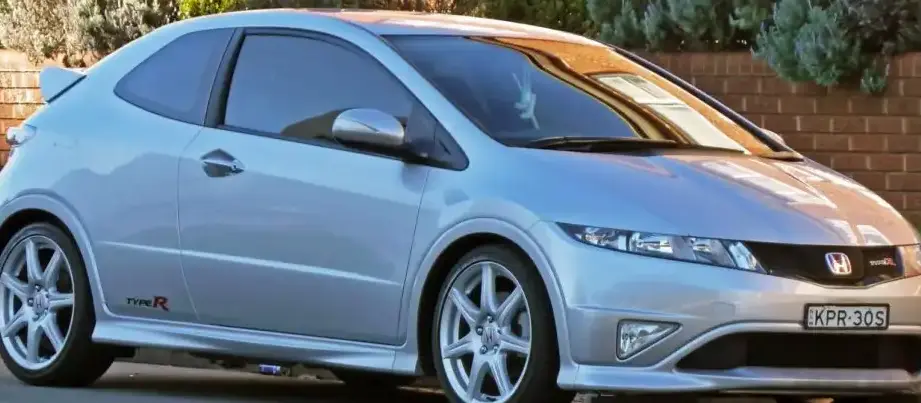
The Honda Civic Type R (FN2) 2.0, produced between 2007 and 2011, represents a significant iteration of Honda’s high-performance hatchback. Built on the Civic’s eighth-generation (FD/FG) platform – specifically the FD2 chassis for the Japanese market and the FN2 for Europe and other regions – this model aimed to deliver a focused driving experience. The FN2 distinguished itself with a naturally aspirated 2.0-liter K20Z4 engine, a six-speed manual transmission, and a host of performance-oriented modifications. It was positioned as the top-tier performance variant within the Civic hatchback range, offering a more aggressive and track-focused alternative to the standard Civic models.
Technical Specifications
| Brand | Honda |
| Model | Civic Type R |
| Generation | Civic Type R (FN2) |
| Type (Engine) | 2.0 (201 Hp) |
| Start of production | 2007 |
| End of production | 2011 |
| Powertrain Architecture | Internal Combustion engine |
| Body type | Hatchback |
| Seats | 4 |
| Doors | 3 |
| Fuel consumption (economy) – urban (NEDC) | 12.7 l/100 km (18.5 US mpg, 22.2 UK mpg, 7.9 km/l) |
| Fuel consumption (economy) – extra urban (NEDC) | 7 l/100 km (33.6 US mpg, 40.4 UK mpg, 14.3 km/l) |
| Fuel consumption (economy) – combined (NEDC) | 9.1 l/100 km (25.8 US mpg, 31 UK mpg, 11 km/l) |
| CO2 emissions (NEDC) | 215 g/km |
| Fuel Type | Petrol (Gasoline) |
| Acceleration 0 – 100 km/h | 6.6 sec |
| Acceleration 0 – 62 mph | 6.6 sec |
| Acceleration 0 – 60 mph | 6.3 sec |
| Maximum speed | 235 km/h (146.02 mph) |
| Emission standard | Euro 4 |
| Weight-to-power ratio | 6.3 kg/Hp, 158.6 Hp/tonne |
| Weight-to-torque ratio | 6.6 kg/Nm, 152.3 Nm/tonne |
| Power | 201 Hp @ 7800 rpm |
| Power per litre | 100.6 Hp/l |
| Torque | 193 Nm @ 5600 rpm (142.35 lb.-ft. @ 5600 rpm) |
| Engine layout | Front, Transverse |
| Engine Model/Code | K20Z4 |
| Engine displacement | 1998 cm3 (121.93 cu. in.) |
| Number of cylinders | 4 |
| Engine configuration | Inline |
| Cylinder Bore | 86 mm (3.39 in.) |
| Piston Stroke | 86 mm (3.39 in.) |
| Compression ratio | 11:1 |
| Number of valves per cylinder | 4 |
| Fuel injection system | Multi-port manifold injection |
| Engine aspiration | Naturally aspirated engine |
| Valvetrain | DOHC, i-VTEC |
| Engine oil capacity | 4.4 l (4.65 US qt, 3.87 UK qt) |
| Coolant | 4.4 l (4.65 US qt, 3.87 UK qt) |
| Kerb Weight | 1267 kg (2793.26 lbs.) |
| Max. weight | 1700 kg (3747.86 lbs.) |
| Max load | 433 kg (954.6 lbs.) |
| Trunk (boot) space – minimum | 485 l (17.13 cu. ft.) |
| Trunk (boot) space – maximum | 1352 l (47.75 cu. ft.) |
| Fuel tank capacity | 50 l (13.21 US gal, 11 UK gal) |
| Max. roof load | 45 kg (99.21 lbs.) |
| Length | 4276 mm (168.35 in.) |
| Width | 1785 mm (70.28 in.) |
| Width including mirrors | 2046 mm (80.55 in.) |
| Height | 1445 mm (56.89 in.) |
| Wheelbase | 2635 mm (103.74 in.) |
| Front track | 1505 mm (59.25 in.) |
| Rear (Back) track | 1530 mm (60.24 in.) |
| Minimum turning circle | 11.2 m (36.75 ft.) |
| Drivetrain Architecture | Front wheel drive |
| Number of gears and type of gearbox | 6 gears, manual transmission |
| Front suspension | Independent, type McPherson with coil spring and anti-roll bar |
| Rear suspension | Transverse stabilizer, Torsion |
| Front brakes | Ventilated discs, 300 mm |
| Rear brakes | Disc, 260 mm |
| Assisting systems | ABS (Anti-lock braking system) |
| Steering type | Steering rack and pinion |
| Power steering | Electric Steering |
| Tires size | 225/40 R18 |
| Wheel rims size | 7.5J x 18 |
Powertrain & Engine Architecture
The heart of the FN2 Type R is the K20Z4 engine, a 2.0-liter inline-four cylinder powerplant. This engine is a derivative of the K20A/K20Z series, renowned for its high-revving nature and responsiveness. The K20Z4 featured a higher compression ratio (11:1) compared to some of its siblings, along with optimized intake and exhaust systems to maximize airflow. It utilized Honda’s i-VTEC (Variable Valve Timing and Lift Electronic Control) technology, allowing for both low-end torque and high-RPM power. Fuel delivery was managed by a multi-point fuel injection system. The engine was paired exclusively with a close-ratio six-speed manual transmission, designed to keep the engine within its optimal power band. This transmission featured shorter gear ratios than those found in standard Civic models, contributing to quicker acceleration.
Driving Characteristics
The FN2 Type R delivered a distinctly sporty driving experience. The 201 horsepower and 193 lb-ft of torque, while not overwhelming by modern standards, were sufficient to provide brisk acceleration. The six-speed manual transmission allowed for precise gear selection and encouraged spirited driving. The car’s relatively lightweight construction (around 2793 lbs) further enhanced its agility. Compared to other Civic variants, the Type R’s suspension was significantly stiffer, resulting in reduced body roll and improved handling. However, this also meant a firmer ride quality, which some drivers found less comfortable for everyday use. The steering was direct and communicative, providing good feedback to the driver. The FN2 wasn’t about outright top speed; it excelled in cornering and providing a connected feel to the road.
Equipment & Trim Levels
The FN2 Type R was generally well-equipped, though the focus remained on performance rather than luxury. Standard features typically included sport seats with enhanced bolstering, a leather-wrapped steering wheel, aluminum pedal covers, and a unique Type R-specific body kit. Air conditioning was standard, but options like navigation and premium audio systems were less common. The interior trim was typically dark in color, with a minimalist design. The FN2 was offered in a limited range of colors, often including Championship White, a signature color for Honda’s performance models.
Chassis & Braking
The FN2 Type R featured a MacPherson strut front suspension and a torsion beam rear suspension. While the torsion beam rear setup was a cost-saving measure compared to a fully independent rear suspension, it was tuned to provide acceptable handling characteristics. The car was equipped with ventilated disc brakes at the front and solid discs at the rear. Anti-lock Braking System (ABS) was standard. The chassis was reinforced compared to standard Civic models to improve rigidity and handling precision.
Market Reception & Comparison
The FN2 Type R received mixed reviews upon its release. Critics praised its engaging driving dynamics, responsive engine, and precise gearbox. However, some criticized the torsion beam rear suspension and the relatively harsh ride quality. Compared to the previous-generation Civic Type R (EP3), the FN2 offered more power and a more refined interior, but it lacked the EP3’s fully independent rear suspension. Against competitors like the Ford Focus ST and Volkswagen Golf GTI, the FN2 offered a more focused and track-oriented experience, but it often lagged behind in terms of practicality and comfort. Fuel economy was reasonable for a performance car, averaging around 25.8 US mpg in combined driving.
Legacy
The Honda Civic Type R (FN2) has become a sought-after model among enthusiasts. The K20Z4 engine is known for its reliability and tunability, making it a popular choice for modifications. While the torsion beam rear suspension is often criticized, it has proven to be durable and relatively maintenance-free. Today, well-maintained FN2 Type Rs command a premium in the used car market. The FN2 represents a pivotal moment in the Type R lineage, bridging the gap between earlier, more raw performance models and the more technologically advanced Type Rs that followed. It remains a compelling option for drivers seeking a pure and engaging driving experience.