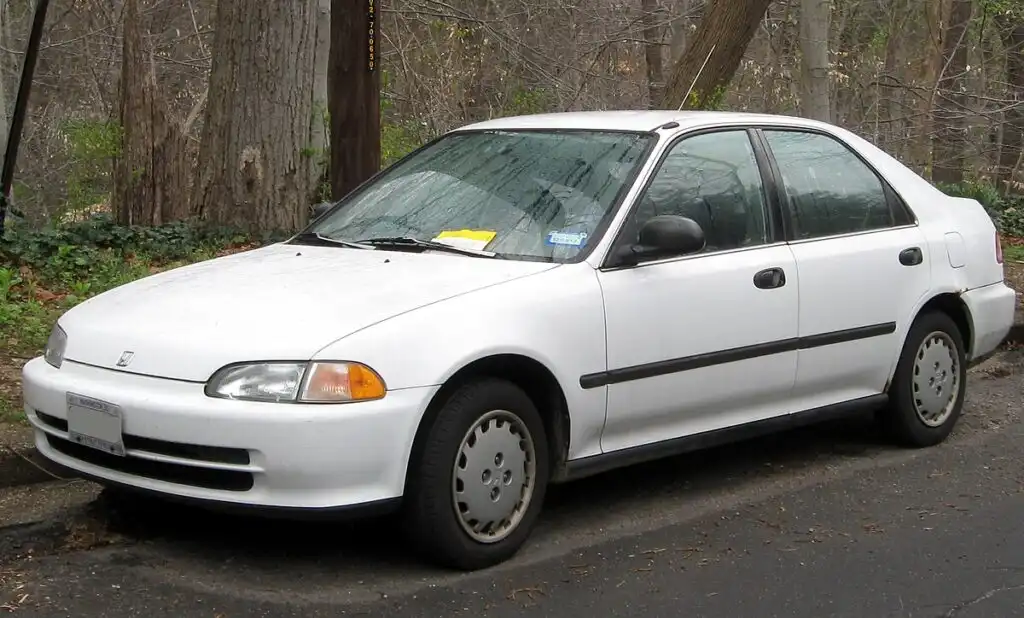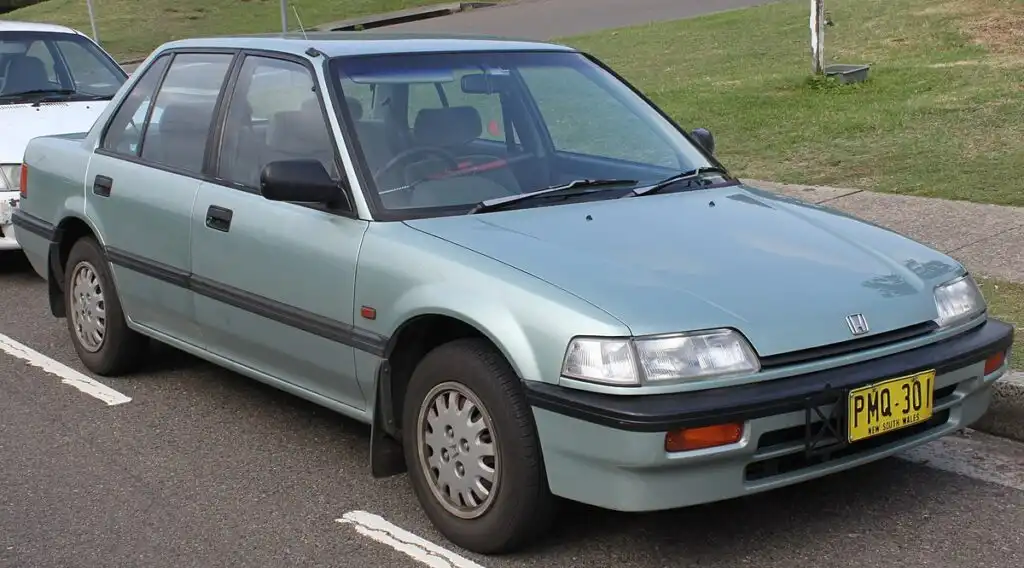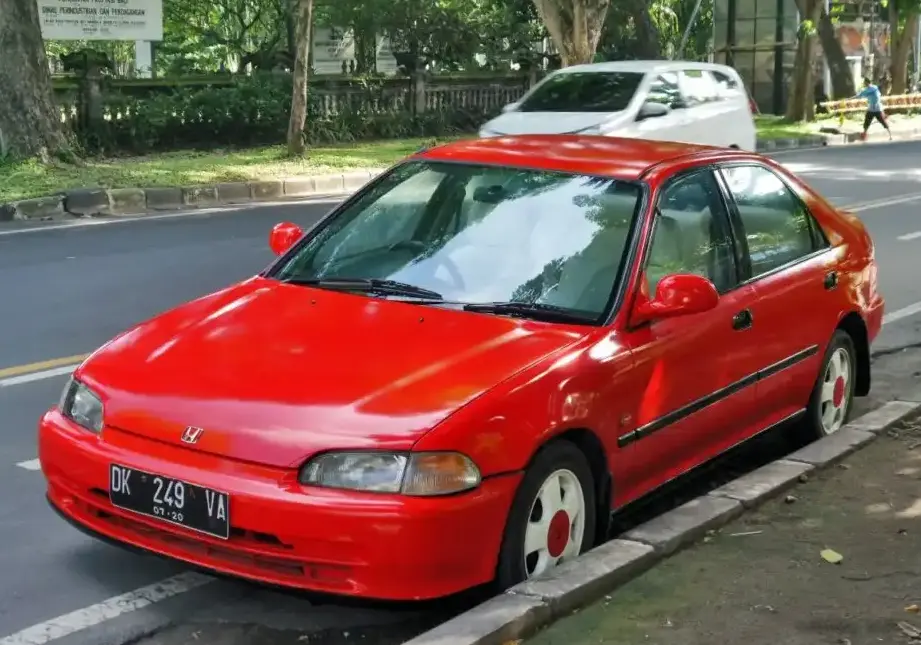
The Honda Civic V, produced between 1991 and 1995, represented a significant evolution for Honda’s popular compact car. Within the fifth generation (chassis code EG), the 1.6 16V VTEC variant, producing 125 horsepower, occupied a sweet spot in the lineup, offering a compelling blend of performance and fuel efficiency. This model was primarily aimed at the North American and European markets, where consumers were increasingly seeking sporty and reliable transportation. It served as an upgrade from the base 1.5L models, while remaining more accessible than the more expensive and performance-focused Si/VTi trims.
Technical Specifications
| Brand | Honda |
| Model | Civic |
| Generation | Civic V |
| Type (Engine) | 1.6 16V Vtec (125 Hp) |
| Start of production | 1991 |
| End of production | 1995 |
| Powertrain Architecture | Internal Combustion engine |
| Body type | Sedan |
| Seats | 5 |
| Doors | 4 |
| Fuel consumption (combined) | 7.5 l/100 km |
| Fuel consumption (US mpg) | 31.4 |
| Fuel consumption (UK mpg) | 37.7 |
| Fuel Type | Petrol (Gasoline) |
| Acceleration 0 – 100 km/h | 8.8 sec |
| Acceleration 0 – 62 mph | 8.8 sec |
| Acceleration 0 – 60 mph | 8.4 sec |
| Maximum speed | 195 km/h (121.17 mph) |
| Weight-to-power ratio | 8.2 kg/Hp |
| Weight-to-torque ratio | 7.2 kg/Nm |
| Power | 125 Hp @ 6600 rpm |
| Power per litre | 78.6 Hp/l |
| Torque | 144 Nm @ 4700 rpm (106.21 lb.-ft. @ 4700 rpm) |
| Engine layout | Front, Transverse |
| Engine Model/Code | D16Z6 |
| Engine displacement | 1590 cm3 (97.03 cu. in.) |
| Number of cylinders | 4 |
| Engine configuration | Inline |
| Cylinder Bore | 75 mm (2.95 in.) |
| Piston Stroke | 90 mm (3.54 in.) |
| Compression ratio | 9.6:1 |
| Number of valves per cylinder | 4 |
| Fuel injection system | Multi-port manifold injection |
| Engine aspiration | Naturally aspirated engine |
| Valvetrain | OHC |
| Engine oil capacity | 3.3 l (3.49 US qt | 2.9 UK qt) |
| Coolant capacity | 3.6 l (3.8 US qt | 3.17 UK qt) |
| Kerb Weight | 1030 kg (2270.76 lbs.) |
| Max. weight | 1520 kg (3351.03 lbs.) |
| Max load | 490 kg (1080.27 lbs.) |
| Trunk (boot) space – minimum | 381 l (13.45 cu. ft.) |
| Fuel tank capacity | 45 l (11.89 US gal | 9.9 UK gal) |
| Length | 4405 mm (173.43 in.) |
| Width | 1695 mm (66.73 in.) |
| Height | 1375 mm (54.13 in.) |
| Wheelbase | 2620 mm (103.15 in.) |
| Front track | 1475 mm (58.07 in.) |
| Rear (Back) track | 1465 mm (57.68 in.) |
| Drivetrain Architecture | The Internal combustion engine (ICE) drives the front wheels of the vehicle. |
| Drive wheel | Front wheel drive |
| Number of gears and type of gearbox | 5 gears, manual transmission |
| Front suspension | Double wishbone |
| Rear suspension | Double wishbone |
| Front brakes | Ventilated discs |
| Rear brakes | Disc |
| Assisting systems | ABS (Anti-lock braking system) |
| Steering type | Steering rack and pinion |
| Power steering | Hydraulic Steering |
| Tires size | 185/60 R14 |
Powertrain & Engine Architecture
The heart of the Civic V 1.6 VTEC is the D16Z6 engine, a 1.6-liter (1590cc) inline-four cylinder powerplant. This engine is notable for its use of Honda’s Variable Valve Timing and Lift Electronic Control (VTEC) system. VTEC allowed the engine to switch between two distinct camshaft profiles – a mild profile for low-speed efficiency and a more aggressive profile for high-speed power. This was achieved through hydraulically actuated pins that locked together high-lift cam lobes at approximately 3,600 rpm, effectively changing the valve timing and lift. The D16Z6 featured multi-port fuel injection and a compression ratio of 9.6:1. The engine’s output of 125 hp at 6,600 rpm and 106 lb-ft of torque at 4,700 rpm was considered respectable for its displacement and time. The engine was paired exclusively with a 5-speed manual transmission in most markets, contributing to its sporty character.
Driving Characteristics
The 1.6L VTEC Civic offered a noticeably more engaging driving experience than the base models. The VTEC system provided a distinct “kick” as it engaged, delivering a surge of power in the mid-range. While not a high-revving engine like some of its later VTEC counterparts, the D16Z6 provided sufficient power for confident highway merging and passing maneuvers. The 5-speed manual transmission allowed drivers to fully exploit the engine’s powerband. The chassis was well-balanced, offering predictable handling and a comfortable ride. Compared to the later Civic Si models, the 1.6 VTEC prioritized fuel economy and everyday usability over outright performance.
Equipment & Trim Levels
The 1.6 VTEC trim typically included features such as power steering, a basic audio system, and cloth upholstery. Optional extras included air conditioning, power windows, and a sunroof. Interior appointments were functional and durable, reflecting Honda’s reputation for reliability. The dashboard layout was straightforward and easy to use. The trim level sat above the base DX and LX models, offering a step up in both performance and features, but below the more fully equipped Si/VTi variants.
Chassis & Braking
The Civic V utilized a front independent suspension with double wishbones and a rear independent suspension, also with double wishbones. This suspension setup provided a good balance between ride comfort and handling. Braking duties were handled by ventilated discs at the front and solid discs at the rear. An Anti-lock Braking System (ABS) was often included as standard equipment, enhancing safety. The chassis was relatively lightweight, contributing to the car’s nimble handling characteristics.
Market Reception & Comparison
The Civic V 1.6 VTEC was well-received by automotive critics and consumers alike. It was praised for its blend of performance, fuel efficiency, and reliability. Compared to competitors like the Toyota Corolla and Nissan Sentra, the Civic V offered a more engaging driving experience and a more sophisticated engine. Fuel economy was competitive for the time, averaging around 31.4 US mpg in combined driving. The 1.6 VTEC offered a compelling alternative to the more expensive and performance-focused Si/VTi models, appealing to buyers who wanted a sporty and reliable car without breaking the bank.
Legacy
The D16Z6 engine and the Civic V generation have earned a strong reputation for durability and reliability. Many examples are still on the road today, a testament to Honda’s engineering prowess. The engine is known for its ability to withstand high mileage with proper maintenance. In the used car market, the 1.6 VTEC variant remains a popular choice for enthusiasts and budget-minded buyers. Its combination of performance, fuel efficiency, and reliability makes it a desirable and enduring classic.